 3 citations
,
June 2023 in “MedComm”
3 citations
,
June 2023 in “MedComm” Stem cells and their exosomes show promise for repairing tissues and healing wounds when delivered effectively, but more research is needed on their tracking and optimal use.
15 citations
,
December 2020 in “International journal of molecular sciences” Epidermal stem cells create and maintain skin structures like hair and nails through specific signaling pathways and vary by location and function.
38 citations
,
July 2020 in “EMBO journal” SIRT7 protein is crucial for starting hair growth in mice.
10 citations
,
May 2020 in “Frontiers in cell and developmental biology” MicroRNAs are important for hair growth regulation, with Dicer being crucial and Tarbp2 less significant.
71 citations
,
January 2020 in “Stem Cells International” Epidermal stem cells help heal skin, but how they work is still unclear.
 20 citations
,
November 2019 in “Stem Cells”
20 citations
,
November 2019 in “Stem Cells” Hes1 protein is important for hair growth and regeneration, and could be a potential treatment for hair loss.
 82 citations
,
May 2019 in “British Journal of Dermatology”
82 citations
,
May 2019 in “British Journal of Dermatology” The document's conclusion cannot be provided because the document is not available to parse.
 211 citations
,
November 2018 in “Nature Cell Biology”
211 citations
,
November 2018 in “Nature Cell Biology” Stem cells help heal skin wounds by moving and changing roles, working with other cells, and needing more research on their activation and behavior.
 30 citations
,
November 2018 in “EMBO Reports”
30 citations
,
November 2018 in “EMBO Reports” The Ovol2-Zeb1 circuit is crucial for skin healing and hair growth by guiding cell movement and growth.
 26 citations
,
September 2018 in “Journal of Molecular Cell Biology”
26 citations
,
September 2018 in “Journal of Molecular Cell Biology” Endoglin is crucial for proper hair growth cycles and stem cell activation in mice.
 24 citations
,
July 2018 in “Stem cells”
24 citations
,
July 2018 in “Stem cells” Runx1 controls fat-related genes important for normal and cancer cell growth, affecting skin and hair cell behavior.
 34 citations
,
April 2018 in “EMBO journal”
34 citations
,
April 2018 in “EMBO journal” The protein SLC1A3 is important for activating skin stem cells and is necessary for normal hair and skin growth in mice.
85 citations
,
January 2018 in “Cell stem cell” Different signals work together to change gene activity and guide hair follicle stem cells to become specific cell types.
 25 citations
,
November 2017 in “Molecular Medicine Reports”
25 citations
,
November 2017 in “Molecular Medicine Reports” PlncRNA-1 helps hair follicle stem cells grow and develop by controlling a specific cell signaling pathway.
20 citations
,
October 2017 in “Stem Cell Reports” Alkaline Ceramidase 1 prevents early hair loss in mice by keeping hair follicle stem cells balanced.
 202 citations
,
August 2017 in “Nature cell biology”
202 citations
,
August 2017 in “Nature cell biology” Lactate production is important for activating hair growth stem cells.
124 citations
,
July 2017 in “eLife” Type XVII collagen helps control skin cell growth and could be a target for anti-aging treatments.
 56 citations
,
May 2017 in “Nature Cell Biology”
56 citations
,
May 2017 in “Nature Cell Biology” Hair can regrow after certain stem cells are lost because other stem cells can take over their role.
 55 citations
,
April 2017 in “Experimental Dermatology”
55 citations
,
April 2017 in “Experimental Dermatology” The document describes a way to isolate and grow human hair follicle cells in 3D to help study hair growth.
 29 citations
,
January 2017 in “Journal of Investigative Dermatology”
29 citations
,
January 2017 in “Journal of Investigative Dermatology” The Msi2 protein helps keep hair follicle stem cells inactive, controlling hair growth and regeneration.
 29 citations
,
December 2016 in “The EMBO Journal”
29 citations
,
December 2016 in “The EMBO Journal” Gata6 is important for protecting hair growth cells from DNA damage and keeping normal hair growth.
9 citations
,
June 2016 in “Stem cells” Overexpression of sPLA2-IIA in mouse skin reduces hair stem cells and increases cell differentiation through JNK/c-Jun pathway activation.
38 citations
,
April 2016 in “The Journal of Pathology” Alkaline ceramidase 1 is crucial for healthy skin and energy balance.
142 citations
,
February 2016 in “Science” Foxc1 helps keep hair follicle stem cells inactive, preventing hair loss.
266 citations
,
January 2016 in “Development” YAP and TAZ are crucial for skin cell growth and repair.
 58 citations
,
August 2015 in “The Indonesian Biomedical Journal”
58 citations
,
August 2015 in “The Indonesian Biomedical Journal” Different types of stem cells help maintain and heal skin.
24 citations
,
June 2015 in “Journal of Investigative Dermatology” aPKCλ is crucial for keeping hair follicle stem cells inactive and maintaining normal hair growth.
 52 citations
,
May 2015 in “PLOS Genetics”
52 citations
,
May 2015 in “PLOS Genetics” miR-22, a type of microRNA, controls hair growth and its overproduction can cause hair loss, while its absence can speed up hair growth.
 321 citations
,
March 2015 in “Nature”
321 citations
,
March 2015 in “Nature” Super-enhancers controlled by pioneer factors like SOX9 are crucial for stem cell adaptability and identity.
53 citations
,
February 2015 in “Journal of Investigative Dermatology” Ceramide Synthase 4 is essential for normal hair growth and preventing hair loss.
 103 citations
,
November 2014 in “Journal of Cell Biology”
103 citations
,
November 2014 in “Journal of Cell Biology” MicroRNA-214 is important for skin and hair growth because it affects the Wnt pathway.
 50 citations
,
September 2014 in “Stem cell reports”
50 citations
,
September 2014 in “Stem cell reports” BLIMP1 is essential for skin maintenance but not for defining sebaceous gland progenitors.
 173 citations
,
January 2014 in “Nature Cell Biology”
173 citations
,
January 2014 in “Nature Cell Biology” Wnt signaling controls whether hair follicle stem cells stay inactive or regenerate hair.
394 citations
,
October 2013 in “Nature”  36 citations
,
September 2013 in “PLoS ONE”
36 citations
,
September 2013 in “PLoS ONE” Sweat gland stem cells help maintain glands, aid wound healing, and can regenerate skin structures.
 83 citations
,
May 2013 in “International Journal of Molecular Sciences”
83 citations
,
May 2013 in “International Journal of Molecular Sciences” Skin development in mammals is controlled by key proteins and signals from underlying cells, involving stem cells for maintenance and repair.
 57 citations
,
January 2013 in “International Journal of Medical Sciences”
57 citations
,
January 2013 in “International Journal of Medical Sciences” Lef1 helps stem cells become hair cells by interacting with specific signaling pathways.
 401 citations
,
January 2013 in “Postepy Dermatologii I Alergologii”
401 citations
,
January 2013 in “Postepy Dermatologii I Alergologii” The paper concludes that understanding melanocyte development can help in insights into skin diseases and melanoma diversity.
 260 citations
,
December 2012 in “Cold Spring Harbor Perspectives in Biology”
260 citations
,
December 2012 in “Cold Spring Harbor Perspectives in Biology” Wnt signaling is crucial for skin development and health, and its disruption can cause skin diseases.
 85 citations
,
July 2012 in “Cold Spring Harbor perspectives in biology”
85 citations
,
July 2012 in “Cold Spring Harbor perspectives in biology” The skin protects the body and is constantly renewed by stem cells; disruptions can lead to cancer.
 265 citations
,
July 2012 in “Cell”
265 citations
,
July 2012 in “Cell” The study found that sweat glands contain different types of stem cells that help with healing and maintaining healthy skin.
 191 citations
,
September 2011 in “Cell stem cell”
191 citations
,
September 2011 in “Cell stem cell” Hair follicle stem cells use specific chromatin changes to control their growth and differentiation.
91 citations
,
June 2011 in “The EMBO Journal” TCF/Lef1 activity is essential for proper skin cell development and renewal.
 351 citations
,
February 2010 in “Nature Cell Biology”
351 citations
,
February 2010 in “Nature Cell Biology” Basal cell carcinoma mostly starts from cells in the upper skin layers, not hair follicle stem cells.
30 citations
,
February 2010 in “The journal of investigative dermatology/Journal of investigative dermatology” Plet-1 protein helps hair follicle cells move and stick to tissues.
503 citations
,
May 2009 in “Cell stem cell” Lrig1 marks a unique group of stem cells in mouse skin that can become different skin cell types.
 1039 citations
,
February 2009 in “Nature Reviews Molecular Cell Biology”
1039 citations
,
February 2009 in “Nature Reviews Molecular Cell Biology” Skin stem cells are crucial for maintaining and repairing the skin and hair, using a complex mix of signals to do so.
28 citations
,
January 2009 in “Journal of Investigative Dermatology” Stem cells in eccrine glands could be used for regenerative medicine.
 835 citations
,
October 2008 in “Nature Genetics”
835 citations
,
October 2008 in “Nature Genetics” Lgr5 is a marker for active, long-lasting stem cells in mouse hair follicles.
415 citations
,
January 2008 in “Cell” NFATc1 controls hair stem cell activity, affecting hair growth and could be a target for hair loss treatments.
 829 citations
,
May 2007 in “Nature”
829 citations
,
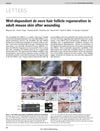
May 2007 in “Nature” Hair follicles can regrow in wounded adult mouse skin using a process like embryo development.
176 citations
,
September 2006 in “Stem Cells” BMP signaling prevents hair growth by stopping stem cell activation.
 147 citations
,
September 2006 in “Developmental Cell”
147 citations
,
September 2006 in “Developmental Cell” Too much Smad7 changes skin and hair development by breaking down a protein called β-catenin, leading to more oil glands and fewer hair follicles.
207 citations
,
July 2006 in “Development” MTS24 marks a new type of skin cell that helps hair growth and repair.
319 citations
,
November 2005 in “Proceedings of the National Academy of Sciences” Hair follicle stem cells can help repair damaged nerves.
1279 citations
,
November 2005 in “Nature Medicine”  291 citations
,
October 2005 in “Proceedings of the National Academy of Sciences of the United States of America”
291 citations
,
October 2005 in “Proceedings of the National Academy of Sciences of the United States of America” Adult stem cells from rat whisker follicles can regenerate hair follicles and sebaceous glands.
419 citations
,
March 2005 in “Proceedings of the National Academy of Sciences” Hair-follicle stem cells can become neurons.
352 citations
,
August 2003 in “Proceedings of the National Academy of Sciences” Nestin is found in hair follicle progenitor cells, linking them to neural stem cells.
182 citations
,
May 2003 in “Development” Myc activation reduces skin stem cells by affecting cell adhesion.
561 citations
,
April 2003 in “Journal of Investigative Dermatology” CD34 is a marker for isolating stem-like cells in mouse hair follicles.
297 citations
,
January 2002 in “Development” Overexpression of ΔNLef1 in mouse skin leads to hair loss, cysts, and skin tumors.
 211 citations
,
October 2001 in “The FASEB Journal”
211 citations
,
October 2001 in “The FASEB Journal” Noggin is necessary to start the hair growth phase in skin after birth.
 555 citations
,
July 2001 in “Genes & Development”
555 citations
,
July 2001 in “Genes & Development” Tcf3 and Lef1 are key in deciding skin stem cell roles.
315 citations
,
June 2001 in “Nature Genetics” 949 citations
,
January 2001 in “Cell” Adult mouse skin contains stem cells that can create new hair, skin, and oil glands.
1010 citations
,
August 2000 in “Cell” Hair follicle stem cells can form both hair follicles and skin.