 22 citations
,
October 2012 in “Cell Transplantation”
22 citations
,
October 2012 in “Cell Transplantation” This study found that adding Wnt-10b to the culture medium of dermal papilla cells maintained their ability to induce hair follicles over 100 days in vitro.
 131 citations
,
July 2009 in “Experimental Dermatology”
131 citations
,
July 2009 in “Experimental Dermatology” This review discusses the development and advances in studying trichogenic dermal cells for hair follicle morphogenesis, summarizing methods, bioassays, and molecular markers, but reports no new research findings.
 829 citations
,
May 2007 in “Nature”
829 citations
,
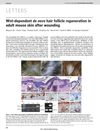
May 2007 in “Nature” Hair follicles can regrow in wounded adult mouse skin using a process like embryo development.
 375 citations
,
February 2006 in “Journal of Cell Science”
375 citations
,
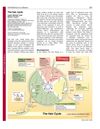
February 2006 in “Journal of Cell Science” This article reviews the stages and regulation of the hair cycle, highlighting molecular regulators involved, but it does not present new research findings.
 27 citations
,
January 2006 in “Colloids and Surfaces B: Biointerfaces”
27 citations
,
January 2006 in “Colloids and Surfaces B: Biointerfaces” This study found that in vitro, cultured bulge cells from human hair follicles possess properties of primitive cells, supporting the hypothesis that hair follicle stem cells reside in the bulge area.
90 citations
,
August 2004 in “Physiological Genomics” This study found that coculturing human hair follicle keratinocyte stem cells with dermal papilla cells increased expression of the hair-specific keratin 6hf gene, which requires β-catenin/lef-1 signaling for hair differentiation.
335 citations
,
March 2004 in “Development” This study found that continuous β-catenin signaling in adult mouse epidermis can reprogram hair follicles to form benign tumors, which regress after the signaling is discontinued.
297 citations
,
January 2002 in “Development” In this study, repressing β-catenin/Lef1 signalling in mouse epidermis led to progressive hair loss, dermal cysts, and spontaneous skin tumors with sebaceous differentiation, indicating altered keratinocyte differentiation and potential tumourigenic processes.
 555 citations
,
July 2001 in “Genes & Development”
555 citations
,
July 2001 in “Genes & Development” This study found that Tcf3 and Lef1 differently regulate cell differentiation in multipotent skin stem cells, with Tcf3 promoting follicle-like features and Lef1, when modified, promoting sebocyte differentiation.
45 citations
,
April 2001 in “The journal of investigative dermatology/Journal of investigative dermatology” This study suggests that Myc superfamily transcription factors may have distinct roles in different epithelial compartments of the human hair follicle, possibly influencing cell fate in the putative stem cell compartment.
949 citations
,
January 2001 in “Cell” This study demonstrated that multipotent stem cells in adult mice whisker follicles migrate to produce whisker growth, and that this process requires precise control of stem cell trafficking.
109 citations
,
June 2000 in “Development” This study reports that activating Notch signaling in the hair follicle cortex of transgenic mice caused abnormal differentiation of the medulla and cuticle, highlighting potential cell-cell interactions.
 62 citations
,
January 2000 in “Developmental dynamics”
62 citations
,
January 2000 in “Developmental dynamics” This study found that Notch-related genes, including Notch1 and Notch2, and their ligands and regulators, have distinct patterns of expression during mouse hair vibrissa follicle development and the adult hair cycle.
990 citations
,
October 1999 in “Development” This study found that LEF1/TCF3 is necessary but not sufficient for TOPGAL activation in hair follicle development, indicating complex regulation in the skin.