 106 citations
,
April 2013 in “Dermatologic Surgery”
106 citations
,
April 2013 in “Dermatologic Surgery” This study found that low-level light therapy significantly increased hair density and diameter in androgenetic alopecia patients compared to a sham device, suggesting it could be an effective treatment option.
 32 citations
,
March 2013 in “Journal of Pharmaceutical Sciences”
32 citations
,
March 2013 in “Journal of Pharmaceutical Sciences” This study observed that iontophoresis significantly improved the delivery of minoxidil sulfate to hair follicles compared to passive methods, suggesting potential benefits for alopecia treatment.
 98 citations
,
October 2012 in “Dermatologic Clinics”
98 citations
,
October 2012 in “Dermatologic Clinics” This article reviews the impact of nutritional deficiencies on hair health, detailing how they can cause structural abnormalities, pigmentation changes, or hair loss; it presents no new clinical findings.
 18 citations
,
August 2012 in “Journal of The American Academy of Dermatology”
18 citations
,
August 2012 in “Journal of The American Academy of Dermatology” This report describes a case where a sex reassignment patient on estrogen therapy experienced complete hair regrowth on a previously fully alopecic scalp.
6 citations
,
August 2012 in “PubMed” In this report, a 44-year-old woman with female pattern alopecia experienced significant hair regrowth after 3.5 months of oral finasteride, with no side effects, after not responding to topical minoxidil.
 32 citations
,
July 2012 in “Stem Cells Translational Medicine”
32 citations
,
July 2012 in “Stem Cells Translational Medicine” In this study, VD(3) pretreatment increased hair follicle formation in a rat model by promoting dermal papilla cell differentiation, suggesting potential for hair regeneration therapy.
 17 citations
,
June 2012 in “Australasian Journal of Dermatology”
17 citations
,
June 2012 in “Australasian Journal of Dermatology” This study found that adding low-dose dutasteride to ongoing finasteride treatment significantly improved hair density in a patient with androgenetic alopecia.
 35 citations
,
May 2012 in “Cochrane Database of Systematic Reviews”
35 citations
,
May 2012 in “Cochrane Database of Systematic Reviews” This review found evidence supporting the effectiveness and safety of topical minoxidil for treating female pattern hair loss, though many included studies were at high risk of bias.
 61 citations
,
April 2012 in “British Journal of Dermatology”
61 citations
,
April 2012 in “British Journal of Dermatology” This study analyzed changes in hair diameter and density with age in Caucasian women, highlighting variations in perception of hair amount over time.
 41 citations
,
April 2012 in “Journal of The European Academy of Dermatology and Venereology”
41 citations
,
April 2012 in “Journal of The European Academy of Dermatology and Venereology” This study found that mesotherapy with a dutasteride-containing preparation improved hair growth indicators in female pattern hair loss better than saline, with minimal side effects and greater effectiveness in patients with shorter disease duration.
 38 citations
,
December 2011 in “British Journal of Dermatology”
38 citations
,
December 2011 in “British Journal of Dermatology” This review discusses the influence of menopausal status on hair parameters in women without alopecia, finding significant differences in hair growth rate, percentage anagen, and hair diameter distributions, particularly in the frontal scalp.
 27 citations
,
October 2011 in “British Journal of Dermatology”
27 citations
,
October 2011 in “British Journal of Dermatology” This study builds on previous findings by associating female pattern hair loss with gene polymorphisms related to oestrogen activity, suggesting oestrogen's role in the condition.
 198 citations
,
October 2011 in “Journal der Deutschen Dermatologischen Gesellschaft”
198 citations
,
October 2011 in “Journal der Deutschen Dermatologischen Gesellschaft” This article discusses the development of an evidence-based guideline for treating androgenetic alopecia and reports no new research results.
 81 citations
,
August 2011 in “Journal of The American Academy of Dermatology”
81 citations
,
August 2011 in “Journal of The American Academy of Dermatology” In this study, latanoprost significantly increased hair density in young men with mild androgenetic alopecia after 24 weeks, suggesting it may stimulate hair follicle activity and treat hair loss.
5 citations
,
July 2011 in “PubMed” This case report of female-pattern androgenetic alopecia found that injected bimatoprost solution did not successfully treat the condition, prompting considerations for future prostaglandin analog therapies.
 100 citations
,
June 2011 in “Journal of The American Academy of Dermatology”
100 citations
,
June 2011 in “Journal of The American Academy of Dermatology” This study found that a once-daily 5% minoxidil topical foam is as effective as a twice-daily 2% minoxidil topical solution for hair growth in women with androgenetic alopecia, with fewer side effects and greater styling convenience.
This pilot study found that a novel regimen including NuH Hair led to significant hair growth in male patients with androgenic alopecia, regardless of atopy status, with quicker results when additional treatment components were used.
 4 citations
,
May 2011 in “Current Drug Discovery Technologies”
4 citations
,
May 2011 in “Current Drug Discovery Technologies” This study found that a dutasteride-loaded liposomal system significantly increased skin permeability and drug deposition in mouse skin compared to other formulations, suggesting improved localized treatment potential for androgenetic alopecia.
 9 citations
,
April 2011 in “PubMed”
9 citations
,
April 2011 in “PubMed” This review discusses spironolactone's dermatologic applications, particularly for conditions like hirsutism and female pattern hair loss, but reports no new results; it also highlights safety concerns in pregnancy and men.
 42 citations
,
April 2011 in “Annals of Pharmacotherapy”
42 citations
,
April 2011 in “Annals of Pharmacotherapy” This study found that long-term flutamide treatment reduced hair loss in women with female pattern hair loss, but liver-related dropouts were minimized at a very low dose of 62.5 mg/day.
 87 citations
,
March 2011 in “Australasian Journal of Dermatology”
87 citations
,
March 2011 in “Australasian Journal of Dermatology” This review explores the current understanding of genetic and hormonal influences on male androgenetic alopecia and female pattern hair loss, providing guidance for clinicians but reports no new results.
 30 citations
,
March 2011 in “Australasian Journal of Dermatology”
30 citations
,
March 2011 in “Australasian Journal of Dermatology” This case report found that a woman's hair loss, which progressed while using spironolactone and topical minoxidil, reversed after switching to flutamide therapy.
 72 citations
,
October 2010 in “Journal of The American Academy of Dermatology”
72 citations
,
October 2010 in “Journal of The American Academy of Dermatology” This study concluded that iron deficiency is common among women but not more prevalent in those with female pattern hair loss or chronic telogen effluvium compared to control subjects without hair loss.
 64 citations
,
June 2010 in “Journal of The European Academy of Dermatology and Venereology”
64 citations
,
June 2010 in “Journal of The European Academy of Dermatology and Venereology” This study suggests that 5 mg/day oral finasteride may increase hair density and thickness in normoandrogenic Asian women with female pattern hair loss over 12 months.
 92 citations
,
June 2010 in “Journal of The American Academy of Dermatology”
92 citations
,
June 2010 in “Journal of The American Academy of Dermatology” This study found that 0.5 mg of dutasteride significantly improved hair growth compared to placebo and was well tolerated over six months in men with male pattern hair loss.
 53 citations
,
May 2010 in “PubMed”
53 citations
,
May 2010 in “PubMed” This paper discusses spironolactone as a potential off-label treatment for female pattern hair loss, noting its ability to halt hair loss progression and induce partial regrowth in a significant number of women but reports no new clinical results.
 69 citations
,
April 2010 in “Dermatologic Surgery”
69 citations
,
April 2010 in “Dermatologic Surgery” This review discusses the safety and efficacy of bimatoprost ophthalmic solution 0.03% for enhancing eyelash growth by influencing the eyelash hair cycle and follicles, and it reports no new results.
 53 citations
,
March 2010 in “British Journal of Dermatology”
53 citations
,
March 2010 in “British Journal of Dermatology” This study found that androgenetic alopecia is the leading cause of hair loss in adolescents and may indicate endocrine disorders, emphasizing the need for accurate diagnosis.
 10 citations
,
January 2010 in “PubMed”
10 citations
,
January 2010 in “PubMed” This article reviews current hair loss treatments, proposing a hypothesis that a combination of drugs, supplements, and therapies may effectively manage hair loss, but presents no new clinical results.
 50 citations
,
December 2009 in “Journal of The European Academy of Dermatology and Venereology”
50 citations
,
December 2009 in “Journal of The European Academy of Dermatology and Venereology” This study found that latanoprost may be effective for treating eyelash alopecia areata, achieving cosmetically acceptable regrowth in 45% of patients.
 76 citations
,
December 2009 in “Clinics in Dermatology”
76 citations
,
December 2009 in “Clinics in Dermatology” This review discusses the indications, contraindications, and potential for using hormonal therapy as a first-line treatment for acne in females, but reports no new clinical results.
 20 citations
,
November 2009 in “European Journal of Dermatology”
20 citations
,
November 2009 in “European Journal of Dermatology” This study found that topical latanoprost was not effective in treating alopecia areata in eyebrows and eyelashes.
 77 citations
,
April 2009 in “British Journal of Dermatology”
77 citations
,
April 2009 in “British Journal of Dermatology” In this study, genetic variation in the CYP19A1 gene, particularly the common rs4646 C allele, was associated with an increased risk of female pattern hair loss, especially in women under 40.
 26 citations
,
April 2009 in “Australasian Journal of Dermatology”
26 citations
,
April 2009 in “Australasian Journal of Dermatology” In this study, a 9-year-old girl with female pattern hair loss showed clinical improvement and hair regrowth after six months of daily oral spironolactone.
 71 citations
,
March 2009 in “Seminars in cutaneous medicine and surgery”
71 citations
,
March 2009 in “Seminars in cutaneous medicine and surgery” This review discusses evidence for alopecia areata treatments, highlighting their ability to stimulate hair growth but noting limited data on long-term efficacy and impact on quality of life.
 90 citations
,
January 2009 in “Journal of cosmetic and laser therapy”
90 citations
,
January 2009 in “Journal of cosmetic and laser therapy” In this study, low-level laser therapy showed no statistically significant improvements in hair growth measures, despite some patients experiencing increases in terminal hairs and shaft diameter.
 105 citations
,
January 2009 in “Medicine”
105 citations
,
January 2009 in “Medicine” This study found that ethinylestradiol and high-dose cyproterone acetate significantly reduced hirsutism scores and were effective for treating acne and alopecia in women with hyperandrogenism.
 160 citations
,
January 2009 in “Clinical Drug Investigation”
160 citations
,
January 2009 in “Clinical Drug Investigation” This study found that the HairMax LaserComb® significantly increased hair density and was safe and well tolerated for treating androgenetic alopecia in men compared to a sham device.
 212 citations
,
September 2008 in “Journal of The American Academy of Dermatology”
212 citations
,
September 2008 in “Journal of The American Academy of Dermatology” This review discusses the various treatment options for male and female pattern hair loss and provides no new clinical results; the authors outline the most effective strategies based on existing evidence.
 209 citations
,
September 2008 in “Dermatologic Therapy”
209 citations
,
September 2008 in “Dermatologic Therapy” This review discusses the role of androgens in hair follicle regulation and suggests that a better understanding could enhance treatments for conditions like hirsutism and alopecia, but does not present new findings.
 30 citations
,
January 2008 in “The Aging Male”
30 citations
,
January 2008 in “The Aging Male” This study found no difference in male pattern baldness between patients with benign prostate hyperplasia and prostate cancer, and no correlation with serum androgen levels.
 14 citations
,
January 2008 in “Dermatology Online Journal”
14 citations
,
January 2008 in “Dermatology Online Journal” This review discusses the use of anti-hormonal therapies for female androgenetic alopecia and notes that while some treatments show promise, larger controlled studies are needed to define their roles and effectiveness.
 6 citations
,
November 2007 in “British Journal of Dermatology”
6 citations
,
November 2007 in “British Journal of Dermatology” This study found that topical fulvestrant did not significantly improve hair growth parameters in men and postmenopausal women with androgenetic alopecia, unlike minoxidil, which was more effective in men.
 56 citations
,
April 2007 in “Journal der Deutschen Dermatologischen Gesellschaft”
56 citations
,
April 2007 in “Journal der Deutschen Dermatologischen Gesellschaft” This study found that 12 months of minoxidil treatment increased hair density and thickness in women with androgenetic alopecia, while alfatradiol primarily stabilized hair loss.
 39 citations
,
March 2007 in “Journal of Cosmetic Dermatology”
39 citations
,
March 2007 in “Journal of Cosmetic Dermatology” This study in identical twin males with androgenetic alopecia found that dutasteride significantly improved hair growth compared to placebo over one year.
 21 citations
,
January 2007 in “Australasian Journal of Dermatology”
21 citations
,
January 2007 in “Australasian Journal of Dermatology” This case report describes how a 53-year-old woman with female pattern hair loss experienced further hair regrowth when topical minoxidil was added to her spironolactone treatment after initial results plateaued.
 50 citations
,
January 2007 in “PubMed”
50 citations
,
January 2007 in “PubMed” This review discusses female pattern hair loss, highlighting that while oral antiandrogens and topical minoxidil can arrest progression, early diagnosis and treatment are crucial, and stresses the need for ongoing therapy.
 215 citations
,
November 2006 in “Journal of The American Academy of Dermatology”
215 citations
,
November 2006 in “Journal of The American Academy of Dermatology” This study found that dutasteride increased scalp hair growth in men with male pattern hair loss, particularly at a 2.5 mg dose, and was more effective than finasteride over 24 weeks.
 100 citations
,
June 2006 in “British Journal of Dermatology”
100 citations
,
June 2006 in “British Journal of Dermatology” This study found that as hair loss severity increased in women with female pattern hair loss, the number of vellus follicles also rose, indicating miniaturization of terminal hair follicles.
38 citations
,
November 2005 in “Journal of Investigative Dermatology Symposium Proceedings”  33 citations
,
October 2005 in “PubMed”
33 citations
,
October 2005 in “PubMed” In this case study, significant improvement in androgenic alopecia was observed in a 46-year-old woman after 9 months of treatment with dutasteride following limited success with finasteride.
 24 citations
,
April 2005 in “The Journal of Dermatology”
24 citations
,
April 2005 in “The Journal of Dermatology” This study found that 2% ketoconazole solution stimulated hair growth significantly in a mouse model, suggesting potential benefits for male pattern hair loss.
 179 citations
,
March 2005 in “British Journal of Dermatology”
179 citations
,
March 2005 in “British Journal of Dermatology” This study found that 88% of women with female pattern hair loss who received oral antiandrogens saw no progression or improvement in their condition.
 50 citations
,
May 2004 in “Journal der Deutschen Dermatologischen Gesellschaft”
50 citations
,
May 2004 in “Journal der Deutschen Dermatologischen Gesellschaft” This review discusses the role of estrogens in hair follicle cycling and the skin, highlighting the need for more research on estrogen signaling pathways and their interactions with other factors in hair biology.
 15 citations
,
May 2004 in “Facial Plastic Surgery Clinics of North America”
15 citations
,
May 2004 in “Facial Plastic Surgery Clinics of North America” This article reviews pharmacologic treatments for pattern hair loss and emphasizes integrating them with surgical and nonmedical options, but it does not present new clinical findings.
 219 citations
,
March 2004 in “Journal of The American Academy of Dermatology”
219 citations
,
March 2004 in “Journal of The American Academy of Dermatology” In this 48-week trial, 5% topical minoxidil was more effective than both 2% minoxidil and placebo in promoting hair growth in women with female pattern hair loss, with notable improvements in nonvellus hair count and hair growth assessments.
 397 citations
,
February 2004 in “British Journal of Dermatology”
397 citations
,
February 2004 in “British Journal of Dermatology” This article reviews the mechanisms by which minoxidil stimulates hair growth and reports no new clinical findings.
6 citations
,
January 2004 in “Acta dermato-venereologica”  72 citations
,
January 2004 in “Dermatology”
72 citations
,
January 2004 in “Dermatology” This study found that oral finasteride, at a dosage of 2.5 mg/day or more, may improve hair growth and appearance in postmenopausal women with pattern hair loss, without adverse effects.
 43 citations
,
October 2003 in “Journal of The American Academy of Dermatology”
43 citations
,
October 2003 in “Journal of The American Academy of Dermatology” This article explains why modern hair transplant techniques can be effective for women with pattern hair loss, despite this being underrecognized.
 34 citations
,
August 2003 in “Clinical and Experimental Dermatology”
34 citations
,
August 2003 in “Clinical and Experimental Dermatology” This study found that hair diameter increases toward the scalp during pregnancy, a novel observation compared to the normal decrease seen in nonpregnant women.
 75 citations
,
August 2003 in “International journal of cosmetic surgery and aesthetic dermatology”
75 citations
,
August 2003 in “International journal of cosmetic surgery and aesthetic dermatology” This study found that low level laser therapy with a HairMax LaserComb improved hair counts and tensile strength in patients with androgenetic alopecia, particularly in males and vertex areas.
 139 citations
,
June 2003 in “Journal of Investigative Dermatology Symposium Proceedings”
139 citations
,
June 2003 in “Journal of Investigative Dermatology Symposium Proceedings” This article reviews androgenetic alopecia in women, highlighting diagnosis criteria and noting that topical minoxidil is currently the only proven treatment for hair growth; it reports no clinical trial findings.
 56 citations
,
April 2003 in “Fertility and Sterility”
56 citations
,
April 2003 in “Fertility and Sterility” This study found that while cyproterone acetate, finasteride, and spironolactone had similar short-term effects in treating idiopathic hirsutism, spironolactone provided more lasting benefits one year after treatment.
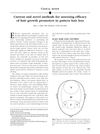 86 citations
,
February 2003 in “Journal of The American Academy of Dermatology”
86 citations
,
February 2003 in “Journal of The American Academy of Dermatology” This article discusses various mechanisms for promoting hair growth in pattern hair loss and highlights the challenge of balancing short-term measurable results in trials with the need for long-term efficacy data.
12 citations
,
January 2003 in “PubMed” This study reported that Diane-35 treatment over 6-9 months reduced hair loss, hair thinning, and seborrhoea in women with androgenetic alopecia.
 108 citations
,
January 2003 in “Fertility and Sterility”
108 citations
,
January 2003 in “Fertility and Sterility” This study found that flutamide at 250 mg daily modestly improved hair thinning in premenopausal women with hyperandrogenic alopecia over one year, while cyproterone acetate and finasteride were not effective.
 92 citations
,
October 2002 in “Journal of The American Academy of Dermatology”
92 citations
,
October 2002 in “Journal of The American Academy of Dermatology” This study reports that oral finasteride improved or stabilized hair loss in women with hyperandrogenism but not in postmenopausal women with female pattern hair loss.
 31 citations
,
October 2002 in “Dermatologic Surgery”
31 citations
,
October 2002 in “Dermatologic Surgery” This article reviews expert opinions on combining pharmacologic treatments like minoxidil with hair transplantation, reporting improved hair density and regrowth in patients with partially functioning follicles.
 51 citations
,
October 2002 in “British Journal of Dermatology”
51 citations
,
October 2002 in “British Journal of Dermatology” Finasteride increases hair density in female androgenetic alopecia, but individual results may vary.
46 citations
,
September 2002 in “Journal of the European Academy of Dermatology and Venereology” In this study, depression was more common among women with androgenetic alopecia, while men showed higher levels of anxiety, aggressiveness, and a lack of adherence to treatment.
 162 citations
,
August 2002 in “Survey of Ophthalmology”
162 citations
,
August 2002 in “Survey of Ophthalmology” This study found that latanoprost induces significant growth and pigmentation of lashes and ancillary hairs, with effects mirroring both brief and chronic treatments observed in patients and animal models.
 80 citations
,
August 2002 in “Journal of Dermatology”
80 citations
,
August 2002 in “Journal of Dermatology” This study found that combining oral finasteride with topical minoxidil resulted in the greatest improvement in hair growth for male patients with androgenetic alopecia, compared to using any single treatment.
 86 citations
,
July 2002 in “Clinical and Experimental Dermatology”
86 citations
,
July 2002 in “Clinical and Experimental Dermatology” This review discusses female pattern hair loss, emphasizing its complex causes and the limited treatment options available, and reports no new clinical results.
 149 citations
,
June 2002 in “British Journal of Dermatology”
149 citations
,
June 2002 in “British Journal of Dermatology” Minoxidil works better for female hair loss, but cyproterone reduces scalp oiliness and causes menstrual issues.
 33 citations
,
January 2002
33 citations
,
January 2002 This study found that daily topical application of 500 microg/ml latanoprost led to moderate to marked hair regrowth in a macaque model of androgenetic alopecia.
 226 citations
,
September 2001 in “Journal of The American Academy of Dermatology”
226 citations
,
September 2001 in “Journal of The American Academy of Dermatology” Hair loss in women is genetic, diagnosed by examination and biopsy, and treated with minoxidil, finasteride, or transplantation.
 17 citations
,
August 2001 in “Australasian journal of dermatology”
17 citations
,
August 2001 in “Australasian journal of dermatology” This case report describes a 50-year-old woman who developed drug-induced hepatitis after using spironolactone for androgenetic alopecia, with symptoms resolving upon discontinuation.
 77 citations
,
March 2001 in “Clinics in Dermatology”
77 citations
,
March 2001 in “Clinics in Dermatology” This article discusses treatment approaches for female pattern hair loss and concludes that available medical treatments are effective in reversing or stabilizing the condition in most cases of mild-to-moderate severity.
 234 citations
,
February 2001 in “British Journal of Dermatology”
234 citations
,
February 2001 in “British Journal of Dermatology” FPHL affects hair density and diameter, causing visible hair loss in older women.
 89 citations
,
January 2001 in “Dermatologic Surgery”
89 citations
,
January 2001 in “Dermatologic Surgery” Hair loss in women is common, starts in late 20s, and affects 30% of women over 50.
 239 citations
,
November 2000 in “Journal of The American Academy of Dermatology”
239 citations
,
November 2000 in “Journal of The American Academy of Dermatology” In this study, finasteride 1 mg/day for 12 months did not improve hair growth or slow hair thinning in postmenopausal women with androgenetic alopecia compared to placebo.
 145 citations
,
December 1999 in “Journal of Investigative Dermatology Symposium Proceedings”
145 citations
,
December 1999 in “Journal of Investigative Dermatology Symposium Proceedings” Finasteride 1mg helps reverse hair miniaturization in men and postmenopausal women.
 115 citations
,
November 1999 in “Journal of The American Academy of Dermatology”
115 citations
,
November 1999 in “Journal of The American Academy of Dermatology” In this study, men using 2% and 5% minoxidil solutions experienced a significant increase in hair weight for 96 weeks compared to placebo, with effects diminishing after treatment cessation.
 370 citations
,
September 1999 in “The New England Journal of Medicine”
370 citations
,
September 1999 in “The New England Journal of Medicine” This article discusses the treatment of androgenetic alopecia and alopecia areata with finasteride and minoxidil but reports no new clinical results.
110 citations
,
September 1999 in “British Journal of Dermatology” This case report describes a young woman with hypopituitarism who experienced hair loss typical of female androgenetic alopecia without detectable androgens, suggesting this hair loss pattern may not always be androgen dependent.
 187 citations
,
June 1999 in “Journal of The American Academy of Dermatology”
187 citations
,
June 1999 in “Journal of The American Academy of Dermatology” This study reported that finasteride 1 mg/day significantly increased hair growth and slowed hair loss in men with frontal scalp hair thinning over one year, and these benefits continued or improved in the second year.
 581 citations
,
October 1998 in “Journal of The American Academy of Dermatology”
581 citations
,
October 1998 in “Journal of The American Academy of Dermatology” In male pattern hair loss, this study found that finasteride 1 mg daily significantly slowed hair loss and increased hair growth over two years compared to placebo.
 54 citations
,
May 1998 in “Urology”
54 citations
,
May 1998 in “Urology” This study demonstrates that patients with benign prostatic hyperplasia have a higher severity and frequency of male pattern baldness compared to a control group.
 92 citations
,
January 1998 in “Dermatology”
92 citations
,
January 1998 in “Dermatology” This study found that 2% ketoconazole shampoo improved hair density and anagen follicle proportion in androgenic alopecia similarly to minoxidil treatment, suggesting a potential role for Malassezia in inflammation.
 20 citations
,
December 1997 in “Clinical Endocrinology”
20 citations
,
December 1997 in “Clinical Endocrinology” This article discusses the potential beneficial effect of spironolactone on androgenic alopecia but provides no new clinical findings.
 416 citations
,
September 1997 in “Journal of Investigative Dermatology”
416 citations
,
September 1997 in “Journal of Investigative Dermatology” People with hair loss have more androgen receptors and enzymes in certain follicles, with men and women showing different patterns.
22 citations
,
January 1996 in “Archives of Dermatological Research”  58 citations
,
October 1993 in “International Journal of Dermatology”
58 citations
,
October 1993 in “International Journal of Dermatology” This study found that 2% topical minoxidil solution was significantly more effective than placebo in promoting new hair growth in women with androgenetic alopecia.
 222 citations
,
October 1993 in “Journal of The American Academy of Dermatology”
222 citations
,
October 1993 in “Journal of The American Academy of Dermatology” This study found that androgenetic alopecia causes significant psychological distress, particularly in women, who exhibit a more negative body image and less adaptive functioning compared to controls.
 43 citations
,
November 1992 in “International Journal of Dermatology”
43 citations
,
November 1992 in “International Journal of Dermatology” This study found that minoxidil 2% increased nonvellus hair counts in women with female androgenetic alopecia without causing serious side effects, compared to a placebo.
 83 citations
,
April 1992 in “Clinical Endocrinology”
83 citations
,
April 1992 in “Clinical Endocrinology” This study found that treatment with cyproterone acetate and ethinyl oestradiol increased hair density in women with diffuse androgen-dependent alopecia, particularly when serum ferritin levels were above 40 μg/l.
 101 citations
,
January 1985 in “British Journal of Dermatology”
101 citations
,
January 1985 in “British Journal of Dermatology” This article discusses oral spironolactone therapy for female patients with acne, hirsutism, or androgenic alopecia and reports no new clinical results.
 95 citations
,
December 1980 in “The New England Journal of Medicine”
95 citations
,
December 1980 in “The New England Journal of Medicine” Minoxidil helped bald patient regrow hair.
 666 citations
,
September 1977 in “British Journal of Dermatology”
666 citations
,
September 1977 in “British Journal of Dermatology” This article presents a classification system for stages of female-pattern androgenetic alopecia to aid early diagnosis and mentions existing systems for rare male-pattern cases, but reports no new clinical results.