 6 citations
,
February 2014 in “Experimental Dermatology”
6 citations
,
February 2014 in “Experimental Dermatology” This review discusses the potential for cellular hair regeneration by building on foundational rodent studies and emphasizes the need for protocols to enhance the inductive properties of human dermal papilla cells.
 99 citations
,
January 2014 in “Nature communications”
99 citations
,
January 2014 in “Nature communications” In this study, researchers developed a method to differentiate human iPSCs into cells that can generate all lineages of hair follicles, potentially aiding treatments for hair loss and skin disorders.
20 citations
,
December 2013 in “PLoS ONE” This study found that β1 integrin-mediated signaling is crucial for the survival, adhesion, and migration of epithelial progenitor cells in human scalp hair follicles, with varying responses observed among cell subpopulations.
 135 citations
,
December 2013 in “Seminars in Cell & Developmental Biology”
135 citations
,
December 2013 in “Seminars in Cell & Developmental Biology” This review examines the literature on the molecular and cellular makeup of the hair follicle niche and how it influences stem cell behavior during hair regeneration, but does not provide new experimental results.
 24 citations
,
November 2013 in “Trends in pharmacological sciences”
24 citations
,
November 2013 in “Trends in pharmacological sciences” This article describes a potential novel approach to reduce chemotherapy-induced hair loss by enhancing the expression of specific transporters in hair follicles, but reports no clinical results.
394 citations
,
October 2013 in “Nature”  85 citations
,
September 2013 in “International Journal of Molecular Sciences”
85 citations
,
September 2013 in “International Journal of Molecular Sciences” This review evaluates existing research on Keratin 15 to assess its validity as a marker for epidermal stem cells, reporting no new results.
220 citations
,
June 2013 in “The Journal of Pathology” This study found that immune privilege collapse in the hair follicle bulge and associated immune responses may contribute significantly to the pathogenesis of lichen planopilaris, suggesting a potential autoimmune basis for the disease.
97 citations
,
June 2013 in “Journal of Dermatological Science” This review discusses the role of the EGF receptor/ligand system in skin homeostasis and its implications for keratinocyte stem cells and reports no new clinical results.
 52 citations
,
April 2013 in “Developmental Cell”
52 citations
,
April 2013 in “Developmental Cell” This study found that Brg1, a chromatin-remodeling enzyme, plays a critical role in hair regeneration and early epidermal repair by regulating bulge stem cells through a Brg1-Shh interaction.
122 citations
,
March 2013 in “Expert opinion on drug delivery” This review summarizes drug delivery strategies to hair follicles, highlighting physicochemical factors affecting penetration and the use of stimuli-responsive particulate carriers, but reports no new clinical findings.
74 citations
,
March 2013 in “Development” This study found that Hopx labels a long-lived progenitor population in hair follicles, which contributes to hair follicle stem cell homeostasis and has an alternative origin from previously thought progenitors.
 33 citations
,
March 2013 in “Journal of Investigative Dermatology”
33 citations
,
March 2013 in “Journal of Investigative Dermatology” Human hair follicle stem cells show signs of low oxygen levels, which may be important for hair growth and preventing baldness.
 218 citations
,
January 2013 in “The Lancet Oncology”
218 citations
,
January 2013 in “The Lancet Oncology” This review discusses the pathobiology of chemotherapy-induced alopecia and highlights challenges in managing it, reporting no new clinical results and emphasizing the need for well-designed preclinical models to develop effective treatments.
176 citations
,
January 2013 in “Proceedings of the National Academy of Sciences” This study reveals an antagonistic competition between BMP and Wnt signaling within stem cells, influencing their fate towards hair germ characteristics based on the BMP/Wnt activity ratio.
 11 citations
,
January 2013 in “Methods in molecular biology”
11 citations
,
January 2013 in “Methods in molecular biology” This study describes a method for labeling and tracking hair follicle stem cells in mouse skin using a Cre/lox recombination system with tamoxifen, providing insights into stem cell behavior and contribution to tissue regeneration.
 150 citations
,
December 2012 in “EMBO Reports”
150 citations
,
December 2012 in “EMBO Reports” This review explores the mechanisms of adult stem cell self-renewal, using skin as a model, and reports no new results but raises important unanswered questions in the field.
75 citations
,
October 2012 in “Journal of Investigative Dermatology” This study developed an animal model that recreates alopecia areata by injecting healthy human skin grafts in immunocompromised mice with peripheral blood mononuclear cells enriched for NKG2D+ and CD56+ cells.
 156 citations
,
October 2012 in “Seminars in Cell & Developmental Biology”
156 citations
,
October 2012 in “Seminars in Cell & Developmental Biology” This study found that hair follicle stem cells initially contribute to wound re-epithelialization, but long-lasting epidermal cells are primarily derived from a stem cell population in the isthmus portion of hair follicles.
 52 citations
,
October 2012 in “Journal of Dermatological Science”
52 citations
,
October 2012 in “Journal of Dermatological Science” This review presents updated tables of mouse mutants with hair growth abnormalities to aid in understanding the molecular mechanisms of human hair disorders, but reports no new clinical results.
 300 citations
,
August 2012 in “Seminars in Cell & Developmental Biology”
300 citations
,
August 2012 in “Seminars in Cell & Developmental Biology” This review discusses mesenchymal–epithelial interactions in hair follicle development and cycling, highlighting recent insights without reporting new experimental results.
161 citations
,
August 2012 in “Seminars in cell & developmental biology” This review discusses the molecular mechanisms involved in hair follicle development and regeneration, highlighting findings from mouse genetic studies, and reports no new experimental results.
14 citations
,
June 2012 in “Stem Cells” This study found that depletion of TACE in mouse hair follicles led to impaired stem cell maintenance and hair loss, implicating TACE and EGFR signaling in hair follicle stem cell homeostasis.
158 citations
,
February 2012 in “Journal of Investigative Dermatology” FGF18 helps keep hair in its resting phase, affecting hair growth cycles.
 254 citations
,
January 2012 in “Nature Reviews Molecular Cell Biology”
254 citations
,
January 2012 in “Nature Reviews Molecular Cell Biology” This review discusses the role of stem cell progeny as integral components of stem cell niches, offering feedback that may influence different stem cell systems' microenvironments, but it presents no new research findings.
 21 citations
,
November 2011 in “The journal of investigative dermatology/Journal of investigative dermatology”
21 citations
,
November 2011 in “The journal of investigative dermatology/Journal of investigative dermatology” This study found that telogen, a resting phase of the hair follicle cycle, is characterized by dynamic gene expression, including enhanced cholesterol metabolism and immune signaling, suggesting it is an active regulatory phase despite its quiescent appearance.
 191 citations
,
September 2011 in “Cell stem cell”
191 citations
,
September 2011 in “Cell stem cell” This study found that polycomb-group-mediated repression plays a key role in regulating hair follicle stem cell states and lineage progression by distinct mechanisms in adult mouse skin.
 499 citations
,
September 2011 in “Cell”
499 citations
,
September 2011 in “Cell” This study found that intradermal adipocyte lineage cells in mice are necessary and sufficient to activate follicular stem cells, highlighting their role in regulating skin stem cell activity.
 61 citations
,
July 2011 in “PLOS ONE”
61 citations
,
July 2011 in “PLOS ONE” This study provides the first direct evidence that spermidine can stimulate hair growth and modulate human epithelial stem cell biology in cultured human hair follicles.
 396 citations
,
May 2011 in “Cell stem cell”
396 citations
,
May 2011 in “Cell stem cell” This study found that Shh from neurons signals to Gli1-expressing cells in the hair follicle, cultivating a niche where these bulge cells can potentially transform into epidermal stem cells in wound healing.
 240 citations
,
April 2011 in “Pigment Cell & Melanoma Research”
240 citations
,
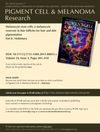
April 2011 in “Pigment Cell & Melanoma Research” This review discusses the identification and characteristics of melanocyte stem cells, emphasizing their role in hair pigmentation, greying, and skin repigmentation, but reports no new research findings.
 235 citations
,
January 2011 in “Journal of Clinical Investigation”
235 citations
,
January 2011 in “Journal of Clinical Investigation” This study found that androgenetic alopecia may involve a defect in the conversion of hair follicle stem cells to progenitor cells, as demonstrated by a reduced presence of progenitor cells in bald scalp samples.
 20 citations
,
December 2010 in “JEADV. Journal of the European Academy of Dermatology and Venereology/Journal of the European Academy of Dermatology and Venereology”
20 citations
,
December 2010 in “JEADV. Journal of the European Academy of Dermatology and Venereology/Journal of the European Academy of Dermatology and Venereology” This study found that selective downregulation of CD200 in the bulge area might contribute to unusual bulge involvement in a subset of alopecia areata cases.
 51 citations
,
November 2010 in “Dermatologic Surgery”
51 citations
,
November 2010 in “Dermatologic Surgery” This study measured the lengths and depths of different portions of occipital scalp hair follicles and suggested cutting below 1 mm for hair regeneration procedures to avoid damaging the bulge zone.
 150 citations
,
October 2010 in “The American Journal of Pathology”
150 citations
,
October 2010 in “The American Journal of Pathology” This review discusses the pathogenesis and challenges in treating primary cicatricial alopecia, highlighting the need to understand immune protection collapse in hair follicle stem cells; it reports no new clinical results.
42 citations
,
July 2010 in “European Journal of Cell Biology” This study found that thyroid hormones T3 and T4 enhance keratin 15 promoter activity and stimulate CD200 expression in epithelial stem cells from human scalp hair follicles, affecting their growth and differentiation.
 28 citations
,
March 2010 in “Histochemistry and Cell Biology”
28 citations
,
March 2010 in “Histochemistry and Cell Biology” This study identified specific markers that can distinguish between stem cells in different regions of human scalp hair follicles, offering potential strategies for cell sorting and purification based on these markers.
 64 citations
,
January 2010 in “The FASEB Journal”
64 citations
,
January 2010 in “The FASEB Journal” This study found that prolactin is a key regulator of keratin expression in human hair follicles, enhancing specific keratin types and influencing epithelial stem cell-associated keratins.
 62 citations
,
November 2009 in “Aging Cell”
62 citations
,
November 2009 in “Aging Cell” Hedgehog signaling helps keep hair follicle stem cells the same in both young and old human skin.
43 citations
,
September 2009 in “Stem Cells” This study reported that GFP labeling driven by the K15 promoter enables visualization and selection of stem cells in adult human scalp hair follicles for further analysis and manipulation.
132 citations
,
September 2009 in “Experimental Dermatology” This study introduced a new classification system for distinguishing between anagen VI and early catagen stages in human hair follicle organ culture, using it to confirm eflornithine's ability to induce premature catagen.
503 citations
,
May 2009 in “Cell stem cell” This study suggests that Lrig1-positive cells form a previously unknown reservoir of interfollicular epidermal stem cells in adult mouse skin, influencing epidermal proliferation and hair follicle development.
6 citations
,
February 2009 in “Journal of Investigative Dermatology”  759 citations
,
February 2009 in “Current Biology”
759 citations
,
February 2009 in “Current Biology” This review summarizes fundamental concepts and recent advancements in hair follicle biology, including insights from mouse models into broader molecular and cellular processes relevant to regeneration and development.
 54 citations
,
January 2009 in “British Journal of Dermatology”
54 citations
,
January 2009 in “British Journal of Dermatology” This study found that in scarring alopecia, stem cells are differentially localized, suggesting that both inner and outer root sheath stem cells, rather than just follicular bulge stem cells, are involved.
 835 citations
,
October 2008 in “Nature Genetics”
835 citations
,
October 2008 in “Nature Genetics” Lgr5 is a marker for active, long-lasting stem cells in mouse hair follicles.
 120 citations
,
August 2008 in “The journal of investigative dermatology/Journal of investigative dermatology”
120 citations
,
August 2008 in “The journal of investigative dermatology/Journal of investigative dermatology” This study found that C8/144B antibody exclusively binds to the hair follicle bulge and not the epidermal stratum basale, with cytokeratin 19 serving as a key marker of certain basal keratinocytes that decrease with age.
415 citations
,
January 2008 in “Cell” NFATc1 controls hair stem cell activity, affecting hair growth and could be a target for hair loss treatments.
170 citations
,
November 2007 in “The journal of investigative dermatology/Journal of investigative dermatology” This study found that in the absence of hair follicles, cutaneous wounds in mice showed delayed reepithelialization but eventually achieved normal wound closure after expanding the activated epidermis region.
 159 citations
,
July 2006 in “Endocrine Reviews”
159 citations
,
July 2006 in “Endocrine Reviews” This article discusses the influence of estrogens on hair follicle growth and metabolism, suggesting a significant role alongside androgens in hair growth control but reports no new clinical results.
207 citations
,
July 2006 in “Development” This study identified a novel MTS24-positive murine keratinocyte population with increased colony-forming ability, suggesting these cells may serve as a new reservoir of proliferative progenitor or stem cells in hair follicles.
550 citations
,
December 2005 in “The Journal of clinical investigation/The journal of clinical investigation” This study found that bulge cells marked by CD200+ in human hair follicles show high colony-forming efficiency, suggesting successful enrichment of keratinocyte stem cells.
21 citations
,
June 2004 in “Experimental Dermatology” This study found that Ber-EP4 immunoreactivity is present in specific areas of hair follicles across different stages of the hair cycle, particularly in the secondary hair germ, but not in mature anagen follicles.
387 citations
,
November 2003 in “Journal of Investigative Dermatology” The K15 promoter effectively targets stem cells in the hair follicle bulge.
561 citations
,
April 2003 in “Journal of Investigative Dermatology” CD34 is a marker for isolating stem-like cells in mouse hair follicles.
 96 citations
,
October 2000 in “The FASEB Journal”
96 citations
,
October 2000 in “The FASEB Journal” In this study, researchers found that p75 neurotrophin receptor signaling affects apoptosis during hair follicle regression in mice, and altering its activity might help manage disorders involving early catagen entry.
441 citations
,
May 1996 in “Journal of Cell Science” This study found that keratin 19 may be a marker for skin stem cells, helping to characterize these cells in different conditions and potentially explaining variations in healing rates between children and adults.
385 citations
,
November 1990 in “Journal of Cell Science” This study successfully grew and maintained human hair follicles in vitro, noting that TGF-β1 negatively affects growth, while EGF replicates hair-removal effects seen in animals.