 32 citations
,
March 2013 in “Journal of Pharmaceutical Sciences”
32 citations
,
March 2013 in “Journal of Pharmaceutical Sciences” This study observed that iontophoresis significantly improved the delivery of minoxidil sulfate to hair follicles compared to passive methods, suggesting potential benefits for alopecia treatment.
 37 citations
,
December 2024 in “Theranostics”
37 citations
,
December 2024 in “Theranostics” In this study, a newly developed nanoparticle-loaded hydrogel wound dressing demonstrated significant antibacterial, antioxidant, anti-inflammatory, and proangiogenic activities, effectively reducing pain and promoting healing in a murine burn wound model while preventing infection by *Staphylococcus aureus*.
December 2025 in “Regenerative Biomaterials” In this study, researchers developed a responsive bilayer hydrogel for diabetic wounds that delivers drugs and oxygen in sync with healing stages, achieving a 99.1% wound closure rate in 14 days by integrating anti-inflammatory, antibacterial, and anti-fouling functions.
 1 citations
,
January 2013 in “Archives of Aesthetic Plastic Surgery”
1 citations
,
January 2013 in “Archives of Aesthetic Plastic Surgery” This study found that combining liposuction with diode laser ablation was effective in treating axillary osmidrosis, with high patient satisfaction and no significant complications reported over a 10-month follow-up period.
 49 citations
,
April 2003 in “Biomaterials”
49 citations
,
April 2003 in “Biomaterials” In this study, BS and BO combined showed a synergistic effect in enhancing wound healing in rat skin lesions compared to using either alone or Flamazine®.
 6 citations
,
January 2012 in “Hair transplant forum international”
6 citations
,
January 2012 in “Hair transplant forum international” This article discusses various holding solutions for hair transplant grafts and reports no new research findings; the authors emphasize the need for comparative studies.
 44 citations
,
March 2016 in “Frontiers in cellular neuroscience”
44 citations
,
March 2016 in “Frontiers in cellular neuroscience” In this study using zebrafish, four bisbenzylisoquinoline derivatives were found to protect hair cells from aminoglycoside-induced damage without reducing antibiotic efficacy, potentially leading to therapies for patients undergoing such treatments.
August 2025 in “Saudi Pharmaceutical Journal” This study developed a new suspended ointment formulation containing neomycin sulfate and triamcinolone acetonide, which showed promise for treating neurodermatitis and chronic eczema by ensuring stable composition, effective skin penetration, and no skin irritation.
 June 2020 in “International journal of research in dermatology”
 This study found that oral intake of choline-stabilized orthosilicic acid (ch-OSA®) significantly improved hair, skin, and nail health in the Indian population, with no reported side effects.
August 2025 in “Applied Sciences” This study found that peroxide-rich plasma-activated water caused minimal morphological damage to hair, while nitrate-rich plasma-activated water induced significant damage, especially in porous hair types.
 October 2023 in “Journal of Drug Delivery and Therapeutics”
 This study evaluated niosome-based gels for delivering salicylic acid topically to treat acne vulgaris and found that the formulation SANG5, using Carbopol 940 and nutmeg oil, demonstrated the best drug release profile.
 1 citations
,
September 2023 in “International Journal of Biological Macromolecules”
1 citations
,
September 2023 in “International Journal of Biological Macromolecules” This study found that a novel in-situ crosslinked self-healing hydrogel made from oxidized Bletilla striata polysaccharide and cationic gelatin enhanced wound healing and showed strong hemostatic performance in animal models, suggesting its potential as an effective wound dressing for skin trauma.
 October 2025 in “International Wound Journal”
 In a study using a rat model of hypertrophic scars, researchers found that gamma-irradiated human amniotic fluid improved wound healing, collagen remodelling, immune response, and scar characteristics more effectively than saline or non-irradiated amniotic fluid, indicating its potential for clinical applications in scar management.
 November 2022 in “International journal of biology, pharmacy and allied sciences”
 In this study, the researchers formulated an herbal shampoo and found it exhibited excellent cleansing properties and foam stability, comparable to commercial shampoos, suggesting it as a safe and cost-effective alternative to marketed formulations.

Minoxidil sulfate, delivered through iontophoresis, can be used to treat hair loss.
63 citations
,
June 2023 in “Journal of Nanobiotechnology” In this study, researchers developed a 3D chitosan/polyvinyl alcohol-tannic acid nanofiber sponge that demonstrated effective hemostatic, antibacterial, and antioxidant properties without antibiotics, accelerated wound healing in vivo, and showed high biocompatibility with L929 cells, highlighting its potential as a wound dressing for clinical use.
 January 2024 in “Open Journal of Veterinary Medicine”
 In this study on dogs with yeast imbalances and dermatological signs, a protocol using chlorhexidine and Ophytrium products significantly reduced Malassezia pachydermatis counts and improved pruritus and irritation scores over 21 days, earning positive assessments from veterinarians and owners in most cases.
January 2022 in “Physics and Chemistry of Liquids” This study investigated the solubility of minoxidil in various solvent mixtures and applied multiple models to understand solute-solvent interactions and energy dynamics.
29 citations
,
December 1998 in “European Respiratory Journal” This study found that exposure to hair bleach aerosols containing persulphates and hydrogen peroxide induced airway hyperresponsiveness to acetylcholine in rabbits.
 1 citations
,
July 2022 in “Journal of Drug Delivery Science and Technology”
1 citations
,
July 2022 in “Journal of Drug Delivery Science and Technology” This study found that Spironolactone-loaded ethosomal gels provided superior skin permeation and deposition compared to niosomal gels in rabbit skin, suggesting that ethosomal gels could be a promising formulation for further clinical studies on treating androgenic alopecia.
December 2025 in “Brazilian Journal of Chemical Engineering” August 2015 in “아시안뷰티화장품학술지” This study found that ultrasonic (ethanol) extracts of Salvia miltiorrhiza bunge and Scutellaria baicalensis were most effective for cell proliferation, while ethanol and ultrasonic waves (water) methods had high antioxidant activity, suggesting their potential in functional cosmetics.
 1 citations
,
February 2025 in “Notulae Scientia Biologicae”
1 citations
,
February 2025 in “Notulae Scientia Biologicae” In this study, researchers developed an in-situ gel formulation of antibacterial Levofloxacin for the eye, which showed prolonged drug release, increased residence time, and effective antibacterial action, suggesting it may be a safe and effective ocular delivery system for antibiotics.
24 citations
,
September 2020 in “Pharmaceutics” In this study, solid lipid microparticles loaded with lidocaine hydrochloride were developed to effectively deliver pain relief and antimicrobial benefits for wound management, demonstrated by testing with bioengineered skin substitutes and showing effectiveness against common wound-infecting bacteria.
 February 2024 in “Journal of Molecular Structure”
 In this study, researchers developed a supramolecular hydrogel combining minoxidil and salicylic acid, finding that it accelerates hair growth and enhances hair follicle regeneration in vivo, suggesting its potential as an effective treatment for alopecia.
August 2015 in “대한피부미용학회지” This study observed that zinc sulfate improved hair growth in a mouse model of alopecia, suggesting potential as a therapeutic agent, though less effective than minoxidil.
 January 2023 in “Zenodo (CERN European Organization for Nuclear Research)”
 This study reported that olive oil applications on the scalp may regenerate hair loss linked to SARS CoV-2 infection and vaccination, based on observations in two individuals.
 57 citations
,
March 2024 in “Nano-Micro Letters”
57 citations
,
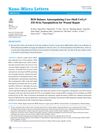
March 2024 in “Nano-Micro Letters” In this study, researchers created a core-shell nanozyme, CeO2@ZIF-8/Au, which autonomously regulates ROS levels to efficiently eliminate bacteria, reduce inflammation, and promote wound healing by balancing ROS generation and scavenging in response to environmental conditions.
This study found that niosomal aminexil was more clinically effective for hair growth than conventional aminexil solutions, and that niosomes facilitated aminexil penetration through rat skin without propylene glycol.
 48 citations
,
March 2022 in “Nano Letters”
48 citations
,
March 2022 in “Nano Letters” This study suggests that sericin microneedles with antibacterial and directional traction functionalities may enhance infected wound healing by improving skin repair and inhibiting bacterial growth, indicating potential for clinical application.