 28 citations
,
July 2015 in “American Journal of Clinical Dermatology”
28 citations
,
July 2015 in “American Journal of Clinical Dermatology” This study found a higher prevalence of metabolic syndrome in patients with lichen planus, especially those with mucosal involvement, which is associated with increased cardiovascular and diabetes risk.
 1 citations
,
October 2008 in “Expert Review of Dermatology”
1 citations
,
October 2008 in “Expert Review of Dermatology” This review discusses frontal fibrosing alopecia, noting its frequent misdiagnosis and highlighting the need for larger studies to better understand its epidemiology, causes, and treatment options; it reports no new clinical findings.
13 citations
,
November 2005 in “Endocrinology” This study explored the secretion and cellular localization of different forms of follistatin and FST-like-3, revealing variable secretion kinetics and possible intracellular roles, particularly for nuclear FSTL3.
 13 citations
,
February 2018 in “Bio-medical Materials and Engineering”
13 citations
,
February 2018 in “Bio-medical Materials and Engineering” This study demonstrated that minoxidil-encapsulated PLLGA nanoparticles significantly increased minoxidil delivery to hair follicles compared to a minoxidil aqueous solution in mice.
 July 2020 in “CRS 2020 Virtual Annual Meeting”
 This study found that the newly developed microarray patches for intradermal delivery of finasteride showed high drug content and significantly improved skin deposition compared to existing methods.
This study demonstrated that Reverse Protein Engineering can decrease the size of Firefly Luciferase from 550 to less than 80 amino acids, but further research is needed to ensure these smaller peptides retain bioluminescent activity.
 5 citations
,
July 2019 in “Photodiagnosis and photodynamic therapy”
5 citations
,
July 2019 in “Photodiagnosis and photodynamic therapy” This study reports a case of a 59-year-old female with refractory follicular mucinosis and diffuse scalp alopecia who achieved complete clinical remission following treatment with a combination of topical tacalcitol and photodynamic therapy.
6 citations
,
February 2020 in “Journal of Cutaneous Pathology” This case report describes the histopathological features of nevus psiloliparus in an 11-year-old girl, noting "shadow" follicular units with loosely arranged collagen and reduced elastic fibers.
 April 2017 in “Journal of Investigative Dermatology”
 This study reports a new optimized protocol for isolating and labeling single cells from neonatal mouse skin, enabling high-quality single cell RNA sequencing for lineage-specific cell analysis.

In this open uncontrolled study on microneedling as an adjuvant therapy for frontal fibrosing alopecia, researchers observed stable frontotemporal recession measurements while patients reported improvements in quality of life and a reduction in inflammatory activity parameters.
 4 citations
,
August 2013 in “Expert Review of Dermatology”
4 citations
,
August 2013 in “Expert Review of Dermatology” This review discusses recent advances in the diagnosis and management of female pattern hair loss but reports no new clinical results.
53 citations
,
April 2016 in “Stem cell research & therapy” This study reports that LL-37 treatment enhances cell proliferation, migration, and secretion of regenerative factors in adipose-derived stem cells, potentially promoting hair growth in vivo.
 March 2025 in “International Journal of Trichology”
 This case report describes the first observed instance of fibrosing alopecia in a pattern distribution in a child, suggesting the condition is not solely androgen dependent.
June 2022 in “Journal of Cosmetic Dermatology” This review discusses minimally invasive procedures for female pattern hair loss and highlights their potential as adjunctive therapies, though the evidence for their efficacy is currently limited.
 April 2016 in “The journal of investigative dermatology/Journal of investigative dermatology”
 In this study, Mpzl3-/- mice developed severe seborrhea-like dermatitis with skin inflammation, indicating MPZL3's role in the skin condition's development, independent of adaptive immunity.
 18 citations
,
July 2016 in “Journal of The American Academy of Dermatology”
18 citations
,
July 2016 in “Journal of The American Academy of Dermatology” This study reported that both primary and secondary cutaneous follicle center lymphomas can present with atypical scalp or forehead lesions, leading to potential misdiagnosis as other skin conditions.
14 citations
,
August 2015 in “Endocrinology” This study describes the development of a monoclonal antibody, 005-C04, which blocks PRLR-mediated signaling, suggesting its potential for furthering understanding of PRLR's role in health and disease.
 November 2022 in “Research Square (Research Square)”
 This study identified key genes and pathways involved in the growth and development of forest musk deer hair follicles, providing insights into molecular regulation and laying groundwork for future research on related diseases.
 1 citations
,
February 2009 in “Clinical and Experimental Dermatology”
1 citations
,
February 2009 in “Clinical and Experimental Dermatology” This study reports an improvement in lymphomatoid papulosis type A in a 52-year-old patient who concurrently used hormone-replacement therapy.
220 citations
,
June 2013 in “The Journal of Pathology” This study found that immune privilege collapse in the hair follicle bulge and associated immune responses may contribute significantly to the pathogenesis of lichen planopilaris, suggesting a potential autoimmune basis for the disease.
1 citations
,
September 2020 in “Journal of dermatology” This study identified a novel mutation and confirmed a previous mutation in the LIPH gene in a woman with autosomal recessive woolly hair, expanding the mutation spectrum for this condition.
9 citations
,
January 2023 in “Journal of Clinical Medicine” This study presents a validated questionnaire, the FFA-QLI, which effectively assesses and differentiates the quality of life impact among patients with frontal fibrosing alopecia, showing greater sensitivity in identifying severe cases than the DLQI.
 September 2023 in “Journal of microbiology and biotechnology”
 This study found that low molecular weight collagen peptide from fish may promote hair growth in both human cells and mice by activating the Wnt/β-catenin signaling pathway.
 9 citations
,
November 2014 in “Journal of feline medicine and surgery”
9 citations
,
November 2014 in “Journal of feline medicine and surgery” This case study suggests lymphocytic mural folliculitis in a cat might be an early sign of pancreatic carcinoma.
1 citations
,
August 2019 in “Chinese Medical Journal” This case report describes a 43-year-old man who developed lupus miliaris disseminatus faciei after discontinuation of cyclosporine A post-stem cell transplantation, successfully treated with oral isotretinoin and topical tacrolimus.
14 citations
,
August 2021 in “Journal of Pharmaceutical Sciences” This study found that cholesterol- and phospholipid-free multilamellar niosomes improved skin deposition and targeted deeper hair follicles better than hydrophobic PLGA nanoparticles for transdermal drug delivery.
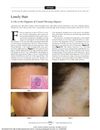 63 citations
,
October 2011 in “Archives of Dermatology”
63 citations
,
October 2011 in “Archives of Dermatology” Isolated long hairs at the original hairline can help diagnose Frontal Fibrosing Alopecia.
 February 2022 in “Research Square (Research Square)”
 This study demonstrated that LGR5 is a marker of hair follicle stem cells across species using a transgenic pig model and noted similarities and differences in expression patterns compared to humans.
2 citations
,
September 2018 in “JAAD case reports” This report describes a rare case of folliculotropic and syringotropic CD8 mycosis fungoides with unusual widespread mucosal involvement.
 1 citations
,
January 2024 in “Nature communications”
1 citations
,
January 2024 in “Nature communications” This study found that stimulating toll-like receptor 5 via mucosal delivery of a flagellin-containing fusion protein effectively extended lifespan and enhanced healthspan in mice, including improved bone density and cognitive capacity.