 13 citations
,
July 2022 in “Frontiers in cell and developmental biology”
13 citations
,
July 2022 in “Frontiers in cell and developmental biology” This review discusses the potential of cell-derived nanovesicles as innovative treatment strategies for hair growth and provides no new clinical results; the authors emphasize the need for further understanding of their mechanisms.
This study demonstrated that the IVL-DrugFluidic® platform is effective for mass-producing finasteride-loaded polymeric microspheres for long-acting injectables, maintaining stable drug release without an initial burst for a month.
 May 2026 in “Medical Sciences”
 This review found that vesicle-based therapies, including mammalian MSC-derived and plant-derived vesicles, consistently promote wound healing in preclinical models of thermal injury and may offer a safer alternative to live cell transplants.
88 citations
,
May 2024 in “Journal of Extracellular Vesicles” This scoping review found that while some small human pilot trials of extracellular vesicles as therapeutics showed promising outcomes, variability in study design and lack of placebo controls limit definitive conclusions about their safety and efficacy.
 September 2022 in “Institutional Repositories DataBase (IRDB)”
 Adipose-derived stem cells can be transformed into hair-forming cells using specific extracellular vesicles, offering potential for hair regeneration therapies.
9 citations
,
May 2025 in “Stem Cell Research & Therapy” This review discusses how extracellular vesicles play a dual role in age-related diseases by contributing to both disease pathogenesis and potential therapeutic strategies through the transfer of specific molecules.
3 citations
,
March 2005 in “Iranian Journal of Pharmaceutical Sciences” This study demonstrated that liquid-state vesicles may reduce the absorption of finasteride through the skin while increasing its concentration and retention in the dermis layer in hamster models.
1 citations
,
May 2024 in “Journal of Dermatological Science” In this study, KC-AD-MSCs were found to increase COL7 deposition and anchoring fibril formation at the dermal-epidermal junction in a RDEB mouse model, suggesting potential for improving skin integrity in recessive dystrophic epidermolysis bullosa patients.
September 2025 in “Acta Biomaterialia” In this study, researchers developed injectable micropore-forming hydrogels that enhance tissue adhesion strength and promote wound healing by allowing better cell infiltration and inducing hair follicle regeneration in skin incision wound models.
September 2025 in “Cell Reports” This study found that a single instance of acute skin stretching can enhance immune surveillance and improve vaccine delivery by increasing skin permeability and promoting immune cell recruitment without causing tissue damage.
26 citations
,
May 1988 in “Pediatric dermatology” This report describes a 15-year-old male with widespread papules due to middermal epithelial cysts containing vellus hairs, also observed in his brother and father.
13 citations
,
September 2021 in “Frontiers in Cell and Developmental Biology” This study found that suspension culture was more effective than hydrogel-based systems for maintaining spheroid morphology and differentiation of human iPSC-derived definitive endoderm cells.
 14 citations
,
September 2015 in “Ophthalmic plastic and reconstructive surgery”
14 citations
,
September 2015 in “Ophthalmic plastic and reconstructive surgery” This case report concludes that the presence of distinctive histiocytic responses in a Cambodian woman's eyelid lipogranulomas suggests surreptitious silicone injections despite her denial of prior procedures.
4 citations
,
December 2022 in “Cells” This study found that fibroblast-engineered nanovesicles significantly enhanced proliferation and migration of dermal papilla cells and increased hair follicle shaft size in ex vivo organ cultures, suggesting potential as a treatment for alopecia.
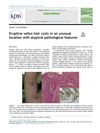 January 2018 in “The Kaohsiung journal of medical sciences”
 This case report describes an atypical presentation of eruptive vellus hair cysts on the elbows, where standard diagnostic techniques were unreliable due to the loss of cystic structural integrity.
This study found that a skin-like structure can be generated in vitro by implanting early passage hair follicle bulb cells into collagen/chitosan porous scaffolds.
January 2011 in “Shiyong kouqiang yixue zazhi” This study found that dermal papilla cells and bulge stem cells can potentially be used to reconstruct hair follicles, as hair follicle-like structures were observed after culturing under a rat's renal capsule.
January 2014 in “Institutional Repositories DataBase (IRDB)” This study found that cell spheres formed from mesenchymal cells in newborn mouse skin showed increased expression of genes associated with hair follicle regeneration, though marker distribution varied and requires further investigation.
 13 citations
,
January 2019 in “Colloids and Surfaces B: Biointerfaces”
13 citations
,
January 2019 in “Colloids and Surfaces B: Biointerfaces” This study found that incorporating a block copolymer significantly alters the size and morphology of niosome drug delivery systems made of non-ionic surfactants and cholesterol, affecting their stability.
September 2025 in “International Journal of Pharmaceutics and Drug Analysis” This study discusses ethosomes, which are lipid-based vesicular carriers that improve drug penetration into the skin due to their high ethanol content, highlighting their benefits in drug delivery despite stability issues like phospholipid oxidation and vesicle fusion during storage.
October 2025 in “Cell Proliferation” In laboratory research, investigators found that apoptotic vesicles from interleukin-10-treated fibroblasts promote wound healing and reduce fibrotic scarring by enhancing mitochondrial function, modulating collagen composition, and inhibiting the Hedgehog signalling pathway, offering potential for regenerative medicine applications.
17 citations
,
January 2016 in “Journal of Drug Delivery” In this study, PEG and keratin scaffolds selectively influenced protein release rates based on charge and size, suggesting their potential for targeted delivery of protein therapeutics.
5 citations
,
October 2020 in “Bioengineering & translational medicine” This study demonstrates the use of microscopy-guided laser ablation to create a highly structured 3D hydrogel-based organotypic skin model with folliculoid structures, potentially useful for studying hair follicle development or bioactive substance screening.
11 citations
,
January 2013 in “Veterinary dermatology” This study found that a bulge stem cell-enriched population from canine hair follicles successfully formed interfollicular epidermis in vitro within two weeks, suggesting potential for regenerative canine skin therapies.
12 citations
,
January 2022 in “Cells” This study found that early passage dermal papilla cell-derived extracellular vesicles, combined with specialized medium, helped adipose-derived stem cells develop dermal papilla-like properties.
January 2026 in “Pharmaceutics” This review discusses the dual role of extracellular vesicles in Alzheimer's disease, highlighting their potential in both exacerbating and alleviating the condition, and emphasizes the need for advanced technologies to enhance diagnosis and treatment.
 November 2023 in “npj regenerative medicine”
 This study found that engineered reconstituted skin can form morphogenetic units that promote tissue patterning and hair regeneration, with certain signaling pathways restoring this ability in adult and fetal cells.
 November 2022 in “Journal of Investigative Dermatology”
 This study demonstrated that hiPSC-derived hair-bearing skin organoids lacked sufficient type VII collagen at the epidermal-dermal junction, indicating a need for further maturation to model certain forms of epidermolysis bullosa effectively.
 62 citations
,
February 2016 in “ACS Applied Materials & Interfaces”
62 citations
,
February 2016 in “ACS Applied Materials & Interfaces” This study found that 3D microtissue models of dermal papilla cells can enhance the ability to induce hair-follicle neogenesis in vivo, offering potential for controlled cell production in follicle regeneration.
March 2007 in “Journal of Plastic Reconstructive & Aesthetic Surgery” A new method was developed to create better skin models for healing and reconstruction.