 August 2025 in “Annals of Medicine”
 This review discusses recent advances in using extracellular vesicles as a potential treatment for alopecia and highlights ongoing challenges in their clinical application and mass production; no new clinical results are reported.
 August 2025 in “International Journal of Nanomedicine”
 This review discusses metal-organic frameworks for treating diabetic infected wounds and related applications, reporting no new clinical results but highlighting challenges like biosafety and production for future research.
July 2025 in “Nano Research” This review highlights the application of microneedle technology as a promising advancement in psoriasis management, focusing on its roles in enhanced transdermal drug delivery and minimally invasive biomarker monitoring, while also discussing current challenges and future research directions.

This review reports that exosome-based therapies, coupled with nanotechnology and AI, show promise in aesthetic medicine, notably in skin rejuvenation and hair restoration, but large-scale trials and clearer regulatory frameworks are needed for effective clinical adoption.
 June 2025 in “IntechOpen eBooks”
 This chapter highlights the potential of exosomes as innovative agents in cosmetic dermatology, noting their ability to promote skin rejuvenation and target issues like wrinkles, photoaging, and hair loss.
June 2025 in “Materials Today Bio” In diabetic mice, this study reported that the multifunctional hydrogel CPGel achieved complete wound closure in 21 days, showing promise in improving chronic wound healing through antibacterial, antioxidative, and tissue regeneration properties.
 July 2024 in “Pharmaceutics”
 In a mouse model of androgenetic alopecia, this study found that a novel hydrogel containing minoxidil-incorporated engineered exosomes (Gel@MNs) enhanced hair regeneration more effectively than conventional minoxidil, increasing hair follicle number and size while reducing skin irritation.
 July 2024 in “Frontiers in Bioengineering and Biotechnology”
 In this mouse study, the researchers found that cryopreserving nanofat at -20°C maintained its viability and regenerative potential, comparable to freshly generated nanofat, supporting its potential for repeated use in regenerative applications.
April 2024 in “Biomolecules” This review summarizes recent findings on the role of mesenchymal stem cell-derived exosomal microRNAs in skin regeneration and rejuvenation, discussing their potential for treating skin damage and aging, and exploring bioengineering methods to enhance therapeutic effects.
February 2024 in “Pharmaceutics” This review discusses the applications and potential of microneedles loaded with extracellular vesicles for tissue regenerative repair and disease diagnosis, but does not report new experimental findings.
 November 2023 in “ACS Omega”
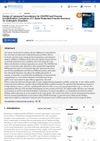
 This study reported that a novel cationic liposome formulation for delivering encapsulated Cas9 protein and sgRNA successfully decreased SRD5α2 mRNA expression by 29.7% in vitro, suggesting a potential alternative treatment option for conditions like prostate cancer and benign prostatic hyperplasia without current drug side effects.
 November 2023 in “Advanced Science”
 A specific hair protein variant increases the spread of breast cancer and is linked to worse survival rates.
 August 2023 in “Bioengineering”
 This systematic review reports that bioprinting technology holds significant potential for improving patient quality of life by enabling personalized medical treatments, reducing organ transplant rejection risks, and accelerating skin tissue regeneration, although many advancements are still at the research stage.
 June 2022 in “Authorea (Authorea)”
 This review discusses various methods for delivering CRISPR/Cas9 for gene editing in vitro and in vivo, highlighting delivery as a major challenge but reports no new experimental results.
August 2026 in “Cell Biomaterials” D-chiral biomaterial scaffolds enhance tissue and hair regeneration by activating the body's immune system.
328 citations
,
November 2020 in “Nature Materials” This study found that D-peptide crosslinked MAP hydrogel accelerated material degradation in vivo but significantly enhanced skin regeneration, suggesting an adaptive immune response can drive regenerative healing even with rapid scaffold breakdown.
January 2026 in “Pharmaceutics” This review reports that biomaterial-based drug delivery systems show promise in overcoming the limitations of traditional therapies for pathological scars by integrating sustained drug release with minimally invasive transdermal technologies, potentially enhancing treatment efficacy for these challenging skin lesions.
January 2025 in “Health engineering.” This study reviews the role of skin stem cells in aging and explores how organoids, as opposed to traditional methods, can advance research into aging skin and regenerative therapies.
1425 citations
,
September 2020 in “Open Biology” This review explores the cellular mechanisms of tissue repair and discusses how advancements in understanding wound pathology could lead to the development of more effective therapies for chronic, non-healing wounds, which are prevalent among individuals with diabetes and aging.
294 citations
,
January 2016 in “Stem Cells International” This review discusses the characteristics, biomaterials, and tissue engineering methods for adipose-derived stem cells in a 3D environment, highlighting their potential in regenerative medicine without presenting new clinical results.
209 citations
,
October 2018 in “Cell Reports” This study found that Lgr5 and Lgr6 stem cells both activated wound-healing genes, but only Lgr5 stem cells changed their identity to contribute to new skin formation during wound repair.
165 citations
,
May 2023 in “Science Advances” In this study, the researchers developed a living microecological hydrogel containing Chlorella and Bacillus subtilis that showed potential in promoting the healing of infected diabetic wounds by providing continuous oxygen delivery and anti-infective properties.
82 citations
,
July 2022 in “Bioengineering & Translational Medicine” This review examines how biochemical and biophysical induction factors influence cell fate in tissue engineering and reports no new experimental results.
81 citations
,
March 2022 in “Frontiers in Bioengineering and Biotechnology” This review discusses advancements and challenges in bioengineered scaffolds for wound healing but presents no new experimental findings, highlighting their potential and need for further development.
48 citations
,
July 2022 in “International Journal of Nanomedicine” This review discusses nanotechnology-based therapies for chronic wound healing and highlights their potential, but it reports no new clinical results.
47 citations
,
August 2024 in “Science Advances” This study introduces a new biomimetic double wound mask designed to promote scarless healing by coordinating multiple biological pathways and providing enhanced protection and nourishment to wounds.
43 citations
,
July 2023 in “Pharmaceuticals” This review explores the effects of caffeine on cancer, cardiovascular, immunological, inflammatory, and neurological diseases, including its use in sports, and discusses advancements in caffeine delivery through novel nanocarrier-based formulations.
38 citations
,
March 2019 in “International Wound Journal” In this study, a new cell-tissue technology using a patient's own skin to create a full-thickness skin autograft successfully treated a chronic wound larger than 200 cm², achieving complete functional skin coverage within 12 weeks and maintaining results at a 6-month follow-up.
 26 citations
,
October 2021 in “Clinical, Cosmetic and Investigational Dermatology”
26 citations
,
October 2021 in “Clinical, Cosmetic and Investigational Dermatology” This review discusses the potential benefits and biological activities of MSC secretome for various skin applications, but it reports no new clinical results.
22 citations
,
March 2021 in “Materials Today Bio” This review discusses recent advances in developmental tissue engineering for regenerating ectodermal appendages like teeth and glands, emphasizing biomaterial selection and cell culture strategies, but reports no new experimental results.