 8 citations
,
January 2021 in “Pharmaceutics”
8 citations
,
January 2021 in “Pharmaceutics” This study found that using nanoporous silica entrapped lipid-drug complexes enhanced the solubility and bioavailability of dutasteride in beagle dogs.
 6 citations
,
May 2018 in “Plant Cell, Tissue and Organ Culture (PCTOC)”
6 citations
,
May 2018 in “Plant Cell, Tissue and Organ Culture (PCTOC)” This study found that adjusting plant growth conditions, such as the use of elicitors like yeast extract and methyl jasmonate, increased wedelolactone production in Eclipta alba cell suspension culture.
 4 citations
,
December 2020 in “Journal of Dermatology”
4 citations
,
December 2020 in “Journal of Dermatology” This study suggests that impaired autophagy may be a potential mechanism contributing to androgenetic alopecia, as observed in miniaturized hair follicles from balding scalps.
 3 citations
,
October 2014 in “Pharmaceutical Development and Technology”
3 citations
,
October 2014 in “Pharmaceutical Development and Technology” This study found that an optimized microemulsion for minoxidil with high solubility, permeation flux, and skin deposition can be achieved with specific low and high levels of certain surfactants and co-solvents.
 2 citations
,
September 2023 in “Scientific reports”
2 citations
,
September 2023 in “Scientific reports” This study reports that zinc oxide or silver nanoparticles capped with vitamin A or E, incorporated into wheat gluten films, showed significant potential in promoting burn wound healing in mice by facilitating wound contraction, re-epithelialization, and collagen deposition, while also exhibiting antioxidant and antibacterial properties.
 October 2025 in “Pakistan journal of urology.”
 This supplementary issue of the Pakistan Journal of Urology contains diverse studies spanning organ donation's significance, surgical techniques, and the comparison of treatments in urology, but it doesn't provide specific research results or detailed findings.
 102 citations
,
July 2007 in “Genes & Development”
102 citations
,
July 2007 in “Genes & Development” This study found that maternal PPARγ is essential for preventing the production of inflammatory lipids in mouse milk, which can otherwise cause inflammation, alopecia, and growth retardation in nursing pups.
 February 2010 in “ePrints Soton (University of Southampton)”
 This research found that androgen bioactivity plays a role in normal female sexual differentiation, suggesting females develop within a significant androgenic environment, with implications for understanding conditions like congenital adrenal hyperplasia.
 1 citations
,
May 2025 in “Discover Chemistry.”
1 citations
,
May 2025 in “Discover Chemistry.” This review highlights that although mangiferin, a polyphenol from the mango tree, faces challenges like low solubility and bioavailability, delivery vehicles such as nanoparticles and complexes have the potential to enhance its therapeutic effectiveness in treating various diseases.
 5 citations
,
September 2012 in “Springer eBooks”
5 citations
,
September 2012 in “Springer eBooks” Nanoparticles can be used to deliver drugs to hair follicles, potentially improving treatments for conditions like acne and alopecia, and could also be used for vaccine delivery and gene therapy.
 59 citations
,
January 2015 in “Nanoscale”
59 citations
,
January 2015 in “Nanoscale” In this study, polymeric micelles containing retinoic acid were found to improve targeted delivery to hair follicle structures in human skin more efficiently than a marketed retinoic acid gel, suggesting potentially safer and more effective acne treatment.
 13 citations
,
September 2024 in “Frontiers in Pharmacology”
13 citations
,
September 2024 in “Frontiers in Pharmacology” This review highlighted the pharmacological potential of Mor, noting its protective effects on the kidneys, liver, bones, nervous system, heart, digestive system, skin, and lungs, as well as its anti-obesity and anti-inflammatory properties, revealing areas for future research.
 13 citations
,
February 2015 in “Journal of Pharmaceutical Sciences”
13 citations
,
February 2015 in “Journal of Pharmaceutical Sciences” This study found that the polymorphic forms I, II, and III of finasteride can be prepared purely, with form III being identical to what was previously referred to as form X.
 12 citations
,
September 2018 in “International Journal of Cosmetic Science”
12 citations
,
September 2018 in “International Journal of Cosmetic Science” This study demonstrated that the biomimetic peptide PTP20 may help preserve hair pigmentation and reduce greying by enhancing melanocyte function and increasing melanin production in human hair follicles.
 3 citations
,
November 2017 in “International Journal of Pharmacy and Pharmaceutical Sciences”
3 citations
,
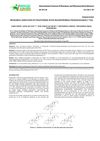
November 2017 in “International Journal of Pharmacy and Pharmaceutical Sciences” This study identified new oxidative derivatives of finasteride, including a newly discovered metabolite, by using the fungus Macrophomina phaseolina.
 May 2023 in “Current Medicinal Chemistry”
 This review highlights the potential of microneedle devices in dermatology for conditions like skin aging and autoimmune skin diseases, emphasizing their ability to facilitate targeted drug delivery by creating temporary skin pathways.
 425 citations
,
January 2021 in “SN Applied Sciences”
425 citations
,
January 2021 in “SN Applied Sciences” This article highlights the versatility and potential of alginate and its derivatives in tissue engineering applications, discussing their properties, modification techniques, and various uses in enhancing tissue healing, bone regeneration, and cell growth.
 211 citations
,
June 2012
211 citations
,
June 2012 This review discusses recent advances in skin penetration mechanisms, specifically focusing on the enhanced understanding of the follicular pathway and its implications for transdermal therapies, immune system targeting, and nanoparticle safety.
 138 citations
,
February 2007 in “European journal of cancer”
138 citations
,
February 2007 in “European journal of cancer” This review discusses the classification, pathogenesis, and management of skin, hair, nail, and mucosal changes due to EGFR inhibitors, emphasizing the importance of informing patients to improve therapy compliance.
 60 citations
,
January 2014 in “Anais Brasileiros De Dermatologia”
60 citations
,
January 2014 in “Anais Brasileiros De Dermatologia” This article discusses the foundational concepts of nanotechnology and its contributions to dermatology and medicine, but does not present new research findings.
 60 citations
,
October 2010 in “Molecular Imaging and Biology”
60 citations
,
October 2010 in “Molecular Imaging and Biology” This study observed that skin pigmentation significantly attenuates bioluminescent signals in C57Bl/6 mice, complicating quantitative optical imaging and requiring consideration in experimental design.
 59 citations
,
October 2012 in “Pharmaceutical Research”
59 citations
,
October 2012 in “Pharmaceutical Research” This study found that nanostructured lipid carriers with more soybean phosphatidylcholine provided better skin retention and follicular targeting for diphencyprone compared to other formulations and controls.
 58 citations
,
February 2016 in “Scientific reports”
58 citations
,
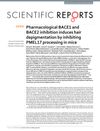
February 2016 in “Scientific reports” This study found that dual inhibition of BACE1 and BACE2 in mice affects melanosome maturation and causes dose-dependent hair depigmentation without altering retinal morphology.
 51 citations
,
September 2020 in “Cell Metabolism”
51 citations
,
September 2020 in “Cell Metabolism” This study highlights that the mammalian target of rapamycin complex 2 (mTORC2)-Akt signaling axis is essential for hair follicle stem cells to return to their niche and regenerate effectively by regulating metabolic pathways.
 36 citations
,
December 2002 in “Experimental dermatology”
36 citations
,
December 2002 in “Experimental dermatology” This study found that procyanidin B-3, a compound isolated from barley extract, may promote hair growth by enhancing hair epithelial cell growth and counteracting TGF-β1's growth-inhibiting effects in vitro and in vivo.
 28 citations
,
September 2019 in “International Journal of Nanomedicine”
28 citations
,
September 2019 in “International Journal of Nanomedicine” This study found that minoxidil nanoparticles increased drug delivery to hair follicles and improved hair growth more effectively in mice than conventional minoxidil formulations.
 27 citations
,
September 2018 in “Medicines”
27 citations
,
September 2018 in “Medicines” This study reported that oleic acid-based nanovesicles improve follicular delivery and reduce side effects of minoxidil compared to traditional MXD lotions.
 14 citations
,
November 2020 in “International Journal of Biological Macromolecules”
14 citations
,
November 2020 in “International Journal of Biological Macromolecules” This study found that Flammulina velutipes polysaccharides-derived scaffolds greatly enhanced wound healing and hair follicle regeneration in a rat model, particularly with the FPS/NaOH variant showing the best results.
 13 citations
,
January 2022 in “Stem cell reviews and reports”
13 citations
,
January 2022 in “Stem cell reviews and reports” This study found that using cultured mesenchymal stem cells from mouse whisker hair follicle outer root sheath in wound healing reduced inflammation, accelerated closure, and resulted in less hypertrophic scarring in mice.
 13 citations
,
September 2021 in “Communications Biology”
13 citations
,
September 2021 in “Communications Biology” This study introduces a five-modal microscopy technique that allows label-free, in vivo observation and quantitative analysis of various wound healing processes.