 2 citations
,
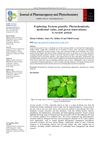
January 2024 in “Journal of Pharmacognosy and Phytochemistry”
2 citations
,
January 2024 in “Journal of Pharmacognosy and Phytochemistry” The study highlights Teak's (Tectona grandis) diverse applications beyond high-quality timber, emphasizing its bioactive compounds' pharmacological potential in cancer treatment and other uses across traditional medicine, cosmetics, and biodiesel production.
4 citations
,
August 2023 in “Journal of Cosmetic Dermatology” Gynostemma pentaphyllum extract may help grow hair and prevent graying.
13 citations
,
August 2020 in “Nutrients” This study found that GS-KG9 and GS-E3D, bioactive ginseng extracts, reduced BBB disruption and neuronal apoptosis in the hippocampus of diabetic rats, suggesting potential therapeutic effects for diabetic patients.
 1 citations
,
July 2017 in “Journal of Pharmacognosy and Phytochemistry”
1 citations
,
July 2017 in “Journal of Pharmacognosy and Phytochemistry” This study identifies various phytochemicals in Thuja orientalis bark, potentially aiding its botanical identification and quality standardization.
 August 2022 in “International journal of research in pharmacy and chemistry”
 This review summarizes the chemical composition and pharmacological properties of Teak (Tectona grandis) but presents no new research findings, emphasizing its use in traditional medicine and therapeutic potentials.
 3 citations
,
January 2017 in “Evidence-based complementary and alternative medicine”
3 citations
,
January 2017 in “Evidence-based complementary and alternative medicine” This study found that Galla chinensis solution significantly improved skin lesions and fungal eradication in dermatophytosis-infected dogs, showing over 85% efficacy in fungal removal after 14 days and outperforming the positive control treatment.
2 citations
,
May 2024 in “Technology and Health Care” In this study, a group taking compound ginseng cicada decoction showed significantly lower relapse rates, severity, and itching related to atopic dermatitis over 3 months compared to a control group, and reported improved quality of life with no significant adverse events.
 April 2025 in “International Journal of Scientific Research in Science and Technology”
 This review explores the therapeutic potential and diverse pharmacological properties of the tree Tectona grandis, highlighting its anti-ulcerogenic, antihyperglycemic, antifungal, and other activities, as well as recent advancements in using its extracts for metal nanoparticle synthesis with antimicrobial applications.
 April 2018 in “The journal of investigative dermatology/Journal of investigative dermatology”
 This study observed that Ginseng and Albizia extracts, when used together, protected human dermal papilla cells from oxidative stress-induced senescence, and inhibited genes that suppress hair growth, indicating their potential in preventing age-related hair density reduction.
November 2025 in “ACS Omega” This study found that compounds from *Tectona grandis* leaves showed moderate inhibition of steroid 5α-reductase, a factor in androgenetic alopecia, and exhibited anti-inflammatory properties by inhibiting nitric oxide and pro-inflammatory cytokines IL-1β and IL-6 in vitro, suggesting potential dual-action benefits for AGA management.
 15 citations
,
August 2017 in “International Journal of Molecular Medicine”
15 citations
,
August 2017 in “International Journal of Molecular Medicine” This study reported that Panax ginseng extract significantly inhibited DKK-1-induced catagen-like changes in human hair follicles by promoting cell proliferation and reducing apoptosis, suggesting it may help mitigate hair loss associated with DKK-1.
44 citations
,
March 2008 in “Journal of Experimental Botany” This study found that during bark regeneration after girdling, immature xylem cells can transdifferentiate into phloem cells, with exogenous indole acetic acid accelerating this process.
1 citations
,
February 2024 in “Preprints.org” This review discusses the pharmacology and potential therapeutic effects of rare ginsenoside compound K on metabolic disorders but presents no new clinical results, highlighting the need for further studies on its bioavailability and toxicity.
 July 2024 in “Science and Culture”
 This comprehensive review reports that Thuja orientalis L. displays several pharmacological properties, including antimicrobial, anti-inflammatory, antioxidant, anticarcinogenic, anthelminthic, and hair growth-promoting effects, emphasizing its potential in modern medicine and the need for further research.
 December 2022 in “Frontiers in Pharmacology”
 This study reported that Tianma Gouteng decoction improved hair follicle regeneration in mice and identified its potential mechanism, primarily involving the Wnt/β-catenin signaling pathway, through a combination of network pharmacology, molecular docking, and experimental validation.

This study found that pectin lyase-modified red ginseng extract (GS-E3D) may promote hair growth by enhancing antioxidant and anti-inflammatory effects, proliferating hair dermal papilla cells, and inhibiting 5α-reductase activity.
 February 2023 in “Journal of Ginseng Research/Journal of ginseng research”
 This review discusses the formation of gintonin LPAs in ginseng during processing and reports no new clinical results; the authors suggest potential benefits against degenerative diseases through LPA receptors.
 August 2019 in “Journal of the American Academy of Dermatology”
 Ginseng and Albizia extracts help prevent hair thinning with age.
April 2023 in “Zenodo (CERN European Organization for Nuclear Research)” This review explores the medicinal potential of gymnosperm plants, such as Platycladus orientalis, Araucaria heterophylla, Cycas revoluta, Thuja occidentalis, and Juniperus virginiana, highlighting their therapeutic significance across various medical practices, including contemporary, folk, and traditional medicine.
4 citations
,
January 2004 This study found that while some extracts from DanGuiBoHyulTangGami-Bang showed potential in inhibiting 5-reductase type Ⅱ and had antioxidant activity, they were not effective in extending the hair growth period.
 41 citations
,
September 2011 in “Journal of Ethnopharmacology”
41 citations
,
September 2011 in “Journal of Ethnopharmacology” This study indicates that Fructus panax ginseng extract may promote hair growth by increasing proliferation in human hair dermal papilla cells and lengthening the anagen phase in mice.
January 2010 in “대한미용학회지” This study found that extracts from Angelica gigas Nakai and Glycyrrhiza uralensis stimulated hair regrowth and follicle development in a shaving mouse model, suggesting potential for hair growth or hair loss prevention in humans.
August 2025 in “International Journal of Biochemistry Research & Review” In this study, G. brevis and M. myristica, alone or together, improved hematological and testicular antioxidant parameters in male rats with finasteride-induced reproductive toxicity, showing potential protective effects against oxidative stress and supporting therapeutic use for related male reproductive disorders.

In this study, researchers analyzed the chemical constituents of male and female Gynostemma longipes plants and different parts like roots and leaves, identifying significant variations in metabolites which could aid in assessing and selecting quality medicinal materials.
 1 citations
,
June 2023 in “Pharmacognosy Research”
1 citations
,
June 2023 in “Pharmacognosy Research” This review highlights the promising therapeutic potential of Bacopa monnieri in treating various health conditions, particularly related to neuropharmacology, but emphasizes the need for further clinical research.
1 citations
,
June 2025 in “Fermentation” This study found that solid-state fermentation using probiotic lactic acid bacteria significantly enhanced the antioxidant properties and bioactive composition of Radix Angelica gigas compared to non-fermented herbs, suggesting a potential method for modernizing traditional herbal medicine.
February 2025 in “Journal of Receptors and Signal Transduction” In this study, computational analysis identified EGCG as the most effective GSK3β inhibitor among tested compounds, suggesting its potential for promoting hair regrowth by interacting with signaling pathways related to hair follicle cycling, although further experimental testing is needed.
16 citations
,
June 2016 in “Innovare Academic Sciences - Innovare Journal of Ayurvedic Sciences” This article reviews historical and traditional uses of the herb Bacopa monnieri, or Brahmi, for enhancing memory and other medicinal benefits, but presents no new research findings.
16 citations
,
August 2022 in “Biogerontology”