 October 2021 in “International Journal of Research in Dermatology”
 This study found that individuals with alopecia areata had significantly lower vitamin D levels compared to healthy controls, and lower vitamin D levels were associated with more severe hair loss.
January 2021 in “İzmir Dr.Behçet Uz çocuk hastanesi dergisi” This study found that children with alopecia areata had significantly lower levels of vitamin D and B12, and higher thyroid-stimulating hormone and free T4 levels compared to healthy children.
 March 2014 in “Journal of The American Academy of Dermatology”
 Vitamin D deficiency is common in temporary hair loss, and stress is often a suspected cause.
 140 citations
,
April 2004 in “The journal of investigative dermatology/Journal of investigative dermatology”
140 citations
,
April 2004 in “The journal of investigative dermatology/Journal of investigative dermatology” This study found that mice lacking the 1αOHase enzyme, which is responsible for producing a key vitamin D metabolite, showed impaired epidermal differentiation and delayed recovery of skin barrier function after disruption.
81 citations
,
March 1985 in “Journal of Clinical Investigation” This study found that measuring 24-OHase induction by 1,25(OH)2D3 in cultured skin fibroblasts is a sensitive test for detecting genetic defects in the 1,25(OH)2D effector pathway.
 40 citations
,
April 2013 in “Dermato-endocrinology”
40 citations
,
April 2013 in “Dermato-endocrinology” In this study, researchers observed vitamin D insufficiency in many patients with Alopecia Areata, suggesting its potential role in managing this autoimmune condition.
18 citations
,
June 2001 in “Journal of Investigative Dermatology” This study found that transfecting keratinocytes with the 1α-OHase gene enhances local production of 1α,25-dihydroxyvitamin D3, suggesting a potential new therapy for skin conditions like psoriasis without causing hypercalcemia or resistance.
 7 citations
,
January 2017 in “Journal of Clinical Biochemistry and Nutrition”
7 citations
,
January 2017 in “Journal of Clinical Biochemistry and Nutrition” This study found that vitamin D was positively associated with serum ferritin levels in Korean women without metabolic syndrome, but this association was not observed in those with metabolic syndrome.
 5 citations
,
January 2020 in “The mental health clinician”
5 citations
,
January 2020 in “The mental health clinician” This case report found that vitamin D3 supplementation may improve hair growth and reduce hair-pulling behavior in patients with trichotillomania, as observed in two female patients over 3 to 4 months.
 January 2020 in “Turkiye Klinikleri Journal of Dermatology”
 This study found that patients with chronic telogen effluvium had significantly lower serum 25-OH vitamin D levels compared to healthy individuals, suggesting a potential link between vitamin D deficiency and this hair loss condition.
 10 citations
,
May 2017 in “PLOS ONE”
10 citations
,
May 2017 in “PLOS ONE” This study found that serum 25-hydroxyvitamin D was inversely associated with serum ferritin levels in Korean men, positively associated in premenopausal women, and not associated in postmenopausal women.
 4 citations
,
April 2020 in “Journal of Cosmetic Dermatology”
4 citations
,
April 2020 in “Journal of Cosmetic Dermatology” This study found that Chinese patients with alopecia areata, female pattern hair loss, and male androgenetic alopecia had significantly lower serum vitamin D levels than healthy individuals.
 April 2025 in “Egyptian Journal of Medical Research”
 This study found that individuals with Telogen Effluvium had significantly lower levels of vitamin D compared to healthy individuals, with a particularly negative correlation observed between disease duration and vitamin D levels in affected patients.
January 2019 in “Egyptian Journal of Dermatology and Venereology /Egyptian Journal of Dermatology and Venerology” This study found that patients with alopecia areata had significantly lower serum 25(OH)D levels, which may be associated with increased disease severity.
845 citations
,
February 2001 in “The Journal of Clinical Endocrinology & Metabolism” This study identified the presence of the enzyme 1 alpha-hydroxylase in various extrarenal tissues, suggesting its potential role in modulating vitamin D function in peripheral tissues.
 11 citations
,
January 2014 in “Egyptian Journal of Dermatology and Venereology”
11 citations
,
January 2014 in “Egyptian Journal of Dermatology and Venereology” This study found that women with female-pattern hair loss had significantly lower serum levels of 25-hydroxyvitamin D compared to healthy controls, but it does not establish causation.
 September 2025 in “Journal of Dhaka Medical College”
 This study found that patients with alopecia areata had significantly lower serum 25-Hydroxy vitamin D levels compared to healthy controls, and observed a significant inverse relationship between vitamin D levels and disease severity.
March 2023 in “Pakistan Journal of Medical and Health Sciences” This study found that premenopausal women with female-pattern hair loss had significantly lower serum vitamin D levels compared to healthy controls, suggesting a potential role of vitamin D deficiency in this condition.
 November 2023 in “Journal of Cosmetic Dermatology”
 This study found that patients with non-scarring alopecia, such as androgenetic alopecia and female pattern hair loss, have lower serum levels of 25-hydroxyvitamin D and a higher incidence of vitamin D deficiency compared to healthy controls.
14 citations
,
January 2013 in “Journal of the Egyptian Women's Dermatologic Society /Journal of the Egyptian Women's Dermatologic Society”  2 citations
,
September 2021
2 citations
,
September 2021 In this study, serum 25-hydroxyvitamin D levels were similar between alopecia areata patients and healthy controls, though a non-significant trend toward higher vitamin D deficiency was observed among the patients.
 2 citations
,
April 2019 in “Acta medica Philippina/Acta Medica Philippina”
2 citations
,
April 2019 in “Acta medica Philippina/Acta Medica Philippina” This study observed that patients with alopecia areata had significantly lower serum 25-hydroxyvitamin D levels than healthy controls, with a trend toward even lower levels in more severe cases.
September 2023 in “Diagnostics” In this study, researchers found a significant relationship between mid-luteal progesterone levels and 25-hydroxy vitamin D levels in infertile patients, suggesting that about 20 ng/mL of vitamin D may be necessary to trigger ovulation or support progesterone secretion.
January 2023 in “International journal of dermatology, venereology and leprosy sciences” In this study, patients with female pattern hair loss had significantly lower serum levels of vitamin D and ferritin, which could be risk factors for the condition's development.
3 citations
,
January 2015 in “Journal of the Egyptian Womenʼs Dermatologic Society” 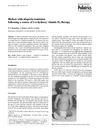 6 citations
,
August 1989 in “European journal of pediatrics”
6 citations
,
August 1989 in “European journal of pediatrics” This case study describes a child with rickets and alopecia who responded to a small dose of 1-a-hydroxyvitamin D3, but her alopecia remained unchanged despite treatment.
13 citations
,
December 2016 in “Egyptian Journal of Basic and Applied Sciences” This study found that patients with alopecia areata had significantly lower serum levels of 25-hydroxy vitamin D compared to control subjects.
 1 citations
,
June 2021 in “International Journal of Dermatology”
1 citations
,
June 2021 in “International Journal of Dermatology” This study found that patients with alopecia areata had significantly lower serum vitamin D levels compared to controls, but these levels did not impact disease severity or pattern.
 1 citations
,
January 2018 in “Turkiye Klinikleri Journal of Dermatology”
1 citations
,
January 2018 in “Turkiye Klinikleri Journal of Dermatology” This study found that patients with telogen effluvium had slightly lower vitamin D levels compared to healthy controls, but the difference was not statistically significant.
 1 citations
,
January 2016 in “Journal of Nepal Paediatric Society”
1 citations
,
January 2016 in “Journal of Nepal Paediatric Society” This case report discusses a 27-month-old girl with vitamin D-dependent rickets type II, who showed minor improvement in skeletal features and alopecia after high-dose oral calcium and vitamin D3 treatment.