23 citations
,
January 2016 in “International Journal of Trichology” This study found that women with female pattern hair loss had significantly lower serum Vitamin D3 levels compared to healthy controls.
 10 citations
,
October 1993 in “Archives of dermatological research”
10 citations
,
October 1993 in “Archives of dermatological research” The researchers reported that the antipsoriatic compounds 1,25-dihydroxy-vitamin D3 and calcipotriol thinned the living cell compartment in organotypic ORS cultures by accelerating the differentiation pathway rather than affecting proliferation.
 4 citations
,
May 2021 in “Molecules”
4 citations
,
May 2021 in “Molecules” This study suggests that analyzing hair samples with a liquid chromatography-mass spectrometric assay may offer a reliable method to measure average quarterly vitamin D levels, potentially complementing blood tests.
 2 citations
,
March 2023 in “3C Empresa Investigación y pensamiento crítico”
2 citations
,
March 2023 in “3C Empresa Investigación y pensamiento crítico” In this study, patients with alopecia areata showed significantly elevated serum levels of IFN-γ and severely deficient vitamin D3 levels compared to healthy controls.
2 citations
,
September 2022 in “Frontiers in Nutrition” This study found no significant difference in the persistence of new symptoms or quality of life improvements with 200,000 IU of vitamin D3 compared to placebo in patients post-COVID-19 hospitalization.
 January 2024 in “Fitoterapia”
 In this study, the analysis of Ukraine's pharmaceutical market from 2020 to 2023 found a large variety of Vitamin D3 preparations, predominantly domestic and synthetic, with capsule forms being common; consumer surveys highlighted that doctor recommendations strongly influenced purchasing decisions.

This study observed that individuals with autoimmune thyroid disease in Georgia had significantly higher frequencies of certain symptoms and Anti-TPO levels compared to controls, with no significant difference in vitamin D levels.
February 2023 in “Journal of Cosmetic Dermatology” This study found that microneedling combined with either topical vitamin D3 or bimatoprost was more effective for hair regrowth in localized alopecia areata than microneedling alone, though differences between the two additives disappeared after three months.
36 citations
,
February 2007 in “Journal of biological chemistry/The Journal of biological chemistry” This study found that vitamin D receptor activation in primary keratinocytes can occur independently of the 1,25-dihydroxyvitamin D3 ligand, likely through interaction with retinoid X receptors.
 47 citations
,
July 2005 in “British Journal of Dermatology”
47 citations
,
July 2005 in “British Journal of Dermatology” This study found no protective effect of topical calcipotriol on hair loss in chemotherapy patients, and the authors propose the term "atrophic telogen effluvium" for this type of hair loss.
July 2025 in “International Journal of Trichology” This study found that intralesional methotrexate and triamcinolone acetonide were significantly more effective than Vitamin D3 for hair regrowth in patients with alopecia areata.
 May 2025 in “Journal of the Egyptian Womenʼs Dermatologic Society”
 This randomized controlled trial found that intralesional vitamin D3 was as effective and safe as intralesional triamcinolone acetonide for treating patchy alopecia areata on the scalp, with no significant influence from serum vitamin D levels on treatment response.
81 citations
,
March 1985 in “Journal of Clinical Investigation” This study found that measuring 24-OHase induction by 1,25(OH)2D3 in cultured skin fibroblasts is a sensitive test for detecting genetic defects in the 1,25(OH)2D effector pathway.
 70 citations
,
November 1984 in “Cell & tissue research/Cell and tissue research”
70 citations
,
November 1984 in “Cell & tissue research/Cell and tissue research” Vitamin D3 affects cell differentiation in specific skin areas.
37 citations
,
August 2015 in “The Journal of Steroid Biochemistry and Molecular Biology” This study found that in a mouse model with hereditary 1,25-dihydroxyvitamin D resistant rickets, a mutant vitamin D receptor lacking hormone-binding ability could restore normal hair cycling and affect parathyroid hormone regulation.
 14 citations
,
November 2005 in “Life sciences”
14 citations
,
November 2005 in “Life sciences” This study indicates that vitamin D3 administration may protect rat hair follicles from radiation-induced damage, as evidenced by maintained follicle numbers and increased Vitamin D receptor activity in treated skin.
 11 citations
,
June 1996 in “Nutrition”
11 citations
,
June 1996 in “Nutrition” Vitamin D3 may prevent hair loss from chemotherapy, but side effects and cancer cell protection are concerns.
11 citations
,
March 2015 in “Life sciences” This study found that using conditioned medium from vitamin D3 pre-activated preadipocytes enhanced hair regeneration in mice by promoting angiogenesis.
 7 citations
,
February 2022 in “Journal of Cosmetic Dermatology”
7 citations
,
February 2022 in “Journal of Cosmetic Dermatology” In this randomized controlled trial, intralesional vitamin D3 injections significantly improved localized alopecia areata symptoms compared to a saline placebo, with minimal and transient side effects, suggesting vitamin D3 as an effective treatment option without needing prior serum vitamin D level measurement.
 6 citations
,
August 1989 in “European journal of pediatrics”
6 citations
,
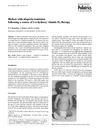
August 1989 in “European journal of pediatrics” This case study describes a child with rickets and alopecia who responded to a small dose of 1-a-hydroxyvitamin D3, but her alopecia remained unchanged despite treatment.
 4 citations
,
January 2020 in “Obstetrics and Gynecology Reports”
4 citations
,
January 2020 in “Obstetrics and Gynecology Reports” This study found that obese Egyptian women with polycystic ovary syndrome had significantly lower serum 25-OH vitamin D levels compared to non-obese women with the condition.
2 citations
,
February 1990 in “PubMed” In this study, 1,25-dihydroxyvitamin D3 inhibited growth and promoted differentiation in normal hair follicle cells but did not affect cells from a patient with vitamin D-dependent rickets type II, assisting in potential rapid diagnosis of the condition.
 November 2025 in “Bioscientia Medicina Journal of Biomedicine and Translational Research”
 In this case report, researchers describe a 44-year-old woman with refractory patch alopecia areata achieving complete hair regrowth using a multi-modal approach of systemic and topical cholecalciferol with microneedling, although systemic vitamin D repletion remains a significant confounder.
 August 2025 in “Zanco Journal of Medical Sciences”
 In this interventional therapeutic study, both intralesional triamcinolone acetonide and vitamin D3 showed significant improvement in alopecia areata, with terminal regrowth more frequently observed in the steroid group, although differences were not statistically significant.
 February 2025 in “Iraqi Journal of Science”
 This study found that women with polycystic ovary syndrome had significantly higher serum lactate dehydrogenase levels and lower levels of cortisol, dopamine, zinc, and vitamin D3 compared to healthy controls.
 January 2025 in “SKIN The Journal of Cutaneous Medicine”
 This study suggests that while vitamin D3 deficiency is linked to alopecia areata severity, evidence for the effectiveness of supplementation or topical calcipotriol treatment remains inconsistent and low quality.

This study found that pregnant women experiencing hair loss in the first and second trimesters had significantly lower levels of vitamin D3 and ferritin compared to those not experiencing hair loss, with these levels explained by typical pregnancy physiology.

In this case study, a 19-year-old woman with Henoch-Schönlein purpura, potentially triggered by hepatitis B vaccination, experienced improved symptoms after correcting low vitamin D levels and undergoing tonsillectomy, demonstrating these interventions may benefit similar patients.
November 2021 in “Journal of Regenerative Biology and Medicine” This article discusses alopecia areata, an inflammatory hair loss condition with largely unexplored causes, but provides no new research findings.
 April 2019 in “Journal of Investigative Dermatology”
 This study found that CYP11A1-derived vitamin D3 analogs inhibit fibroblast proliferation and decrease collagen production through VDR expression, showing potential antifibrotic and antiproliferative activity in human dermal fibroblasts.