3 citations
,
January 2021 in “touchREVIEWS in Endocrinology” This case report describes how a 68-year-old woman's hyperandrogenic symptoms improved and testosterone levels normalized after the surgical removal of an occult Leydig cell tumour.
 August 2022 in “RECISATEC”
 This article discusses androgenetic alopecia, its progression, signs of hyperandrogenism, and impacts on quality of life, without presenting new clinical findings.
11 citations
,
January 2000 in “Der Hautarzt” This review describes how male hypogonadism can lead to various skin and hair symptoms, as well as potential dermatological reactions to hormone treatments and reports no new clinical results.
 January 2025 in “Haematology International Journal”
 This study describes a functional disorder in the ovary, known as stromal hyperplasia, characterized by the proliferation of ovarian stroma and luteinization of stromal cells, which is linked to excessive androgen production and elevated testosterone levels.
78 citations
,
August 1996 in “The Journal of Clinical Endocrinology & Metabolism” This study reports that the same androgen receptor gene mutation within a family can lead to both complete and partial androgen insensitivity syndromes, suggesting that genetic defects alone may not predict clinical phenotype.
August 2021 in “Pediatrics in review” This case study reports that a 16-year-old girl with hirsutism and menstrual irregularities was diagnosed with a benign steroid cell ovarian tumor, after high testosterone levels indicated a potential androgen-secreting source.
 October 2023 in “The Journal of clinical endocrinology and metabolism/Journal of clinical endocrinology & metabolism”
 This review found that hyperandrogenism in premenopausal women is linked to a higher prevalence of cardiovascular risk factors and diseases regardless of obesity, while in postmenopausal women, these risks depend on obesity.
 November 2022 in “Journal of the Endocrine Society”
 This case report describes a 23-year-old woman with an adult granulosa cell tumor of the ovary, whose symptoms and hormone levels improved significantly after surgical removal of the tumor.
 March 2010 in “The Journal of Urology”
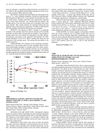
 This study found that men with early-onset androgenetic alopecia had larger prostate volumes and lower urinary flow rates compared to those without the condition, suggesting a potential link between AGA and urinary symptoms.
100 citations
,
April 1990 in “The Journal of Clinical Endocrinology & Metabolism” This study found that ovarian suppression significantly reduced serum testosterone and androstenedione in women with polycystic ovarian syndrome and idiopathic hirsutism, with hair growth rates decreasing more in polycystic ovarian syndrome.
5 citations
,
October 1990 in “Archives of Dermatology”  13 citations
,
September 1986 in “Archives of Dermatology”
13 citations
,
September 1986 in “Archives of Dermatology” This study found that women with female pattern baldness often had a higher ratio of 3 alpha,17 beta-androstanediol glucuronide to sex hormone-binding globulin and lower serum sex hormone-binding globulin, possibly indicating minimal androgen excess.
 August 1996 in “Journal of Pediatric and Adolescent Gynecology”
 This article discusses the various manifestations and diagnostic challenges of polycystic ovarian syndrome and reviews its associated symptoms and clinical heterogeneity but reports no new clinical findings.
 42 citations
,
September 2007 in “The Journal of Clinical Endocrinology and Metabolism”
42 citations
,
September 2007 in “The Journal of Clinical Endocrinology and Metabolism” This study found that women with PCOS who have an exaggerated 17-hydroxyprogesterone response to buserelin exhibit more severe hyperandrogenemia, increased insulin secretion, and reduced insulin sensitivity.
 December 2022 in “Cureus”
 This study found that clinical and biochemical markers of hyperandrogenism were more common in post-adolescent and early adult-onset acne among women than in adolescent acne.
 1 citations
,
June 2021 in “Revista de la Facultad de Ciencias Médicas de Córdoba”
1 citations
,
June 2021 in “Revista de la Facultad de Ciencias Médicas de Córdoba” This case report describes a postmenopausal woman with virilization linked to ovarian stromal hyperthecosis, highlighting the importance of detailed clinical evaluation and complementary testing for accurate diagnosis and treatment.
 December 2024 in “Turkish Society of Clinical Biochemistry”
 This study found that women with idiopathic hyperandrogenemia had higher urinary Bisphenol A levels compared to healthy controls, suggesting a potential role of this chemical in the condition.
 January 2026 in “Frontiers in Oncology”
 This case report highlights that in postmenopausal women with severe hyperandrogenism, thorough adrenal and pelvic evaluations, hormonal profiling, and permanent pathology are essential for accurate diagnosis and management of androgen-secreting tumors, such as AGCTs, to prevent misdiagnosis and ensure effective treatment.
 5 citations
,
January 2014 in “Postepy Dermatologii I Alergologii”
5 citations
,
January 2014 in “Postepy Dermatologii I Alergologii” Among women with hirsutism studied, this research found a high prevalence of acne, particularly associated with polycystic ovarian syndrome and endocrine changes.
 11 citations
,
January 2001 in “Cambridge University Press eBooks”
11 citations
,
January 2001 in “Cambridge University Press eBooks” This article discusses cultural significance and psychological effects of hair growth variations but provides no new clinical findings.
 November 2021 in “Khyber Medical University Journal”
 This case report highlights that uncommon ovarian tumors like sclerosal stromal tumors can cause hirsutism and virilization in postmenopausal women and lead to androgen secretion, despite typically being hormonally inactive.
 October 2025 in “Journal of Bahria University Medical and Dental College”
 In this study, among women with polycystic ovary syndrome, free testosterone was most frequently elevated, highlighting its importance in biochemical assessment and suggesting the need for age-related interpretation of DHEAS levels.
19 citations
,
June 1997 in “The Journal of Clinical Endocrinology & Metabolism” This case study details a 57-year-old woman with symptoms of androgen excess, including rapid hair growth and temporal balding, alongside abnormal testosterone levels and a history of chronic renal failure.
 5 citations
,
September 2012 in “The Journal of Urology”
5 citations
,
September 2012 in “The Journal of Urology” This article discusses androgenetic alopecia as a potential early marker for benign prostatic hyperplasia but reports no new clinical findings.
 9 citations
,
March 2001 in “Clinics in dermatology”
9 citations
,
March 2001 in “Clinics in dermatology” This review examines the causes, assessment, and treatment options for hirsutism but presents no new clinical findings, highlighting the need for further research on managing this condition.
174 citations
,
July 2003 in “The Journal of Clinical Endocrinology & Metabolism” This study investigated genetic and phenotypic characteristics of androgen insensitivity syndrome in individuals with a 46,XY karyotype, documenting a range from complete to partial insensitivity.
5 citations
,
July 2009 in “Experimental and Clinical Endocrinology & Diabetes” This study found that nuclear androgen receptor levels varied among females with androgen-dependent dermatoses, being highest in hirsutism, which may suggest superior androgen stimulability compared to acne and androgenetic alopecia.
 2 citations
,
October 2021 in “Clinical Epidemiology and Global Health”
2 citations
,
October 2021 in “Clinical Epidemiology and Global Health” The researchers reported a high incidence of hyperuricemia in women with PCOS, with positive correlations to testosterone, SHBG, HOMA-IR, and LDL levels, but negative correlations to HbA1C, FPG, and FSI.
May 2026 in “Journal of Investigative Dermatology” In this study, genetic factors associated with hirsutism were identified, suggesting that both androgen-dependent and independent mechanisms may contribute to excessive hair growth in women.
 August 2009 in “International Journal of Dermatology”
 This case report describes a postmenopausal woman who experienced facial erythema, acne, and hirsutism due to excess androgen and estrogen levels.