 10 citations
,
October 2009 in “Clinical Therapeutics”
10 citations
,
October 2009 in “Clinical Therapeutics” This study found that the orally disintegrating tablet and standard tablet formulations of finasteride met bioequivalence criteria in fasting healthy adult male Han Chinese volunteers, although there was a significant difference in time to maximum concentration.
21 citations
,
March 2021 in “Molecules” This study found that a new quercetin-loaded self-nanoemulsifying drug delivery system improved quercetin bioavailability by 149.8% compared to its suspension in rats.
 January 2024 in “Journal of Ayurveda and integrative medicine”
 This paper discusses the potential of millets as a dietary intervention to help manage chemotherapy side effects in cancer patients, suggesting that their nutrient profile and various health benefits could support treatment without increasing medication burden.
3 citations
,
April 2024 in “Dentistry Journal” In this study, oral care products like foams and a spray, similar to tap water, improved salivary pH and oral clearance rates after exposure to Coca-Cola® in young adults, but no significant differences were found between these products and tap water.
 April 2023 in “Dentistry”
 This chapter reviews the potential of stem cells from discarded deciduous teeth in regenerative medicine and dentistry, with no new clinical results presented.
May 2018 in “Dermatologic Surgery” This journal overview highlights the expansive coverage of cosmetic and reconstructive skin surgery, but reports no new research findings.
 2 citations
,
November 2024 in “AAPS PharmSciTech”
2 citations
,
November 2024 in “AAPS PharmSciTech” In this study, researchers found that niosomes, bilosomes, and spanlastic formulations can enhance the oral anticoagulation efficiency of rivaroxaban in rats, with spanlastic ranked as the most effective in prolonging clotting, prothrombin, and tail bleeding times compared to unprocessed rivaroxaban.
 61 citations
,
May 2014 in “International journal of pharmaceutics”
61 citations
,
May 2014 in “International journal of pharmaceutics” This research describes a process for producing caffeine nanocrystals, which may enhance skin penetration by accumulating in hair follicles and maintaining stability for two months, paving the way for in vivo testing.
8 citations
,
March 2023 in “Polymers” This study suggests that a chitosan-coated omeprazole-loaded nanoemulgel formulation may effectively treat certain skin infections due to its demonstrated antimicrobial properties and enhanced antibacterial activity.
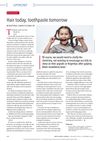
Keratin could help create enamel-regenerating toothpaste in a few years.
5 citations
,
August 2023 in “Preprints.org” This review outlines recent advancements in droplet-based microfluidics used with food-grade materials to create delivery systems, emphasizing the design and function of systems like emulsions and microcapsules while discussing challenges related to scaling these processes from lab to industry.
 3 citations
,
August 2021 in “Journal of fiber science and technology”
3 citations
,
August 2021 in “Journal of fiber science and technology” This study found that chitin nanofibrils prepared by the aqueous counter collision process exhibited superior emulsifying properties for stabilizing oil droplets in Pickering emulsions compared to cellulose nanofibrils.
This study introduced a technology for creating water-soluble minerals, which reportedly showed potential health benefits such as diet and anti-wrinkle effects in their applications.
 October 2025 in “Pharmaceutical Development and Technology”
 In this study, cetirizine hydrochloride was formulated into niosomal and cubosomal gels, showing potential for off-label use in treating androgenic alopecia due to effective skin permeation and acceptable safety profiles; cubosomal gels exhibited superior permeation compared to niosomal gels.
3 citations
,
August 2022 in “Pharmaceuticals” This study observed that a self-emulsifying drug delivery system for finasteride significantly enhanced bioavailability in rats compared to commercial tablets, but the formulation was found to be thermodynamically unstable.
September 2025 in “International Journal of Molecular Sciences” This review examined the potential effects of Kampo medicine Hangeshashinto on oral mucositis, highlighting that several natural products in its composition may inhibit intracellular AGEs, reduce inflammation from extracellular AGEs, and suppress cytotoxicity in stomatitis.
 March 2024 in “Journal of drugs in dermatology”
 This study evaluated the safety and effectiveness of HASHA, a new hyaluronic acid injectable, for chin augmentation in adults with chin retrusion. HASHA significantly improved chin appearance and satisfaction over 12 months compared to controls, with only mild or moderate transient adverse events.
 50 citations
,
November 2010 in “Otolaryngologic Clinics of North America”
50 citations
,
November 2010 in “Otolaryngologic Clinics of North America” This review discusses the oral manifestations associated with hematologic conditions and nutritional deficiencies, without presenting new research results; it emphasizes the impact of blood disorders and vitamin deficiencies on oral health.
 June 2026 in “International Journal of Drug Delivery Technology”
 In this study, researchers optimized fast-dissolving tablets of nifedipine using a systematic approach, resulting in formulations that demonstrated rapid disintegration, enhanced dissolution profiles, and improved solubility, potentially improving oral delivery for patients requiring poorly soluble antihypertensive medication.
 6 citations
,
February 2016 in “Journal of Microencapsulation”
6 citations
,
February 2016 in “Journal of Microencapsulation” This study found that injectable finasteride microspheres provided a sustained drug release with a minimal initial burst in albino rabbits compared to oral suspension.
14 citations
,
November 2024 in “Pharmaceuticals” This study found that using spanlastics, a nano, surfactant-based drug delivery system, improved the bioavailability, drug release characteristics, and pharmacokinetic behavior of famotidine, a poorly soluble drug, by enhancing its dissolution and membrane permeation.
This study found that an injectable calcium alginate-amelogenin hydrogel is biocompatible, degradable, anti-inflammatory, and promotes osteogenesis, which may enhance the bone healing process in jaw and facial bone defect areas by mediating the bone immune microenvironment.
June 2025 in “Healthy-Mu Journal” The optimized Cinchonine gel effectively fights acne bacteria and is safe for twice-daily use.
June 2024 in “International Journal of Pharmaceutical Research and Applications” This study designed fast-dissolving Minoxidil tablets to improve patient compliance and found that formulations containing 6% croscarmellose sodium were optimal, showing rapid in-vitro dispersion and effective drug release without drug interaction.
8 citations
,
January 2024 in “Current Research in Food Science” This study found that using composite alginate hydrogels containing Aloe vera, CMC, and tragacanth can improve the encapsulation efficiency and protect pumpkin seed protein hydrolysates from degradation during simulated gastrointestinal digestion, potentially increasing their applicability as functional food components.
 April 2025 in “Journal of Digestive Cancer Research”
 Milk-derived vesicles are promising for delivering drugs orally and treating various conditions.
298 citations
,
June 2019 in “Marine Drugs” This review discusses the properties and bioextraction methods of chitin and chitosans, emphasizing their potential use in eco-friendly cosmetic manufacturing and reports no new experimental findings.
233 citations
,
March 2009 in “Journal of Clinical Oncology” In this study, among patients undergoing chemotherapy for breast or gynecologic cancers, smell and taste functions significantly decreased but largely recovered three months post-treatment, with taxane-based regimens causing more severe taste disturbances.
 4 citations
,
March 2020 in “Cutaneous and ocular toxicology”
4 citations
,
March 2020 in “Cutaneous and ocular toxicology” In this double-blind, randomized controlled study, researchers found that Wen by Chaz Dean Sweet Almond Mint Cleansing Conditioner was similarly tolerated compared to three other hair cleansing conditioners and was significantly better tolerated than salicylic acid shampoo or baby shampoo in terms of skin reactions.
January 2022 in “Drugs of Today”