 November 2021 in “International journal of life science and pharma research”
 This study reported that a solid lipid nanoparticle-based gel formulation, specifically optimized for psoriasis, improved drug loading capacity and release properties using high-pressure homogenization, suggesting its potential efficacy as a topical treatment.
 17 citations
,
January 2010 in “Acta Dermato Venereologica”
17 citations
,
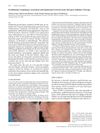
January 2010 in “Acta Dermato Venereologica” This report details a case of a 43-year-old woman developing yellowish papular eruptions alongside typical acneiform skin reactions on her cheeks and chest following a switch from cetuximab to panitumumab treatment.
5 citations
,
July 1996 in “Journal of Cutaneous Medicine and Surgery” This study explains that while trichothiodystrophy and xeroderma pigmentosum share genetic defects, TTD patients primarily exhibit issues in transcription initiation, not the increased skin cancer risk seen in XP.
 April 2019 in “Journal of Investigative Dermatology”
 This study demonstrated that gene-corrected 3D skin constructs from RDEB patient-derived iPSCs, grafted onto immunocompetent mice, showed normal collagen VII expression after two months.
 1 citations
,
March 2019 in “Journal of AOAC INTERNATIONAL”
1 citations
,
March 2019 in “Journal of AOAC INTERNATIONAL” New method quickly and accurately measures dexpanthenol in hair products.
 September 2019 in “Journal of Investigative Dermatology”
 This study found that using human induced pluripotent stem cells (iPSC) carrying the causal mutation of Epidermolysis Bullosa simplex provides a robust model for understanding its molecular mechanisms and testing potential therapeutic targets.
9 citations
,
July 2022 in “Journal of Clinical Oncology” This study found that oral paclitaxel combined with encequidar improved tumor response rates compared to intravenous paclitaxel in women with metastatic breast cancer, while also reducing neuropathy but increasing certain gastrointestinal and neutropenic side effects.
 4 citations
,
April 2023 in “JURNAL FARMASI DAN ILMU KEFARMASIAN INDONESIA”
4 citations
,
April 2023 in “JURNAL FARMASI DAN ILMU KEFARMASIAN INDONESIA” This study evaluated green tea extract-loaded spanlastic formulations and found that a vesicle builder to edge activator ratio of 8:2 produced optimal characteristics, including a particle size of 419.70 nm, an entrapment efficiency of 60.85%, and a drug loading of 11.07%.
January 2024 in “Animals” This study suggests that the transcription factors SP1 and KROX20 regulate CUX1 gene's effect on the proliferation of ovine dermal papilla cells in vitro.
1 citations
,
January 2010 in “Acta Chirurgica Latviensis” In this study, researchers found that psoriasis patients with untreated lesions showed increased activation of defensins, matrix metalloproteinases, and neuropeptides, which may be stimulated by specific inflammation pathways.
September 2023 in “Journal of the American Academy of Dermatology” This study evaluated the effect of guselkumab on moderate to severe plaque psoriasis and found that median PASI improvements increased from around 60% at week 4 to over 90% by week 12 of treatment across multiple clinical trials.
 10 citations
,
September 1997 in “Molecular carcinogenesis”
10 citations
,
September 1997 in “Molecular carcinogenesis” This study found that mirex and TPA promote papilloma formation in CD-1 mouse skin through distinct populations of mutant Ha-ras cells, resulting in additive tumor yields.
October 2023 in “Indian Journal of Skin Allergy” This study discusses a rare case of subacute cutaneous lupus erythematosus induced by nab-paclitaxel, a complication scarcely reported in existing literature related to paclitaxel use.
43 citations
,
March 2017 in “Drug Design Development and Therapy” The researchers reported that a new nanoformulation of paclitaxel-loaded nanoparticles showed superior antitumor effects against malignant melanoma in vitro and in vivo compared to the commercial formulation Taxol®.
6 citations
,
December 2024 in “International Journal of Biological Macromolecules” This study introduced a novel exosome-loaded sprayable hydrogel (ADA-aPF127@LL18/Exo) that significantly enhanced wound healing in a deep partial thickness burn model, showing improved antibacterial efficacy and promoting tissue recovery processes like epithelialization and hair follicle regeneration.
 April 2019 in “Journal of Investigative Dermatology”
 This study reported that mSKPs and DMSCs share similarities in biological characteristics but exhibit distinct transcriptome profiles, with mSKPs being more immune-related and DMSCs more associated with differentiation and disease pathways.
 18 citations
,
September 2003 in “The journal of investigative dermatology/Journal of investigative dermatology”
18 citations
,
September 2003 in “The journal of investigative dermatology/Journal of investigative dermatology” This study suggests that vitamin D-upregulated protein 1 (VDUP1) might play a unique role in regulating the differentiation of epidermal cells.
 April 2017 in “Journal of Investigative Dermatology”
 The researchers reported that iPSCs derived from Sendai virus reprogrammed blood cells can mature into functional keratinocytes for up to 60 days, potentially offering new approaches for DEB treatment.
1 citations
,
June 2016 in “FEBS open bio” This study reports that topical fish oil treatment in GsdmA3 Dfl/+ mice increased cellular proliferation and macrophages but did not affect COX-2 expression related to psoriasis-like skin changes.
 2 citations
,
September 2018 in “Tissue Engineering Part A”
2 citations
,
September 2018 in “Tissue Engineering Part A” This study found that injecting xeno-free, three-dimensional cell masses from human adipose-derived stem cells improved blood perfusion and preserved limb function in mice without causing tumors or toxicity, suggesting potential for treating severe ischemic diseases.
11 citations
,
February 2023 in “British Journal of Pharmacology” This study found that ISX9 may activate the Wnt/β-catenin signaling pathway and holds potential as a therapeutic agent for treating alopecia.
 43 citations
,
July 2016 in “European journal of pharmaceutical sciences”
43 citations
,
July 2016 in “European journal of pharmaceutical sciences” This study found that dexamethasone-loaded Eudragit® L 100 nanoparticles displayed controlled drug release depending on pH levels, with minimal toxicity to human fibroblasts.
5 citations
,
June 2005 in “Journal of Clinical Oncology” This study found that paclitaxel poliglumex induces significantly less and milder alopecia compared with standard taxanes in ovarian and breast cancer patients.
15 citations
,
February 2011 in “Experimental Dermatology” This study found that in a mouse model, betamethasone dipropionate reduced epidermal thickness while fish oil unexpectedly increased it, validating optical coherence tomography as an effective measurement tool.
1 citations
,
January 2022 in “Brazilian Journal of Pharmaceutical Sciences” This study investigated the physicochemical properties of polystyrene-b-poly(acrylic acid) nanovesicles coated with modified chitosans, finding that they can effectively control surface charge and potentially serve as drug delivery carriers with a 50.7% encapsulation efficiency for minoxidil.
2 citations
,
June 2025 in “Chemical Engineering Journal” The hydrogel helps heal seawater-immersed wounds by reducing infection and inflammation.
 13 citations
,
February 2007 in “British Journal of Dermatology”
13 citations
,
February 2007 in “British Journal of Dermatology” EF and PXE not closely related.
 26 citations
,
May 2012 in “Pharmaceutical Development and Technology”
26 citations
,
May 2012 in “Pharmaceutical Development and Technology” PEVs effectively deliver minoxidil through skin.
 2 citations
,
June 2024 in “International Journal of Drug Delivery Technology”
2 citations
,
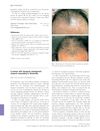
June 2024 in “International Journal of Drug Delivery Technology” This review describes advanced drug delivery systems for dithranol aimed at overcoming stability issues and skin irritation seen in conventional formulations, highlighting options like nanoparticles and liposomes for improved psoriasis treatment.
 13 citations
,
June 2020 in “International Journal of Dermatology”
13 citations
,
June 2020 in “International Journal of Dermatology” This review discusses erosive pustular dermatosis of the scalp, highlighting its wide variety of causes and multiple effective treatment options beyond high-potency topical steroids, and reports no new clinical results.