 1 citations
,
October 2024 in “Journal of Clinical Immunology”
1 citations
,
October 2024 in “Journal of Clinical Immunology” This study observed that adult Netherton syndrome patients showed a range of normal to diminished immune responses to polysaccharide, conjugate, and mRNA-based vaccines, with responses generally overlapping those of healthy controls, suggesting no consistent B- or T-cell immunodeficiency in this population.
In this study, researchers developed a method to create a synthetic dataset of facial acne images using generative techniques, achieving 97.6% classification accuracy with InceptionResNetv2, which helps overcome privacy concerns in biomedical applications by using anonymized data.
 21 citations
,
April 2012 in “European Journal of Pharmaceutics and Biopharmaceutics”
21 citations
,
April 2012 in “European Journal of Pharmaceutics and Biopharmaceutics” This study suggests that gel containing OSF3 loaded in niosomes offers high transfollicular penetration for topical anti-androgenic alopecia treatment with minimal systemic effect.
28 citations
,
November 2004 in “Endocrinology” This study by Gao et al. reports that two nonsteroidal selective androgen receptor modulators, S1 and S4, demonstrated tissue-selective actions in rats, suppressing prostate growth while maintaining muscle growth without altering hormone levels.
13 citations
,
October 2020 in “BMC Genomics” This study revealed specific patterns and potential functions of long non-coding RNAs during the hair follicle cycle of yaks, offering insights into their sequence conservation between yaks and cashmere goats.
 134 citations
,
June 2012 in “International Journal of Oral and Maxillofacial Surgery”
134 citations
,
June 2012 in “International Journal of Oral and Maxillofacial Surgery” This article discusses current methods in facial feminization surgery for transsexual women and reports no new clinical results, focusing instead on various surgical techniques used to feminize facial features.
33 citations
,
October 2013 in “PloS one” This study found that human sweat glands contain unique stem cells with significant multilineage differentiation potential and self-renewal abilities, suggesting promising clinical applications due to easy biopsy access.
 February 2025 in “Journal of Ayurveda and Integrated Medical Sciences”
 This study explores the use of Neem oil and a sesame oil-based formulation in Ayurvedic treatments for hair loss, suggesting their potential to improve scalp health, nourish hair follicles, and balance doshas, thereby aiding in hair loss prevention and management.
1 citations
,
January 2025 in “Head & Neck” In this report, researchers highlighted the snail flap as a highly reliable and minimally invasive reconstructive technique that preserves hair and requires minimal hospitalization, making it suitable for elderly or frail patients with moderate scalp defects.
 March 2024 in “Journal of drugs in dermatology”
 This study evaluated the safety and effectiveness of HASHA, a new hyaluronic acid injectable, for chin augmentation in adults with chin retrusion. HASHA significantly improved chin appearance and satisfaction over 12 months compared to controls, with only mild or moderate transient adverse events.
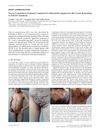 14 citations
,
January 2015 in “Acta dermato-venereologica”
14 citations
,
January 2015 in “Acta dermato-venereologica” Acitretin significantly reduced inflammatory attacks in a woman with Naevus Comedonicus Syndrome but caused side effects.
9 citations
,
June 2020 in “Trials” This study aims to conduct the first double-blind randomized trial comparing spironolactone and doxycycline for female acne treatment, with the goal of establishing spironolactone as a potentially superior alternative, especially given concerns about antibiotic resistance.
 March 2019 in “Zenodo (CERN European Organization for Nuclear Research)”
 In this study, researchers applied Yashtimadhwadi tail using shirodhara and Nasya karma treatments on sixty patients experiencing hair fall, finding that both methods produced excellent results in reducing symptoms such as hair fall, roughness, and dandruff.
 2 citations
,
July 2020 in “Behavioural Brain Research”
2 citations
,
July 2020 in “Behavioural Brain Research” This study found that neonatal administration of finasteride affected adult learning and memory in rats, enhancing object recognition but impairing aversive learning, with no effect on anxiety-like behavior.
7 citations
,
July 1981 in “Clinical and Experimental Dermatology” This study found that the normalized androgen ratio (NAR) could help evaluate androgen activity in women with acne vulgaris, hirsutism, and androgenetic alopecia, showing elevated NAR in some patients.
June 2025 in “Formosa Journal of Sustainable Research” In this study, the NADES extract of mangkokan leaves (Polyscias scutellaria) demonstrated antibacterial activity against Escherichia coli and Staphylococcus aureus, with a total flavonoid content measured at 4.944 mgEQ/gSimplisia using the disc diffusion method.
 14 citations
,
September 2012 in “Journal of nanoscience and nanotechnology”
14 citations
,
September 2012 in “Journal of nanoscience and nanotechnology” In this study, loading niosomes with Oryza sativa bran extract altered their physical properties, suggesting potential for developing formulations aimed at anti-hair loss products.
 May 2015 in “Hair transplant forum international”
 This article discusses the American Society of Hair Restoration Surgery (ASHRS) but does not present new research findings.
2 citations
,
September 2017 in “Journal of Investigative Dermatology” This study found that notch1 signaling is severely impaired in hidradenitis suppurativa patients with or without NCSTN or other gamma-secretase gene mutations, highlighting a canonical defect at the lesional tissue level.
 25 citations
,
August 2017 in “Animal Biotechnology”
25 citations
,
August 2017 in “Animal Biotechnology” This study identified and characterized several long noncoding RNAs in Cashmere goats, revealing complex regulatory roles in hair follicle development and growth, particularly within the Wnt signaling pathway.
 25 citations
,
March 2017 in “Archives of Dermatological Research”
25 citations
,
March 2017 in “Archives of Dermatological Research” This study suggests that sinapic acid may promote hair growth in human hair follicle dermal papilla cells by activating specific signaling pathways and inducing the expression of growth factors.
December 2025 in “Clinical Case Reports” In this study, researchers reported that dermoscopic examination of eyebrow hairs can help in the early diagnosis of Netherton syndrome in children by detecting trichorrhexis invaginata, facilitating prompt counseling and care while awaiting genetic test results.
August 2023 in “Diagnostics” This study observed that using ultra-high-frequency ultrasound with 70 MHz probes effectively assessed the distribution of hyaluronic acid fillers and improvements in nasolabial fold wrinkles, with significant changes in dermal thickness and wrinkle scores maintained 24 weeks after treatment.
This case report highlights a unique instance where the use of naproxen was associated with concurrent eosinophilic pneumonitis and diffuse alveolar hemorrhage, conditions not previously linked to NSAIDs.
28 citations
,
June 2010 in “Pediatric dermatology” This review discusses short anagen syndrome, highlighting its symptom of abnormally short scalp hair without associated systemic diseases, and notes that hair length often improves spontaneously after puberty without treatment.
January 2006 in “OpenCommons at University of Connecticut (University of Connecticut)” This study found that double transgenic Arabidopsis plants overexpressing both AVP1 and AtNHX1 showed improved salt tolerance and enhanced root hair and hypocotyl growth compared to single transgenic lines.
 7 citations
,
July 2022 in “Pharmaceuticals”
7 citations
,
July 2022 in “Pharmaceuticals” This study reports that pumpkin seed oil-loaded niosomes significantly decreased hair loss and increased hair growth indicators in vivo, suggesting potential as a natural anti-hair loss therapy.
 2 citations
,
January 2023 in “BioMed Research International”
2 citations
,
January 2023 in “BioMed Research International” This review discusses the potential of mesenchymal stromal cell secretome therapies for facial nerve palsy, emphasizing their standardization advantages over cell transplantation, but provides no new clinical results.
March 2025 in “International Journal of Trichology” This case study reported that a 15-year-old female developed acquired localized trichorrhexis nodosa, a hair shaft disorder, due to vigorous rubbing of an herbal powder on her scalp as part of local cultural practices.
 72 citations
,
December 2012 in “Expert Opinion on Drug Delivery”
72 citations
,
December 2012 in “Expert Opinion on Drug Delivery” This review discusses niosomes' increasing popularity in dermatology for topical drug delivery due to their ability to enhance drug penetration, provide sustained release, and carry various drugs, while reporting no new clinical findings.