4 citations
,
March 2023 in “IP International Journal of Comprehensive and Advanced Pharmacology” This study explored the development of a self nanoemulsifying drug delivery system to enhance the solubility and oral bioavailability of exemestane HCl for breast cancer therapy.
August 2026 in “Fabad Journal of Pharmaceutical Sciences” This study developed a Neusilin® US2-based solid self-nanoemulsifying drug delivery system for finasteride that showed improved stability and drug delivery, with complete dissolution comparable to standard Propecia® tablets.
6 citations
,
February 2025 in “International Journal of Molecular Sciences” This study found that the solid self-nanoemulsifying drug delivery system improved the oral bioavailability of carvedilol significantly compared to the drug alone, enhancing its solubility, dissolution, AUC, and Cmax.
21 citations
,
March 2021 in “Molecules” This study found that a new quercetin-loaded self-nanoemulsifying drug delivery system improved quercetin bioavailability by 149.8% compared to its suspension in rats.
 15 citations
,
November 2017 in “Drug Development and Industrial Pharmacy”
15 citations
,
November 2017 in “Drug Development and Industrial Pharmacy” This study found that the optimized finasteride-loaded lyophilized tablets using a self-nanoemulsifying drug delivery system improved bioavailability in human volunteers compared to the marketed finasteride product.
16 citations
,
August 2021 in “Frontiers in Pharmacology” This study found that a nano-preparation of quercetin, using a self-nanoemulsifying drug delivery system, was more effective than standard quercetin in reducing cardiac complications and tissue damage in rats with metabolic syndrome, although both formulations similarly reduced oxidative and inflammatory markers.
3 citations
,
August 2022 in “Pharmaceuticals” This study observed that a self-emulsifying drug delivery system for finasteride significantly enhanced bioavailability in rats compared to commercial tablets, but the formulation was found to be thermodynamically unstable.
 39 citations
,
November 2015 in “Nanomedicine”
39 citations
,
November 2015 in “Nanomedicine” This study found that the developed Finasteride-loaded SMEDDS improved the relative bioavailability of the drug compared to a commercial tablet, offering a promising oral delivery system for glucosteroid analogs.
 13 citations
,
October 2012 in “InTech eBooks”
13 citations
,
October 2012 in “InTech eBooks” Nanocarriers could improve how drugs are delivered through the skin but require more research to overcome challenges and ensure safety.
 8 citations
,
December 2021 in “Military Medical Science Letters”
8 citations
,
December 2021 in “Military Medical Science Letters” This review highlights the potential of nanoemulgel as a promising drug delivery system for lipophilic drugs, but presents no new experimental results; it discusses composition, preparation methods, and applications.
5 citations
,
January 2022 in “Asian Journal of Pharmaceutical and Clinical Research” In this review, the authors highlight that emulgels, a combination of gel and emulsion, provide an effective topical drug delivery system for hydrophobic drugs, offering benefits like controlled release and versatility in treating various dermatological conditions.
 140 citations
,
December 2017 in “Journal of Controlled Release”
140 citations
,
December 2017 in “Journal of Controlled Release” This study reviews the evolution and modifications of microneedle drug delivery systems, initially designed for percutaneous use, now expanded for targeting a variety of tissues and organs such as ocular, oral mucosal, and gastrointestinal, suggesting widespread future applicability.
January 2026 in “International Journal of Molecular Sciences” This review highlights brimonidine’s potential as a dermatological agent, noting its ability to improve rosacea-related facial redness and its effectiveness in various other skin conditions due to its vasoconstrictive and anti-inflammatory actions, with minimal systemic absorption and a favorable safety profile for long-term use.
32 citations
,
June 2024 in “Pharmaceutics” This review explores the use of topical and transdermal delivery for drugs and cosmetics, highlighting the benefits of avoiding side effects and rapid metabolism, with a focus on nanoparticulate formulations and techniques for studying skin penetration.
5 citations
,
April 2022 in “IntechOpen eBooks” This source describes the potential benefits of a nanoemulgel delivery system for enhancing the use of lipophilic drugs, improving patient compliance, and expanding treatment options for various conditions, including acne, arthritis-related inflammation, and Parkinson's disease, while also offering sunburn protection in cosmetic applications.
18 citations
,
May 2024 in “Pharmaceutics” This review discusses advances in drug delivery systems to enhance oleanolic acid's bioavailability and therapeutic potential but reports no new clinical results.
 4 citations
,
July 2025 in “International Journal of Nanomedicine”
4 citations
,
July 2025 in “International Journal of Nanomedicine” This review explores nano-quercetin formulations to enhance the solubility, stability, and targeted delivery of quercetin, highlighting its potential efficacy in treating cancer, inflammation, metabolic diseases, and tissue regeneration, though challenges in biocompatibility, toxicity, and production remain, per this source.
26 citations
,
January 2024 in “Gels” This review highlights advancements in nanoemulgel platforms for topical and transdermal drug delivery, noting their improved safety and efficacy over conventional treatments in in vitro and in vivo studies, specifically for conditions like skin diseases and inflammatory issues.
 1 citations
,
December 2025 in “Iraqi Journal of Pharmaceutical Sciences ( P-ISSN 1683 - 3597 E-ISSN 2521 - 3512)”
1 citations
,
December 2025 in “Iraqi Journal of Pharmaceutical Sciences ( P-ISSN 1683 - 3597 E-ISSN 2521 - 3512)” This study investigated spanlastic nanovascular drug delivery systems and found that they can effectively enhance the transport and continuous release of medicines with small particle size, low polydispersity index, and satisfactory entrapment efficiency, showing potential as carriers for drug delivery.
9 citations
,
August 2024 in “Pharmacological Reviews” This review summarized advancements in intestinal lymphatic drug delivery, emphasizing the evolving understanding of lymphatics as active players in health and disease, which has led to innovative therapeutic strategies and enhanced pharmacokinetic outcomes via this delivery route.
1 citations
,
January 2022 in “BioMed Research International” This study reported that solid lipid nanoparticles of finasteride decorated with chitosan enhanced drug retention in skin layers, suggesting potential application in treating androgenic alopecia and benign prostate hyperplasia with fewer side effects.
 1 citations
,
December 2023 in “Annals of Phytomedicine An International Journal”
1 citations
,
December 2023 in “Annals of Phytomedicine An International Journal” In this review, the researchers discuss how nanoemulgel overcomes the limitations of lipophilic phytomolecules by improving their bioavailability, penetration, and therapeutic efficacy, making it a promising nanocarrier for the treatment of various health conditions.
34 citations
,
November 2023 in “Applied Materials Today” This review discusses the potential of topical nanoemulsions to transform skin cancer treatment by improving drug delivery and minimizing side effects, highlighting their advantages like enhanced skin permeation and controlled release, despite existing challenges.
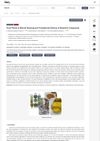
This review highlights the potential of plant-derived natural compounds as biocompatible and biodegradable materials in dermal and transdermal delivery systems, emphasizing their unexplored benefits and detailing recent advances in isolation techniques and drug delivery technologies.
 34 citations
,
October 2021 in “Scientific Reports”
34 citations
,
October 2021 in “Scientific Reports” This study found that nobiletin-loaded vesicles effectively restored skin condition in a mouse model of skin cancer, suggesting they are a promising treatment delivery system.
14 citations
,
November 2024 in “Pharmaceuticals” This study found that using spanlastics, a nano, surfactant-based drug delivery system, improved the bioavailability, drug release characteristics, and pharmacokinetic behavior of famotidine, a poorly soluble drug, by enhancing its dissolution and membrane permeation.
3 citations
,
December 2024 in “Iraqi Journal of Pharmaceutical Sciences ( P-ISSN 1683 - 3597 E-ISSN 2521 - 3512)” This study reported that meloxicam-loaded spanlastics, created using the ethanol injection method, demonstrated potential as a drug delivery system with sustained release and effective entrapment efficiency.
 July 2026 in “International Journal of Molecular Sciences”
 This review highlights how cyclodextrin-polysaccharide hybrids can advance drug delivery and environmental cleanup by improving the solubility and stability of hydrophobic molecules, serving as promising platforms for biomedical applications and efficient sorbents for wastewater treatment.
 30 citations
,
December 2019 in “PLoS ONE”
30 citations
,
December 2019 in “PLoS ONE” This study found that formulating raloxifene in nano-lipid carriers significantly enhanced its permeation and cytotoxicity against cancer cells compared to raw raloxifene.
 September 2024 in “International Journal of Pharmaceutical Quality Assurance”
 This review outlines the potential of nanoemulsion-based hydrogels (nanoemulgels) for enhanced topical and transdermal drug delivery in treating skin disorders, highlighting their ability to improve therapeutic efficacy, control drug release, and boost patient compliance.