 April 2017 in “Journal of Investigative Dermatology”
 This study found that a single dose of TRP significantly reduced the number of UV-B-induced actinic keratosis lesions in a mouse model and was associated with improved skin histology and minimal side effects.
 July 1996 in “Clinical and Experimental Dermatology”
 This study found that a single topical application of calcipotriol ointment did not affect systemic calcium levels in patients with chronic plaque psoriasis.
 15 citations
,
May 2018 in “Open Access Macedonian Journal of Medical Sciences”
15 citations
,
May 2018 in “Open Access Macedonian Journal of Medical Sciences” This double-blind control study found that an ointment containing propolis (50%) and aloe vera (3%) led to significant improvement in 64.4% of patients with mild to moderate psoriasis over 12 weeks, compared to no significant improvement in the placebo group.
 July 2025 in “Pakistan Journal of Intensive Care Medicine”
 In this randomized controlled trial, researchers observed that topical clobetasol propionate 0.05% was significantly more effective than topical tacrolimus 0.1% for treating alopecia areata, with a higher treatment success rate of 74.2% versus 45.2%, suggesting clobetasol as a preferred first-line topical therapy.
 January 2023 in “Indian Dermatology Online Journal”
 This study found that there was no significant difference in hair regrowth between clobetasol and bimatoprost for scalp alopecia areata over 12 weeks, but bimatoprost had fewer side effects and prompted earlier, more pigmented hair regrowth.
 1 citations
,
December 2022 in “Journal of cosmetic dermatology”
1 citations
,
December 2022 in “Journal of cosmetic dermatology” This study found that combining a potent steroid with a vitamin D analogue may offer more convenient treatment for localized alopecia areata than using a superpotent steroid alone, with comparable efficacy but fewer side effects.
2 citations
,
January 2021 in “Indian Journal of Dermatology, Venereology and Leprology” This study found that topical betamethasone dipropionate was more effective than topical latanoprost in reducing the area and promoting hair regrowth in patients with localized alopecia areata, though latanoprost was considered safer.
16 citations
,
January 2000 in “Journal of dermatological treatment” This study found that calcipotriol scalp solution was more effective than a coal tar-based shampoo for treating mild to moderate scalp psoriasis and showed continued efficacy with long-term use.
 9 citations
,
December 2020 in “Dermatologic Therapy”
9 citations
,
December 2020 in “Dermatologic Therapy” This review found that oral and topical phosphodiesterase inhibitors and topical prostaglandin analogues are safe and effective treatments for various skin diseases, including psoriasis, atopic dermatitis, vitiligo, and alopecia.
9 citations
,
January 2021 in “Mediators of Inflammation” In this study, 15d-PGJ2 administered in a topical cream inhibited oxidative and inflammatory skin changes caused by UVB radiation in hairless mice, suggesting it as a promising treatment approach.
 1 citations
,
February 2015 in “Journal of evolution of medical and dental sciences”
1 citations
,
February 2015 in “Journal of evolution of medical and dental sciences” This study concluded that 0.05% betamethasone dipropionate cream is more effective than other topical treatments for improving alopecia areata over 12 weeks.
12 citations
,
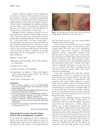
September 2012 in “Pediatric Dermatology” This case report describes a 5-year-old boy with extensive epidermal nevus who experienced marked improvement using a topical calcipotriol/betamethasone dipropionate combination ointment.
 3 citations
,
May 2011 in “Journal of the American Academy of Dermatology”
3 citations
,
May 2011 in “Journal of the American Academy of Dermatology” This case report describes a 54-year-old woman who developed hypertrichosis around a leg ulcer while using PGE1 ointment, suggesting a potential side effect of the treatment.
December 2024 in “Journal of the European Academy of Dermatology and Venereology” This systematic review and meta-analysis found that bimatoprost, especially when used with NB-UVB phototherapy, FxCO2 laser, or mometasone, may be an effective and well-tolerated treatment option for vitiligo, achieving significant patient satisfaction and repigmentation, despite some limitations like small sample sizes and high costs.
 1 citations
,
April 2009 in “Expert Review of Dermatology”
1 citations
,
April 2009 in “Expert Review of Dermatology” This study found that the once-daily gel combining calcipotriene and betamethasone dipropionate was more effective and faster in treating scalp psoriasis compared to individual treatments, with a similar safety profile.
3 citations
,
August 2019 in “PubMed” This study found that topical corticosteroid foams are effective and generally preferred by patients for a variety of corticosteroid-responsive skin conditions, demonstrating significant clinical benefits such as improved psoriasis symptoms and hair regrowth in alopecia areata compared to traditional forms.
2 citations
,
May 2024 in “International Journal of Medical Arts” This study found that topical DPCP was more effective for hair regrowth in resistant alopecia areata compared to anthralin, with both treatments having similar safety profiles.
 October 2015 in “Reactions Weekly”
 A woman got a scalp condition from using latanoprost, but it improved after stopping the drug and starting other treatments.
January 2015 in “Annals of dermatology/Annals of Dermatology” This report describes a case where travoprost treatment for open-angle glaucoma was associated with periocular hypertrichosis, hyperpigmentation, and eyelash growth, which gradually improved after discontinuation.
 10 citations
,
April 2020 in “Dermatology and therapy”
10 citations
,
April 2020 in “Dermatology and therapy” In this study of 35 patients with scalp alopecia areata, calcipotriol ointment led to faster and greater hair regrowth than clobetasol, though differences were not statistically significant.
3 citations
,
January 1996 in “Journal of Dermatological Treatment” In this study, twice daily application of 3 μg/g calcitriol ointment was reported to be safe, effective, and well tolerated for treating moderate to severe chronic plaque psoriasis on the face and surrounding areas.
 July 2023 in “Annals of King Edward Medical University”
 This randomized clinical trial compared bimatoprost 0.03% solution and mometasone furoate 0.1% cream for treating alopecia areata in 60 patients, finding that mometasone furoate led to better hair regrowth, while both treatments showed significant effectiveness.
 36 citations
,
November 2005 in “Journal of The American Academy of Dermatology”
36 citations
,
November 2005 in “Journal of The American Academy of Dermatology” This article discusses the potential of latanoprost for treating alopecia areata, but notes that well-controlled studies are still needed to confirm its effectiveness.
 14 citations
,
July 2016 in “Pediatric Dermatology”
14 citations
,
July 2016 in “Pediatric Dermatology” In this report, a case of steroid-resistant multifocal alopecia areata was successfully treated with topical bimatoprost, suggesting it may be a promising alternative therapy.
3 citations
,
October 2013 in “Photodermatology Photoimmunology & Photomedicine” This study observed that combining targeted UVA phototherapy with topical 8-methoxypsoralen showed cosmetically acceptable hair regrowth in patients with patchy alopecia areata.
May 2025 in “Biological and Clinical Sciences Research Journal” This randomized controlled trial found that topical 5% minoxidil was more effective than topical 5% Procapil in treating androgenetic alopecia after six months, as indicated by patient self-assessment, global photography, and researcher evaluation, with statistically significant differences favoring minoxidil.
 9 citations
,
December 2010 in “Journal of The European Academy of Dermatology and Venereology”
9 citations
,
December 2010 in “Journal of The European Academy of Dermatology and Venereology” This letter reports repigmentation of hair in patients receiving latanoprost therapy.
May 2025 in “JEADV Clinical Practice” This study found that using calcipotriene and betamethasone dipropionate cream in a real-world setting significantly improved clinical outcomes and patient quality of life for adults with mild-to-moderate scalp psoriasis, especially among those with higher adherence, demonstrating high treatment satisfaction.
 48 citations
,
January 2011 in “International journal of trichology”
48 citations
,
January 2011 in “International journal of trichology” This study found that intralesional triamcinolone acetonide was most effective for hair regrowth in localized alopecia areata, with betamethasone valerate foam also being beneficial, while tacrolimus ointment showed no significant effect.
 9 citations
,
November 2017 in “Journal of Glaucoma”
9 citations
,
November 2017 in “Journal of Glaucoma” This case report documents a patient experiencing paradoxical depigmentation of the periocular skin after one year of using latanoprost, a finding not previously associated with this medication.