 23 citations
,
November 2021 in “Journal of Bionic Engineering”
23 citations
,
November 2021 in “Journal of Bionic Engineering” This study found that PCL-Col/ZnO fibrous scaffolds enhanced wound healing and exhibited antibacterial properties, making them promising for use as a wound dressing.
19 citations
,
April 2023 in “Antibiotics” This study found that azelaic acid entrapped in transethosomes exhibited enhanced antidermatophyte activity and improved treatment outcomes in guinea pig models of dermatophytosis compared to free azelaic acid.
16 citations
,
March 2024 in “International Journal of Molecular Sciences” This review highlights how natural compounds can enhance wound healing by influencing fibroblast behavior and discusses innovative biomimetic engineering and delivery methods. This source emphasizes combining traditional and modern approaches for effective and scar-free healing, while noting challenges in clinical translation.
 16 citations
,
October 2023 in “Molecular cancer”
16 citations
,
October 2023 in “Molecular cancer” This study reviews the etiology and treatment of skin cancer, focusing on nanotechnology's role in addressing drug resistance and evaluating nanoparticles' potential to improve treatment outcomes, including overcoming multidrug resistance.
10 citations
,
August 2024 in “ACS Omega” This review discusses the use of nanomaterials in cosmetics, highlighting their benefits like enhanced stability and skin penetration, while also noting potential health risks and the role of natural ingredients in formulations.
8 citations
,
October 2022 in “International Journal of Molecular Sciences” This study found that CLD-hFGF2 hydrogels improved healing in deep second-degree burn wounds more effectively than hydrogels alone or direct administration of CLD-hFGF2.
 8 citations
,
February 2022 in “Molecules”
8 citations
,
February 2022 in “Molecules” This study found that Asparagus racemosus root extract significantly reduced facial sebum production and pore size in male volunteers, suggesting potential application as an anti-sebum ingredient in cosmetics.
8 citations
,
July 2021 in “F1000Research” This review discusses the potential of plant-derived phytochemicals as alternatives to 5-alpha-Reductase inhibitors in treating prostate cancer, highlighting possible benefits like reduced side effects, but it reports no new findings.
8 citations
,
January 2016 in “Cells tissues organs” This study found that chemical sympathectomy inhibited hair follicle growth in mice, suggesting that sympathetic nerves may regulate keratinocyte behavior to promote hair growth.
6 citations
,
January 2025 in “Molecules” This review highlights the challenges in developing nano-scale drug delivery systems for natural antioxidants in wound healing, pointing out issues like low solubility and skin permeability, and discusses potential solutions such as combining polymers and lipids to enhance delivery effectiveness.
2 citations
,
November 2024 in “ACS Omega” This study investigated bilayer wound dressings incorporating snail secretions into chitosan matrices, finding enhanced skin cell attachment, proliferation, and antimicrobial properties, suggesting potential for skin regeneration and wound healing.
2 citations
,
January 2024 in “Pharmaceuticals” This paper reviews the properties, characteristics, and applications of deep eutectic solvents as environmentally friendly alternatives for extracting bioactive compounds from natural sources in the pharmaceutical industry.
 2 citations
,
June 2023 in “Pharmaceutics”
2 citations
,
June 2023 in “Pharmaceutics” This study systematically reviews the development and applications of drug-loaded nanofiber scaffolds in wound healing, highlighting challenges such as maintaining drug activity and achieving controlled release, while summarizing preparation methods and describing advanced drug delivery schemes.
1 citations
,
October 2025 This source describes wound healing as a complex biological process that requires precise regulation and coordination among various cells, cytokines, and signaling pathways to achieve tissue repair, although specific findings or results are not provided in the abstract.
1 citations
,
November 2023 in “Polymers” This review examines how incorporating various polymers and active ingredients into polyurethane dressings can enhance their properties and adaptability for better wound repair and regeneration, suggesting a promising direction for developing advanced functional dressings.
1 citations
,
March 2021 in “F1000Research” This review discusses plant-derived phytochemicals, such as phytosterols, polyphenols, and fatty acids, as potential alternatives to 5-alpha-reductase inhibitors for prostate cancer treatment, highlighting their promising anti-cancer properties and potentially fewer side effects compared to conventional drugs.
1 citations
,
April 2009 in “한국생물공학회 학술대회” In this study, onion (Allium cepa) extracts promoted hair growth in an alopecia model in mice, with the effect appearing unrelated to the presence of the polyphenol quercetin.
 June 2026 in “International Journal of Molecular Sciences”
 This study found that shallot (Allium ascalonicum) extracts reduced oxidative stress in human nasal epithelial cells caused by PAH exposure by decreasing ROS generation, suppressing lipid peroxidation, and restoring SOD activity, with quercetin being a key antioxidant component.
January 2026 in “Eng—Advances in Engineering” This study developed a biodegradable nonwoven textile using a starch-based biopolymer and fruit extracts, resulting in materials that are stronger, more hydrophilic, and capable of releasing beneficial compounds over 72 hours, positioning them for potential use in medical, healthcare, and cosmetic applications.
 August 2025 in “Biomacromolecules”
 This study presents a novel composite hydrogel dressing with berberine-loaded silk fibroin microspheres and Calotropis gigantea fibers, demonstrating enhanced antibacterial activity, mechanical strength, and wound healing capabilities in treating chronic and infected wounds.
March 2025 in “Molecules” This study found that Kyoh®, a flavonol-rich extract from rocket leaves, may promote hair growth by enhancing the expression of hair growth-related genes in laboratory conditions.
 January 2025 in “Cosmetics”
 This review highlights the multifunctional role of exosomes in dermatology, noting their potential as therapeutic agents for conditions like skin cancers and hair disorders, while also indicating pathogens exploit them for immune evasion.
 January 2025 in “AAPS PharmSciTech”
 Transethosomes improve drug delivery through the skin and show promise for treating various conditions.
 January 2025 in “Burns & Trauma”
 This review paper highlights that titanium dioxide nanoparticles (TiO2 NPs), due to their biological properties like antioxidant, anti-inflammatory, and antimicrobial effects, show promise in accelerating wound healing and enhancing tissue regeneration when used in scaffolds and dressings.
 November 2024 in “Applied Sciences”
 This study suggests that a supercritical CO2 extract from wild-strawberry-processing waste may be an innovative and sustainable ingredient for cosmetic applications, particularly in treating androgenic-related skin conditions.
 March 2024 in “International journal of nanomedicine”
 This review discusses recent advancements in the development and use of polymer-based nanohydrogels for topical drug delivery, noting their potential to enhance drug loading, release control, and skin penetration for treating dermatological conditions.
October 2023 in “Biomimetics” This study developed a biocompatible hair-dyeing technology using a dark polyphenol complex, which demonstrated effective hair coating, improved mechanical strength, and strong antioxidant properties while maintaining high cell viability.
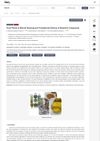
This review highlights the potential of plant-derived natural compounds as biocompatible and biodegradable materials in dermal and transdermal delivery systems, emphasizing their unexplored benefits and detailing recent advances in isolation techniques and drug delivery technologies.
 July 2023 in “International Journal of Molecular Sciences”
 This study found that N,N-dimethylglycine sodium salt promoted proliferation and migration of cultured human epidermal keratinocytes and had anti-inflammatory and antioxidant effects in vitro.
 December 2013 in “Iranian Journal of Applied Animal Science”
 Adding bentonite clays to goat diets increased milk yield, periwinkle shell improved chicken egg production, and vaccination increased muscle area and carcass yield in calves.