4 citations
,
December 2022 in “Skin Research and Technology” This study found that a combination of dermatoscopy and reflectance confocal microscopy assists in accurately diagnosing pigmented prurigo, which is often misdiagnosed due to its varied clinical manifestations.
 November 2018 in “Chin J Clin Lab Mgt (Electronic Edition)”
 This paper introduces Concentration Growth Factor (CGF) as a potential treatment for androgenetic alopecia, but reports no clinical findings on its effectiveness in promoting hair growth.
This study found that PRP injections may safely improve penile curvature and PDQ scores in men with stable-phase Peyronie's Disease, although the curvature reduction observed was not enough to determine long-term clinical significance.
 June 2023 in “GLOBAL JOURNAL FOR RESEARCH ANALYSIS”
 This review discusses platelet-rich plasma as a treatment for androgenetic alopecia and explains its mechanisms, but presents no new clinical results.
 February 2023 in “Military Medical Science Letters”
 This study concluded that both pure-PRP and leukocyte-PRP injections significantly reduced serum CD 68 levels in knee osteoarthritis patients, with pure-PRP being more effective than leukocyte-PRP.
January 2023 in “Journal of Cosmetic Dermatology” This review concludes that platelet-rich plasma treatment is effective for androgenetic alopecia, with recommendations for a specific volume, frequency, and duration of therapy for optimal results.
134 citations
,
October 2020 in “Preprints.org” This review discusses recent advancements in platelet-rich plasma therapies for tissue repair and regenerative medicine, but reports no new clinical results, highlighting a need for translating research into human clinical protocols.
 August 2024 in “Quality in Sport”
 This review highlights the positive effects of platelet-rich plasma in aesthetic and regenerative medicine, particularly for skin rejuvenation, anti-aging, hair reconstruction, and wound healing, but it reports no new clinical results.
 33 citations
,
May 2006 in “Journal of Investigative Dermatology”
33 citations
,
May 2006 in “Journal of Investigative Dermatology” This study found that high levels of parathyroid hormone-related protein expression can result in the production of shorter hair shafts, likely through effects on angiogenesis.
 May 2015 in “Hair transplant forum international”
 This article contains no research findings; it reports on an online discussion about platelet-rich plasma (PRP) and opinions shared during a conference.
12 citations
,
August 2001 in “PubMed” This study found that contrast enhanced phototrichogram (CE-PTG) significantly improved detection of various hair types and growth stages in androgenetic alopecia compared to standard PTG and was comparable to biopsy analysis.
 September 2024 in “Cureus”
 In this study, researchers optimized a method for preparing platelet-rich plasma to improve light transmittance aggregometry testing in coronary artery disease patients on clopidogrel and ticagrelor, finding distinct differences in platelet aggregation and volumes among these patients compared to healthy controls.
 16 citations
,
January 2021 in “International Journal of Medical Sciences”
16 citations
,
January 2021 in “International Journal of Medical Sciences” This study found that gelatin microspheres loaded with platelet-rich plasma enhanced wound healing in rats by improving inflammatory and angiogenic responses compared to untreated wounds or PRP alone.
January 2025 in “Fìzìologìčnij žurnal” This study found that in patients with elevated fibrinogen levels undergoing revision rhinoplasty, PDRN decreased M1 cytokines and increased M2 cytokines, potentially offering a new therapeutic approach, but further research is needed to understand its mechanisms and effects fully.
 February 2022 in “Research Square (Research Square)”
 This study demonstrated that LGR5 is a marker of hair follicle stem cells across species using a transgenic pig model and noted similarities and differences in expression patterns compared to humans.
19 citations
,
January 2019 in “Animals” This study suggests that PDGFA and BMP2 play a role in the hair follicle cycle in cashmere goats, with PDGFA particularly involved in activating the growth phase.
6 citations
,
September 2019 in “Indian Journal of Dermatology”  February 2018 in “InTech eBooks”
 This review discusses the role of platelet-rich plasma therapy in various cosmetic procedures, finding potential benefits in improving tissue homeostasis if harvesting standards are maintained, but reports no new clinical results.
 January 2015 in “Surgical and Cosmetic Dermatology”
 This study reported effective hair growth improvement in androgenic alopecia through subcutaneous injections of platelet-rich plasma, with observed benefits in both women and men.
 April 2025 in “Journal of Skin and Stem Cell”
 This review discusses the potential of polydeoxyribonucleotide (PDRN) for various dermatological treatments and highlights its significant effects on wound healing, anti-aging, acne scars, and hair loss, but emphasizes the need for further clinical studies.
July 2025 in “Annals of Medicine” This study describes a planned multicenter randomized controlled trial to assess the safety, tolerability, and pharmacokinetics of subdermal gestrinone pellets in patients with deep infiltrative endometriosis-related pelvic pain, but it does not report any findings yet.
 9 citations
,
December 2010 in “Journal of The European Academy of Dermatology and Venereology”
9 citations
,
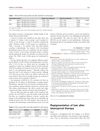
December 2010 in “Journal of The European Academy of Dermatology and Venereology” This letter reports repigmentation of hair in patients receiving latanoprost therapy.
August 2022 in “Theriogenology” This study found that allopregnanolone has a bimodal effect on prolactin secretion in sheep, stimulating PRL mRNA expression but inhibiting hormone release under stress and pregnancy conditions.
4 citations
,
May 2024 in “Rapid Communications in Mass Spectrometry” This study demonstrated that GP derivatization improves mass spectral analysis of spironolactone and its metabolites by reducing in-source fragmentation and enhancing signal clarity, laying the groundwork for future advancements in reaction optimization and quantitative assay development.
 June 2024 in “Journal of Ayub Medical College Abbottabad”
 This study concluded that adding 5% topical Procapil to PRP therapy provided better outcomes for androgenetic alopecia than PRP alone, as assessed by dermatologist evaluations and patient satisfaction.
 136 citations
,
February 2017 in “International Journal of Molecular Sciences”
136 citations
,
February 2017 in “International Journal of Molecular Sciences” This study observed that autologous platelet-rich plasma treatment improved hair count and density in areas with androgenetic alopecia compared to placebo, with differing outcomes based on the PRP collection device used.
 39 citations
,
March 2019 in “Dermatologic Surgery”
39 citations
,
March 2019 in “Dermatologic Surgery” This study's meta-analysis reported that PRP injections significantly increased hair density compared to baseline and placebo in androgenetic alopecia patients, supporting its use as a beneficial treatment.
January 2026 in “Andrology” This study found that PRP injections are safe and may slightly reduce penile curvature and improve PDQ scores in men with stable-phase Peyronie's Disease, but the changes are not significant enough to predict long-term effects.
34 citations
,
May 2001 in “Endocrinology” This study found that MRP3 is induced in wound edge keratinocytes during wound healing and may play a role as a growth or angiogenesis factor in this process and the hair follicle cycle.
September 2020 in “Revista Digital de Postgrado” This review discusses the characteristics and dermatological applications of platelet-rich plasma and fibrin meshes and reports no new clinical results.