 December 2022 in “Otorhinolaryngology, Head and Neck Pathology.”
 In this study, the combination of photobiomodulation therapy and Respiro Myrtol forte reduced pain and inflammation more effectively than either treatment alone in patients after septoplasty.
 52 citations
,
January 2001 in “Eye”
52 citations
,
January 2001 in “Eye” This review discusses challenges in treating CMO associated with uveitis and highlights the need for prospective studies to guide therapy, as current treatments are largely empirical and potentially harmful.
 January 2024 in “Jurnal Ilmu Kesehatan Hewan”
 In this case report, a 7-month-old local dog named Oreo was diagnosed with demodicosis and helminthiasis and showed improvement in skin condition after 14 days of treatment with ivermectin, antihistamines, vitamin B complex, fish oil, and sulfur soap.
May 2013 in “DOAJ (DOAJ: Directory of Open Access Journals)” This study found that a multimodal microemulsion containing minoxidil, diclofenac, and tea tree oil was significantly more effective and stable than minoxidil alone in treating androgenic alopecia over a 32-week period.
 4 citations
,
August 2022 in “The Scientific World Journal”
4 citations
,
August 2022 in “The Scientific World Journal” This study found that bufotalinin, derived from Merremia peltata leaves, may enhance hair growth by acting as a potential androgen receptor antagonist in rabbits.
20 citations
,
April 2020 in “Journal of advanced Biomedical and Pharmaceutical Sciences” This study investigated the use of methylene blue in a niosomal hydrogel for photodynamic treatment of acne and found that it led to significant improvement in inflammation compared to IPL treatment.
January 2007 in “동의생리병리학회지 = Journal of physiology & pathology in Korean Medicine” This study observed that extracts of Biotae Orientalis showed hair growth effects in mice and suggest they may be useful for topical treatment of alopecia areata.
22 citations
,
January 2012 in “Mediators of inflammation” This review discusses the potential benefits of nonantibiotic macrolides for treating inflammatory skin disorders and reports no new clinical results.
 10 citations
,
June 2005 in “Small ruminant research”
10 citations
,
June 2005 in “Small ruminant research” This study found that melatonin combined with bromocryptine treatment in Spanish goats increased secondary hair follicle numbers and extended the cashmere growth phase during spring.
 8 citations
,
May 2019 in “Journal of dermatological treatment”
8 citations
,
May 2019 in “Journal of dermatological treatment” This study found that vismodegib was effective in treating basal cell carcinoma, achieving complete remission in some patients; however, significant side effects often required careful management to prevent therapy suspension, which can lead to resistance.
7 citations
,
September 2021 in “Antimicrobial Agents and Chemotherapy” This study found that olorofim demonstrated potent in vitro and in vivo antifungal activity against dermatophytes, resolving skin lesions in a guinea pig model similar to clotrimazole, suggesting it may be a promising treatment for dermatophytosis.
 May 2015 in “Journal of The American Academy of Dermatology”
 Both treatments help with hair regrowth in alopecia areata, but azathioprine has milder side effects than betamethasone.
 January 2025 in “The Egyptian Journal of Hospital Medicine”
 This study observed significant repigmentation in localized stable vitiligo lesions treated with oral baricitinib, with even more improvement when combined with topical tacrolimus, and reported no side effects.
 14 citations
,
July 2012 in “Journal of the American Academy of Dermatology”
14 citations
,
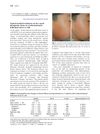
July 2012 in “Journal of the American Academy of Dermatology” This study found that topical tacalcitol improved roughness and scaling in erythromelanosis follicularis faciei et colli, although it was less effective for facial erythema.
February 2025 in “Canadian Journal of Health Technologies” This review assessed the clinical and cost-effectiveness of baricitinib, an oral treatment for severe alopecia areata in adults, to inform Canadian reimbursement recommendations, excluding Quebec.
 109 citations
,
March 2011 in “Journal of controlled release”
109 citations
,
March 2011 in “Journal of controlled release” This study found that econazole nitrate delivered via MPEG-dihexPLA micelles significantly increased skin deposition compared to Pevaryl® cream, potentially enhancing drug bioavailability and clinical efficacy.
 July 2020 in “IP International Journal of Maxillofacial Imaging/International journal of maxillofacial imaging/IP International journal of maxillofacial imaging”
 The authors concluded that mesotherapy is a new, effective, and safer dermatologic treatment option for conditions like alopecia, skin rejuvenation, and hyperpigmentation due to its efficiency and reduced treatment time.
14 citations
,
July 2007 in “Therapy” This review discusses ethosomes as potential carriers for delivering drugs into deeper skin layers and provides no new clinical results, suggesting a need for further studies on their efficiency in dermal therapies.
 1 citations
,
December 2022 in “Journal of cosmetic dermatology”
1 citations
,
December 2022 in “Journal of cosmetic dermatology” This study found that combining a potent steroid with a vitamin D analogue may offer more convenient treatment for localized alopecia areata than using a superpotent steroid alone, with comparable efficacy but fewer side effects.
 November 2022 in “The journal of investigative dermatology/Journal of investigative dermatology”
 This study found that applying ivermectin 1% cream significantly improved both visible symptoms like erythema and invisible symptoms such as stinging, burning, and dryness in rosacea patients over a period of at least 16 weeks.
March 2021 in “CRC Press eBooks” This review discusses the application of mesotherapy in dermatology and trichology, noting its potential benefits and issues, but reports no new clinical results.
 1 citations
,
January 2023 in “Research Square (Research Square)”
1 citations
,
January 2023 in “Research Square (Research Square)” This study found that a neem-based herbal formulation may be more effective than ivermectin in treating sarcoptic mange in dromedary camels, leading to complete recovery without scarring or keratinization.

This study found that a combination of betulin and cytostatic Namitecan had a statistically significant synergistic effect on solid Ehrlich adenocarcinoma tumors in NMRI mice, and suggests a promising method for administering betulin in in vivo experiments despite its water insolubility.
 June 2022 in “Pakistan Journal of Medical and Health Sciences”
 This randomized controlled trial found that topical clobetasol propionate 0.05% ointment is significantly more effective than topical tacrolimus 0.1% ointment in promoting hair regrowth in patients with alopecia areata, with effective results observed in 79.31% of clobetasol users compared to 44.82% of tacrolimus users.
 July 2014 in “Disease-a-Month”
 The document gives treatment advice for various skin conditions, like using metronidazole for perioral dermatitis and minoxidil for hair loss.
 November 2016 in “Faridpur Medical College Journal”
 This study observed that Betamethasone oral mini-pulse therapy showed a good response in 60% of lichen planus patients, though further research is needed to confirm its efficacy.
 49 citations
,
April 2003 in “Biomaterials”
49 citations
,
April 2003 in “Biomaterials” In this study, BS and BO combined showed a synergistic effect in enhancing wound healing in rat skin lesions compared to using either alone or Flamazine®.
3 citations
,
January 1996 in “Journal of Dermatological Treatment” In this study, twice daily application of 3 μg/g calcitriol ointment was reported to be safe, effective, and well tolerated for treating moderate to severe chronic plaque psoriasis on the face and surrounding areas.
22 citations
,
August 2006 in “Journal of the European Academy of Dermatology and Venereology” This article reports on twice-weekly 5 mg betamethasone oral pulse therapy for alopecia areata but provides no clinical results.
5 citations
,
May 2017 in “Journal of dermatological science” This study reviewed the genetic and phenotypic aspects of Olmsted syndrome, highlighting pathogenic mutations in TRPV3 and MBTPS2 genes and their association with specific skin manifestations like symmetrical keratoderma and hyperkeratotic plaques.