3 citations
,
August 2024 in “Skin Research and Technology” In this study, LC-OCT imaging was found to noninvasively identify specific features of cicatricial alopecia due to lupus erythematosus, such as hyperreflective collagen fibers, which may aid in distinguishing it from other types of scarring alopecia.
 1 citations
,
January 2021 in “Dermatology online journal”
1 citations
,
January 2021 in “Dermatology online journal” This report describes a unique case of linear lichen planus pigmentosus on the face with histological features of lichen planopilaris, which has not been documented before.
This study found that in early retinal neurogenesis in mice, the transcription factor Lhx2 regulates Sonic Hedgehog signaling by controlling expression of pathway genes like the co-receptors Gas1 and Cdon.
This study demonstrated that the IVL-DrugFluidic® platform is effective for mass-producing finasteride-loaded polymeric microspheres for long-acting injectables, maintaining stable drug release without an initial burst for a month.

This article reports a rare case of a postmenopausal woman with coexisting lichen planus pigmentosus and classic lichen planopilaris, alongside a review of related literature.
 4 citations
,
March 2013 in “InTech eBooks”
4 citations
,
March 2013 in “InTech eBooks” Confocal Laser Scanning Microscopy (CLSM) is a useful tool for studying how drugs interact with skin and diagnosing skin disorders, despite some limitations.
18 citations
,
May 2006 in “Journal of Cutaneous Medicine and Surgery” This study reports the first known case of linear lichen planopilaris following Blaschko's lines in a nonfacial region.

This study found that patients with lichen planopilaris exhibit a higher pro-atherogenic lipid profile and elevated atherogenic indexes, suggesting a need for increased cardiovascular and lipid monitoring in these individuals.
3 citations
,
July 2025 in “International Immunopharmacology” 4350 citations
,
May 2012 in “Arthritis & Rheumatism” This study found that the new SLICC classification criteria for systemic lupus erythematosus were more sensitive and resulted in fewer misclassifications than the current ACR criteria, although they had lower specificity.
7 citations
,
March 2001 in “Journal of the European Academy of Dermatology and Venereology” This case report highlights the complexity of lupus erythematosus/lichen planus overlap syndrome, noting a high potential for progression to systemic lupus erythematosus.
January 2025 in “International journal of research studies in biosciences” This abstract discusses the prevalence and forms of lichen planopilaris, a type of scarring hair loss, but reports no new clinical findings.
1 citations
,
February 2025 in “International Journal of Dermatology” This case report by the researchers observed a complete remission of lichen planopilaris in a 58-year-old woman after treatment with the JAK-1 inhibitor abrocitinib, although they noted that concurrent topical therapy might have contributed to this outcome.
 April 2026 in “Frontiers in Medicine”
 In this case report, a female patient with both psoriasis and lichen planus initially responded to acitretin and topical mometasone but experienced a relapse after stopping the treatment. The authors reported marked improvement within 3 months after switching to upadacitinib, aiming to guide clinical decision-making.
 1 citations
,
April 2018 in “The journal of investigative dermatology/Journal of investigative dermatology”
1 citations
,
April 2018 in “The journal of investigative dermatology/Journal of investigative dermatology” This study found that oral tofacitinib improved disease activity in patients with lichen planopilaris, suggesting it may be a promising treatment option for this condition.
 1 citations
,
November 2025 in “Clinical and Experimental Medicine”
1 citations
,
November 2025 in “Clinical and Experimental Medicine” This review highlights the emerging role of long non-coding RNAs (lncRNAs) in dermatology, suggesting that lncRNAs significantly impact signaling pathways involved in normal skin functions and skin diseases, offering potential as biomarkers and therapeutic targets.
 February 2024 in “Australasian journal of dermatology”
 This research letter discusses the use of Janus kinase inhibitors for treating lichen planopilaris, although specific results or conclusions from the study are not provided.
 July 1998 in “Proceedings of SPIE”
 This study found that Low Power Laser therapy may be an effective complementary treatment for scalp alopecia and crural ulcers, showing quicker and potentially better results than conventional treatments.
 October 2023 in “International Journal of Science and Research (IJSR)”
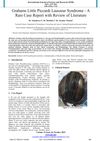
 This paper describes Grahams Little Piccardi Lassueur Syndrome, a rare type of Lichen Planopilaris that causes different types of alopecia and distinctive skin papules, primarily affecting females aged 40 to 70, and notes the current challenges in treatment options, particularly once scarring occurs.
 April 2023 in “Journal of Investigative Dermatology”
 In this systematic review, researchers found that individuals with lichen sclerosus have a higher prevalence of comorbidities like vitiligo, alopecia areata, and cardiovascular diseases compared to non-affected controls, and suggest screening all LS patients for cardiovascular risk factors and other diseases.
 April 2026 in “American Journal of Dermatopathology”
 This study identified a new dermoscopic feature, plexiform erythema, in lichen planopilaris lesions, suggesting it may indicate active disease and the potential need for more aggressive treatment.
 5 citations
,
November 2014 in “Hair transplant forum international”
5 citations
,
November 2014 in “Hair transplant forum international” This article introduces a series on low level laser light therapy, focusing on its science, regulatory aspects, and controlled trial methodologies, but reports no new clinical results.
 1 citations
,
March 2025 in “Journal of Investigative Dermatology”
1 citations
,
March 2025 in “Journal of Investigative Dermatology” Metabolic issues may trigger lymphocytic cicatricial alopecia, and treatments targeting these issues could help.
 April 2019 in “Journal of Investigative Dermatology”
 This study found that lichen planopilaris is associated with three core molecular pathways, which may inform new therapeutic strategies for scarring alopecia, including unique pathways like ABC transporters specific to LPP.
 June 2026 in “Frontiers in Cell and Developmental Biology”
 This review synthesizes the diverse roles of the transcription factor LHX2 in development, tissue maintenance, and injury repair across various organ systems, highlighting its potential therapeutic applications and significance in regenerative medicine, particularly in developmental disorders and tissue regeneration.
 1 citations
,
January 2023 in “Journal of Drugs in Dermatology”
1 citations
,
January 2023 in “Journal of Drugs in Dermatology” This review discusses Graham-Little Piccardi-Lasseur syndrome, a rare dermatosis with limited treatment options, emphasizing the importance of early diagnosis through physical exam and dermoscopy, but reports no new results.
33 citations
,
October 2016 in “Photomedicine and laser surgery” This review discusses the development of IPL devices, highlights their established cosmetic uses, such as treating vascular and pigmented lesions, and suggests potential expansion into more effective combination therapies.
April 2020 in “The Aesthetics” This article discusses the applications and proposed benefits of LED low level light therapy for various conditions like acne, wound healing, and pain relief, but provides no new clinical results.
 15 citations
,
September 2014 in “Journal of The American Academy of Dermatology”
15 citations
,
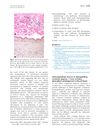
September 2014 in “Journal of The American Academy of Dermatology” This study found that seven cases of cicatricial alopecia initially diagnosed as discoid lupus erythematosus were more consistent with lichen planopilaris based on histopathology.
 3 citations
,
September 2015 in “Journal of Vascular Surgery”
3 citations
,
September 2015 in “Journal of Vascular Surgery” This study found that chemical lumbar sympathectomy with 5% phenol effectively treated idiopathic livedo reticularis in most patients, offering a potential long-lasting solution with repeatable efficacy upon recurrence.