
In this case report, a woman's Majocchi's granuloma, linked to her pet guinea pig infected with Trichophyton mentagrophytes, improved significantly with a combination of terbinafine and ketoconazole cream.
 November 2025 in “SKIN The Journal of Cutaneous Medicine”
 In this open-label study of post-menopausal women with frontal fibrosing alopecia, researchers found that 12 weeks of baricitinib monotherapy significantly reduced disease activity as measured by the Lichen Planopilaris Activity Index, improved patient-reported scalp hair growth, but showed no significant change in eyebrow growth.
1 citations
,
October 2020 in “Cermin Dunia Kedokteran” This study reported complete clinical clearance of tinea capitis in a 3-year-old boy after 8 weeks of treatment with oral griseofulvin and ketoconazole shampoo.
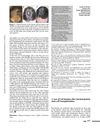 May 2018 in “European Journal of Dermatology”
 Adjusting the medication tacrolimus resolved a boy's red nail beds after a stem cell transplant.
 January 2003 in “Reactions Weekly”
 Lowering the dose of cyclosporin caused hair loss that didn't improve even when the dose was increased again.
This study found that home use of low-level light therapy reduced inflammation and symptoms like itching and burning in women with frontal fibrosing alopecia over six months.
1 citations
,
April 2024 in “Anais Brasileiros de Dermatologia” 46 citations
,
March 2009 in “Die Pharmazie” This study describes the development of nanostructured lipid carriers for minoxidil as a potential alternative to conventional topical solutions, showing promise for use in topical formulations.
 May 2026 in “Zenodo (CERN European Organization for Nuclear Research)”
 This study developed a new triamcinolone acetonide serum combined with a microneedling device, showing promise for treating alopecia areata by targeting hair follicles in a less invasive, patient-friendly way with confirmed drug solubility, compatibility, and safety.
3 citations
,
July 2025 in “International Immunopharmacology”  July 2021 in “Open access journal of biomedical science”
 This study evaluated the effectiveness of a lotion containing Larrea divaricata and Coffea arabica extracts in accelerating hair growth in women after chemotherapy, but it reports no results.
 July 2018 in “Journal of Dairy & Veterinary Sciences”
 In this veterinary case study, a 5-year-old Labrador with pruritus and alopecia tested positive for Malassezia pachydermatitis and recovered after treatment with oral terbinafine and topical ketoconazole.
 75 citations
,
June 2019 in “International Journal of Molecular Sciences”
75 citations
,
June 2019 in “International Journal of Molecular Sciences” This review discusses the therapeutic potential of costunolide for various diseases, highlighting its bioactivity and mechanisms, but it reports no new experimental results.
March 2026 in “Jurnal Pharmascience” This study found that isorhamnetin, a compound from the Rampai plant, showed a lower affinity energy in molecular docking tests compared to Minoxidil, indicating potential as an androgen receptor antagonist for alopecia therapy in silico, with favorable pharmacokinetic characteristics in ADME-Tox predictions.
 3 citations
,
August 2019 in “Journal of The American Academy of Dermatology”
3 citations
,
August 2019 in “Journal of The American Academy of Dermatology” Clascoterone safely promotes hair growth similar to minoxidil.
46 citations
,
September 2018 in “Expert Opinion on Drug Delivery” This study reported that nanostructured lipid carriers with melatonin improved hair density and decreased hair loss in patients with androgenic alopecia, suggesting a promising direction for future treatments.
 January 2012 in “The Year book of dermatology”
 This study found that women with late onset acne have fewer comedones and acne lesions compared to those with early onset, despite no differences in P. acnes density or sebum secretion.
January 2006 in “Chinese Journal of Dermatology” In this study, latanoprost at certain concentrations promoted the growth of pig hair follicles in vitro by possibly extending the anagen phase of the hair cycle.
February 2013 in “Archives of Disease in Childhood Education & Practice” This text describes kerion, a severe form of tinea capitis, and emphasizes the difficulty of diagnosis and the need for oral antifungal treatment, but reports no new clinical results.
2 citations
,
September 2022 in “Drug Delivery” This study found that a transdermal drug delivery system using nanostructured lipid carriers and polymeric microneedles for β-sitosterol significantly enhanced hair growth in testosterone-induced alopecia rats, suggesting potential for treating androgenic alopecia.
18 citations
,
January 2015 in “International Journal of Trichology” This study found that intralesional steroid treatment led to significantly more hair regrowth in alopecia areata patients than narrow band ultraviolet B therapy, while their combination did not enhance effectiveness.
 July 2023 in “Journal of exploratory research in pharmacology”
 In this case report, a 47-year-old man with extensive psoriasis saw significant improvement in scaling and itching after using a new lotion containing clobetasol and other ingredients for one week, but further research is needed to confirm these findings.
January 2026 in “ACS Applied Bio Materials” This study developed nanoliposomes embedding AR-PROTAC and NFKBIZ siRNA to target androgen receptors and reduce oxidative stress, which improved the follicular microenvironment and enhanced hair regrowth in androgenetic alopecia, suggesting a promising multi-target therapeutic strategy.
13 citations
,
January 2018 in “International Journal of Trichology” In this study, intralesional triamcinolone acetonide injections were associated with halting the progression of frontal fibrosing alopecia in female patients and showed minimal adverse effects, but the efficacy as sole therapy remains unclear pending further trials.
 February 2025 in “Indian Dermatology Online Journal”
 The study found that both mometasone and calcipotriol ointments effectively reduced alopecia severity in localized alopecia areata, with calcipotriol having fewer side effects, while tacrolimus showed no significant effect.
39 citations
,
October 2012 in “Headache The Journal of Head and Face Pain” This study reports cutaneous atrophy and alopecia in four patients following greater occipital nerve blockade with triamcinolone and lidocaine, suggesting that alternative steroids may reduce these side effects.
 8 citations
,
June 2016 in “Journal of Pharmacy Practice”
8 citations
,
June 2016 in “Journal of Pharmacy Practice” This case report suggests that lisinopril may cause alopecia, which resolved after the patient switched to losartan potassium.
15 citations
,
January 2009 in “Indian journal of dermatology, venereology, and leprology” This case report describes two instances of white piedra, a fungal hair infection, and notes successful treatment with oral itraconazole and topical ketoconazole in one patient.
 2 citations
,
May 2012 in “Indian drugs”
2 citations
,
May 2012 in “Indian drugs” This study found that a proniosomal gel formulation of finasteride increased anagen hair count in male volunteers with androgenic alopecia by 42.85% compared to the control group.
This review reports no new results and discusses various topical treatments, noting that fluocortin butyl ester offers anti-inflammatory effects without systemic side effects, while combinations outperform single-agent therapies in managing hyperpigmentation.