 May 2011 in “Dermatología argentina”
 In this case report, a female patient with frontal fibrosing alopecia and lichen scleroatrophicus vulvae experienced excellent results from hair microtransplants combined with finasteride and topical minoxidil, maintained over six years.
 8 citations
,
April 2011 in “Surgery today”
8 citations
,
April 2011 in “Surgery today” This study found that sodium zinc dihydrolipoylhistidinate reduced chemotherapy-induced hair loss in rats, suggesting its potential as a treatment for this side effect.
 September 2025 in “Cermin Dunia Kedokteran”
 This research reports that onychomycosis, a common nail fungal infection often caused by Candida yeast, requires laboratory testing like direct preparations, fungal cultures, and molecular tests for accurate diagnosis due to its diverse etiology and differential diagnosis, improving therapy effectiveness and efficiency.
 January 2015 in “Dermatology online journal”
 This case report reviews a 67-year-old man with both alopecia totalis and lichen planus of the nails, suggesting a possible autoimmune link between these rare concurrent conditions, but presents no new clinical data.
5 citations
,
July 2007 in “PubMed” This report describes a case of alopecia totalis associated with lopinavir/ritonavir in an HIV-positive patient, which reversed after discontinuation of the drug.
 May 2026 in “Zenodo (CERN European Organization for Nuclear Research)”
 This study developed a low-viscosity triamcinolone acetonide serum, used with a derma stamp microneedling device, to improve targeted treatment of alopecia areata, reporting favorable drug solubility, spreadability, and permeation to hair follicles, while maintaining skin safety.
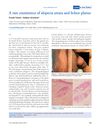 March 2019 in “Nasza Dermatologia Online”
 A man had both alopecia areata and lichen planus, which is uncommon.
 December 2024 in “Kahramanmaraş Sütçü İmam Üniversitesi Tıp Fakültesi Dergisi”
 This study found that switching patients with alopecia areata unresponsive to topical clobetasol 17 propionate 0.05% to anthralin treatment led to improved treatment success.
 July 2024 in “Forum Dermatologicum”
 This review evaluates various topical treatments for androgenetic alopecia but does not provide new clinical findings, emphasizing the need for selecting therapies with limited systemic side effects.
65 citations
,
April 1999 in “Journal of Parasitology” This study found that all lesions in mice treated with a new topical formulation, WR 279,396, healed completely without relapse, outperforming other formulations and showing no toxicity.
 79 citations
,
September 2018 in “Dermatologic therapy”
79 citations
,
September 2018 in “Dermatologic therapy” This study found that treatment with oral tofacitinib, alone or with other therapies, was associated with clinical improvement in most patients with recalcitrant lichen planopilaris.
 21 citations
,
August 1960 in “British journal of dermatology/British journal of dermatology, Supplement”
21 citations
,
August 1960 in “British journal of dermatology/British journal of dermatology, Supplement” Endoxan often causes hair loss, which usually starts in the third week of treatment.
January 2012 in “Lume (Universidade Federal do Rio Grande do Sul)”  January 2022 in “Elsevier eBooks”
 This study found that sodium valproate nanospanlastics could be an effective and safer method for treating androgenic alopecia, with results comparable to minoxidil but fewer side effects.
18 citations
,
November 1989 in “Clinical and experimental dermatology” This case report describes a 5-year-old girl with an extensive Microsporum canis scalp infection, highlighting griseofulvin as the preferred treatment and noting corticosteroids' benefit in severe inflammatory cases.
29 citations
,
October 2001 in “British Journal of Ophthalmology” In this case, intralesional cidofovir was reported to successfully treat SCC without systemic toxicity, suggesting it may be considered as an alternative to surgical excision.
 24 citations
,
April 2005 in “The Journal of Dermatology”
24 citations
,
April 2005 in “The Journal of Dermatology” This study found that 2% ketoconazole solution stimulated hair growth significantly in a mouse model, suggesting potential benefits for male pattern hair loss.
3 citations
,
January 2011 in “Yearbook of Dermatology and Dermatologic Surgery” 18 citations
,
July 2001 in “International Journal of Dermatology” This case report documents a successful response to griseofulvin and prednisolone treatment in a 12-year-old boy with lichen planopilaris, characterized by patchy hair loss and distinct skin changes.
 74 citations
,
March 1963 in “Archives of Dermatology”
74 citations
,
March 1963 in “Archives of Dermatology” This article reviews historical reports of skin changes, such as pseudoacanthosis nigricans, associated with cholesterol-lowering drugs like triparanol and nicotinic acid, but presents no new clinical findings.
 47 citations
,
September 2013 in “Aaps Pharmscitech”
47 citations
,
September 2013 in “Aaps Pharmscitech” This study found that liquid crystalline nanoparticles formulated with Cremophor surfactants significantly enhanced skin permeation of finasteride compared to lower surfactant concentrations.
 March 2021 in “Jurnal Biomedik : JBM”
 This literature review found that systemic antifungals, including griseofulvin, terbinafine, and azole derivatives, are effective against dermatophytosis, though their effectiveness varies with the type of infection and treatment duration.
2 citations
,
May 2024 in “International Journal of Dermatology” 7 citations
,
September 1962 in “Oral Surgery Oral Medicine Oral Pathology” This study reported that black hairy tongue was rapidly resolved with topical triamcinolone acetonide, suggesting further trials for its treatment are warranted.
 May 2025 in “Journal of Nanobiotechnology”
 This study reported that an ATRA-loaded nanostructured lipid carrier gel (ATRA-NLC-Gel) improved symptoms of alopecia areata in mice by enhancing transdermal drug delivery, reducing skin irritation, and promoting hair regrowth through targeted follicle enrichment and pathway activation.
 5 citations
,
May 2020 in “Clinical and Experimental Dermatology”
5 citations
,
May 2020 in “Clinical and Experimental Dermatology” This correspondence discusses clascoterone as a potential new treatment for androgenetic alopecia but reports no clinical results.
 216 citations
,
October 1997 in “American Journal of Ophthalmology”
216 citations
,
October 1997 in “American Journal of Ophthalmology” This study found that unilateral topical latanoprost use for glaucoma was associated with hypertrichosis and increased pigmentation of eyelashes in the treated eye compared to the untreated eye.
July 2025 in “The Egyptian Journal of Hospital Medicine” This study found that intralesional methotrexate and triamcinolone acetonide have similar efficacy for localized alopecia areata in adults, but differ in safety profiles, with methotrexate associated with hyperpigmentation and triamcinolone with atrophy.
In this phase I study, CG2001, a topical foam combining minoxidil and finasteride, was found to be safe and well-tolerated in Chinese males with androgenetic alopecia, showing significantly reduced systemic finasteride exposure compared to oral administration, potentially reducing related side effects.
 July 2024 in “Biomolecular and Health Science Journal”
 This case report describes a 33-year-old woman with both subacute cutaneous lupus erythematosus and onychomycosis, highlighting the importance of excluding infections and considering the spectrum of alopecia causes in lupus patients.