 3 citations
,
July 2012 in “Indian Journal of Psychological Medicine”
3 citations
,
July 2012 in “Indian Journal of Psychological Medicine” Olanzapine helped a man who thought he had bugs on his skin.
9 citations
,
April 2020 in “Journal of Cosmetic Dermatology” This case report describes the first instance of eosinophilic folliculitis of the scalp occurring during nivolumab therapy, which responded partially to topical steroids and cream but did not require stopping the treatment.
October 2017 in “Our Dermatology Online” This study reports that while DCP had similar treatment efficacy in propylene glycol and isopropanol for alopecia areata, the formulation in isopropanol was better tolerated.
 January 2025 in “Dermatologic Therapy”
 This study found that adding low-dose oral minoxidil to standard treatment for lichen planopilaris was safe but did not significantly improve hair density or thickness, although minor hair regrowth was observed in some scarring areas.
 52 citations
,
February 2006 in “Archives of Dermatology”
52 citations
,
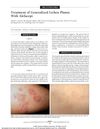
February 2006 in “Archives of Dermatology” This case report describes a 25-year-old woman with widespread lichen planus who did not respond to multiple systemic treatments, including antihistamines, hydroxychloroquine sulfate, and corticosteroids.
 July 2022 in “SKIN The Journal of Cutaneous Medicine”
 This case report presents the first successful treatment of acne keloidalis nuchae with a combination of halobetasol 0.01% and tazarotene 0.045% lotion.
12 citations
,
August 2011 This paper discusses tinea capitis in adults, emphasizing that it particularly affects postmenopausal African American or Black women, and notes challenges in treatment due to antifungal resistance.
 April 2026 in “International Journal of Drug Delivery Technology”
 The study developed herbal shampoo formulations using isolated phytoconstituents, such as eugenol, rutin, menthol, and camphor, which demonstrated similar antifungal efficacy to ketoconazole but with improved safety and detergency, offering a promising alternative for managing seborrheic dermatitis.
August 2026 in “Canadian Journal of Health Technologies” This study found that Litfulo improved hair regrowth in patients aged 12 and older with severe alopecia areata but did not meaningfully improve anxiety or depression symptoms compared to placebo.
This case report details a patient with lichen planopilaris who maintained successful hair transplant results for seven years, suggesting chemotherapy may have played a role in preventing re-activation of the disease.
 October 2025 in “Zenodo (CERN European Organization for Nuclear Research)”
 Ritlecitinib may help young adults with severe alopecia areata when ketoconazole fails.
 April 2012 in “Journal of the American Academy of Dermatology”
 In this survey of dermatologists, pimozide was most commonly identified as the preferred first-line antipsychotic for treating delusions of parasitosis, followed by risperidone.
 10 citations
,
May 2017 in “CMAJ. Canadian Medical Association journal”
10 citations
,
May 2017 in “CMAJ. Canadian Medical Association journal” The boy had a fungal scalp infection called kerion, which was cured with oral antifungal medication.
January 1987 in “Chronica Dermatologica” 113 citations
,
May 2007 in “Journal of the American Academy of Dermatology” This study suggests that tetracycline may be more effective for treating lichen planopilaris than previously thought, alongside topical high-potency and intralesional corticosteroids.
 May 2014 in “Clinical and Experimental Dermatology”
 A 70-year-old woman with a rare skin condition improved after treatment with topical steroids and acitretin.
In this case study, treatment with terbinafine effectively resolved symptoms of tinea capitis in an eight-year-old male, highlighting trichoscopy as a valuable diagnostic tool for this common fungal scalp infection and proposing its integration with clinical data for quicker diagnosis in settings lacking mycological facilities.
 January 2019 in “Open access journal of mycology & mycological sciences”
 This article discusses tinea capitis, highlighting its causes, symptoms, diagnostic methods, and the importance of selecting treatment based on the causal agent for effective outcomes; it reports no new clinical results.
 January 2025 in “Letters in Drug Design & Discovery”
 This study found that ozonated olive oil exhibited antifungal activity against Trichophyton mentagrophytes, comparable to the standard antifungal terbinafine, in an in vivo rat study, suggesting it may serve as an alternative treatment for dermatophytosis.
 December 2024 in “Tropical Journal of Natural Product Research”
 This study aimed to enhance the skin penetration of brown algae fucoidan using a Nanostructured Lipid Carrier, achieving a formulation with good physical quality and stability.
 May 2013 in “Reactions Weekly”
 Using minoxidil can cause severe skin reactions in some people.
 July 1996 in “Annals of Internal Medicine”
 This correspondence reported significant variability between quantitative PCR and bDNA assays for measuring Hepatitis C virus RNA in high-titer specimens, challenging the reliability of the Chiron assay.
January 2026 in “Updates in clinical dermatology” 28 citations
,
October 2000 in “International Journal of Dermatology” This case report details a 37-year-old man who developed eosinophilic pustular dermatosis after previously resolving herpes zoster, with successful treatment using itraconazole and cycloproxolamine.
December 2022 in “Scientific Reports” This study found that caffeic acid amide derivative, compound 4, effectively inhibited steroid 5α-reductase type 1 in vitro, suggesting potential for development as a treatment for androgenic alopecia.
 December 2025 in “IP Indian Journal of Clinical and Experimental Dermatology”
 This study observed that topical dinitrochlorobenzene was significantly more effective than topical betamethasone in treating patients with alopecia areata, with 53.3% achieving excellent hair regrowth compared to 13.3% using betamethasone.
1 citations
,
October 2024 in “JAAD Case Reports” This article discusses alopecia areata and lichen planopilaris, providing a review of their clinical characteristics and reporting no new research findings; the authors underscore the potential progression and distinctive features of each condition.
24 citations
,
July 2009 in “Mycoses” This case report describes an adult patient with tinea capitis due to Microsporum canis who experienced complete hair regrowth following treatment with fluconazole and ketoconazole shampoo.