A Comparative Study on Therapeutic Efficacy Between Topical Dinitrochlorobenzene and Topical Betamethasone in Alopecia Areata
December 2025
in “
IP Indian Journal of Clinical and Experimental Dermatology
”
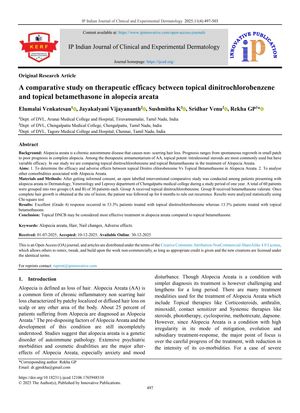
Studysummary This study observed that topical dinitrochlorobenzene was significantly more effective than topical betamethasone in treating patients with alopecia areata, with 53.3% achieving excellent hair regrowth compared to 13.3% using betamethasone.
Our plain-language summary. Not medical advice or a treatment recommendation. Consult a qualified healthcare professional before changing treatment. Full disclaimer
This study compared the efficacy of topical dinitrochlorobenzene (DNCB) and topical betamethasone in treating alopecia areata among 60 patients, divided into two groups of 30 each. The results indicated that DNCB was more effective, with 53.3% of patients achieving excellent hair regrowth (Grade 4) compared to 13.3% in the betamethasone group. However, DNCB was associated with more side effects, such as eczema and hypopigmentation. The study concluded that while DNCB is more effective than betamethasone, further research with larger samples is needed.