February 2024 in “International journal of molecular sciences” This study established an animal model using UV-irradiated C57BL/6 mice to assess hair luster, reporting that UV exposure alters keratin-associated protein gene expression, and suggested potential for developing effective hair care products by evaluating treatments like oral minoxidil.
October 2023 in “Applied sciences” In this study, Iris germanica L. rhizome-derived exosomes were found to reduce oxidative stress, enhance antioxidant enzyme transcription, and restore cellular function in human epidermal keratinocytes, suggesting potential protective effects against oxidative-stress-induced skin damage.
 June 2023 in “Historical records of Australian science/Historical Records of Australian Science”
 This biographical abstract highlights George Rogers' pioneering contributions to the understanding of keratin molecular structure and keratinisation biochemistry, including the application of electron microscopy to hair ultrastructure and the discovery of enzymes and gene transcription processes relevant to keratin proteins.
 June 2023 in “Frontiers in Medicine”
 This study identified core genes and pathways involved in androgenetic alopecia, finding that genes related to hair follicle development are down-regulated, while those linked to immune responses are up-regulated, highlighting potential therapeutic targets.
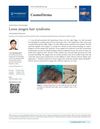 February 2023 in “Cosmoderma”
 Loose anagen hair syndrome causes easily shed hair but usually improves with time.
 September 2022 in “IP Indian journal of clinical and experimental dermatology”
 This case report describes an 8-year-old girl with atrichia congenita characterized by complete hair loss and papular lesions, attributed to an insertion mutation in the hairless gene.
 October 2021 in “The Egyptian Journal of Hospital Medicine ”
 This study concluded that combination therapies often yield better results for treating atrophic post-acne scars than single treatments.
This study found differential expression of genes related to hair fiber production in Pashmina and Barbari goats, potentially enhancing pashmina fiber quality and informing future enrichment analyses.
This review discusses loose anagen hair syndrome in children, characterized by non-scarring alopecia and increased hair shedding, and reports no new results; topical minoxidil may be used as a treatment.
 April 2018 in “bioRxiv (Cold Spring Harbor Laboratory)”
 This study identified a specific genetic variant in the CCHCR1 gene that may contribute to alopecia areata through impaired keratinization, suggesting an alternative mechanism beyond autoimmune causes.

This chapter reviews various fungal skin diseases affecting cattle but does not report new research findings; it focuses on rare, inherited, and congenital conditions like follicular dysplasia and cutaneous asthenia.
This chapter reviews fungal skin diseases in goats and their hereditary aspects, but it does not present new experimental results.
January 2018 in “Indian Dermatology Online Journal” This case report describes a rare instance of Olmsted syndrome with hypotrichosis in a 5-year-old boy, noting mild improvement in symptoms following treatment with oral acitretin and other interventions.
 November 2017 in “Koubunshi rombunshuu/Kōbunshi ronbunshū”
 In this study, treatments using a shampoo and conditioner with hematin helped repair damaged hair by depositing a cuticle-like structure, straightening hair as observed through electron microscopy.
January 2017 in “대한미용학회지” This study observed that hair follicle cuticular cells undergoing keratinization were significantly thicker than those in a normal hair shaft, due to incomplete loss of cytosol.
September 2016 in “European Journal of Pediatric Dermatology/PD. European journal of pediatric dermatology” This article discusses the characteristics and challenges of treating ulerythema ophryogenes, noting the limited effectiveness of emollients, vitamin A, retinoids, and transient response to corticosteroids, with some success using dye laser therapy.
 April 2016 in “Plastic and reconstructive surgery. Global open”
 This article lists online educational resources from the American Society of Plastic Surgeons but reports no new research findings.
January 2015 in “Springer eBooks” Ichthyoses are skin disorders causing scales, with treatment depending on type and severity.
This study found that ingesting seeds from the Lecythis ollaria tree may cause hair loss and other toxic effects in animals.
 December 2013 in “미용예술경영연구”
 This study found that scalp treatments improved hair density and reduced the number of telogen bulbs in patients with Telogen Effluvium.
 January 2008 in “Springer eBooks”
 Thyroid hormone may be useful for treating various skin conditions and needs more research.

This review discusses loose anagen hair syndrome, a benign and self-limited condition predominantly affecting children, and highlights the importance of differentiating it from other hair disorders like telogen effluvium and trichotillomania, but reports no new results.
This article reviews different generations of synthetic retinoids for dermatological use, discussing their efficacy and significant side effects, but reports no new clinical results.
January 2002 in “Linchuang pifuke zazhi” This report describes an unusual case of proliferating trichilemmal cyst with trichoepitheliomatous change in a young woman, differing from its typical presentation in elderly women.
December 2001 in “中華皮膚科醫學雜誌” This case report describes a rare instance of sebaceous trichofolliculoma identified in an 18-year-old boy, characterized by a dermal nodule on the nasal bridge with distinct histological features.
January 2001 in “Acta Academiae Medicine Militaris Tertiae” In this study, the researchers reported that the expression of keratin 14 in the skin and hair follicles of neonatal and juvenile rats differs from that observed in adults or human embryos.
January 1996 in “대한피부과학회지” This study found a significantly higher density of Demodex mites in sebaceous hyperplasia lesions compared to controls, suggesting a possible link between Demodex and the development of these skin lesions.
January 1995 in “Seoul National University Open Repository (Seoul National University)” This study found that skin sulfhydryl oxidase plays a role in keratinization and may contribute to skin's protective functions, with its expression influenced by irritants and differentiation modifiers.
February 1990 in “PubMed” This study suggests that human hair follicle cells and epidermal keratinocytes differ in their degree of keratinization and other characteristics when cultured on mixed collagen membranes.
 January 1990 in “Irish Journal of Medical Science (1971 -)”
 Retinoids are important for treating skin conditions but should be used with caution due to serious side effects and risks during pregnancy.