 April 2024 in “bioRxiv (Cold Spring Harbor Laboratory)”
 In a keratinocyte-specific knockout mouse model, this study found that deleting GRK2 disrupted hair follicle homeostasis, causing cyst-like structures, abnormal growth patterns, and eventual hair loss, suggesting potential links to immune-mediated alopecias.
 October 2023 in “International Journal of Science and Research (IJSR)”
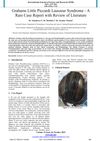
 This paper describes Grahams Little Piccardi Lassueur Syndrome, a rare type of Lichen Planopilaris that causes different types of alopecia and distinctive skin papules, primarily affecting females aged 40 to 70, and notes the current challenges in treatment options, particularly once scarring occurs.
2 citations
,
March 2024 in “Dermatologic Surgery” The chemical peel improved the appearance of hand spots safely and effectively.
 2 citations
,
April 2022 in “Clinical, cosmetic and investigational dermatology”
2 citations
,
April 2022 in “Clinical, cosmetic and investigational dermatology” In this case series, four African American women with treatment-resistant central centrifugal cicatricial alopecia showed scalp itch relief and significant hair regrowth after using a new botanical formula for 8 weeks to 1 year, with no adverse effects reported.
January 2024 in “Animals” In this study, researchers found that circERCC6, a circular RNA identified in cashmere goat hair follicles, helps activate secondary hair follicle stem cells, with its role dependent on specific m6A modifications that interact with miR-412-3p to regulate BNC2 expression.
5 citations
,
March 2022 in “Clinical Cosmetic and Investigational Dermatology” This study proposed a model that accurately predicts skin condition using genotype information and machine learning, suggesting potential for creating customized cosmetics.
 38 citations
,
April 2017 in “PLOS Genetics”
38 citations
,
April 2017 in “PLOS Genetics” This study found that human progenitor keratinocytes form unique complements of enhancers and super-enhancers during differentiation and migration, influencing gene expression and skin disease variant enrichment.
25 citations
,
October 2007 in “Developmental biology” In this study, transgenic mice altered to express a Clim-inhibiting molecule under a keratin promoter showed corneal degradation and hair follicle failure, highlighting Clim proteins' role in maintaining these tissues.
1 citations
,
May 2025 in “BMC Genomics” In this study, researchers identified key lncRNAs and target genes potentially involved in the transformation of the hair follicle cycle, which could advance understanding of lncRNAs' roles in hair follicle development.
 May 2025 in “Medical Science Monitor”
 This review discusses recent research on the use of concentrated growth factor (CGF) for treating androgenetic alopecia, highlighting its potential to enhance hair regrowth and improve hair density but noting the need for high-quality clinical trials.
3 citations
,
May 2024 in “Poultry Science” This study identified key genes involved in feather follicle development in Wannan chickens, finding that genes such as LAMC2, COL6A3, and WNT7A are crucial in the regulation processes, potentially aiding molecular breeding programs for improved carcass appearance traits.
March 2025 in “International Journal of Molecular Sciences” This study analyzed proteomic changes in Jiangnan cashmere goats' secondary hair follicles and found that the PLIN2 gene significantly impacts hair follicle growth cycles by affecting dermal papilla cell proliferation, offering insights into breeding strategies to enhance cashmere yield.
 14 citations
,
June 2018 in “Frontiers in pharmacology”
14 citations
,
June 2018 in “Frontiers in pharmacology” In this study, EGCG from green tea promoted mink hair follicle growth and cell proliferation at specific concentrations, potentially through activation of Shh and AKT signaling pathways.
9 citations
,
February 2023 in “Genes” This study reveals that long non-coding RNAs influence cashmere fiber traits in goats by interacting with target genes involved in pathways affecting fiber diameter and color.
66 citations
,
August 2007 in “Applied and environmental microbiology” This study engineered a bioluminescent yeast strain responsive to androgenic chemicals, demonstrating rapid and sensitive detection suitable for high-throughput screening and environmental monitoring.
January 2004 in “uO Research (University of Ottawa)” This study found that overexpression of Claudin 6 in mice led to incomplete epidermal formation and hair abnormalities, suggesting its crucial role in skin differentiation and hair follicle development.
January 2010 in “Chinese Journal of Aesthetic Medicine” This study found that EGCG may promote hair growth by inducing and prolonging the anagen phase and delaying the catagen phase in an alopecia model of C57BL6 mice.
 October 2025 in “Dermatology Practical & Conceptual”
 This study found that ChatGPT 4.0 and Gemini 1.5 Flash provided more accurate and user-friendly responses to androgenetic alopecia questions than Deepseek R1, suggesting they could be effective tools for patient education with physician guidance.
9 citations
,
September 2013 in “Journal of Applied Animal Research” This study identified eight alleles of the caprine KAP13-3 gene in cashmere goats, which could influence gene expression and cashmere fiber characteristics.
 7 citations
,
March 2018 in “Asian-Australasian journal of animal sciences”
7 citations
,
March 2018 in “Asian-Australasian journal of animal sciences” This study observed that the OCIAD2 and DCN genes in Liaoning cashmere goats have opposite effects on hair growth by interacting with the TGF-β signaling pathway, influencing follicle morphogenesis and periodic changes.
1 citations
,
December 2020 in “Medical lasers” The laser therapy device effectively increased hair growth in people with androgenetic alopecia.
63 citations
,
May 2015 in “PloS one” This study found that GALT5 and GALT2 are redundant enzymes essential for O-glycosylation of AGPs, with mutations leading to significant growth and development defects in plants.
101 citations
,
June 2003 in “The EMBO Journal” Phospholipase Cδ1 is crucial for normal skin and hair development.
9 citations
,
April 2018 in “Canadian Journal of Animal Science” This study found that LEF-1 expression influences dermal papilla cells' proliferation through Wnt signaling, impacting the potential for cashmere yield improvement.
5 citations
,
September 2021 in “Clinical case reports” This case report documents the first known instance of Graham‐Little Piccardi Lassueur Syndrome in Saudi Arabia, observed in an adult dark-skinned male.
4 citations
,
October 2021 in “bioRxiv (Cold Spring Harbor Laboratory)” This study found that epidermal stem cells in live mice exhibit coordinated intercellular Ca 2+ signaling governed by G2 cycling stem cells and mediated by Connexin43, essential for tissue-wide communication during regeneration.
 4 citations
,
March 2013 in “InTech eBooks”
4 citations
,
March 2013 in “InTech eBooks” Confocal Laser Scanning Microscopy (CLSM) is a useful tool for studying how drugs interact with skin and diagnosing skin disorders, despite some limitations.
 2 citations
,
June 2024 in “Frontiers in Plant Science”
2 citations
,
June 2024 in “Frontiers in Plant Science” This study found that RALF peptides, through liquid-liquid phase separation, form condensates with pectin and other proteins, playing a pivotal role in plant development and stress response regulation.
This study found that the survival and proliferation of mouse melanocytes expressing the GNAQQ209L oncogene were impaired by interactions with the epidermal microenvironment, suggesting a possible mechanism for the rarity of these mutations in epidermal melanomas.
February 2026 in “ACS Applied Materials & Interfaces” This study developed a novel treatment method using carbon dots from Cinnamomum burmannii leaves, which improved hair regeneration and thickness in an AGA mouse model by promoting cell proliferation, angiogenesis, and reducing inflammation through multiple signaling pathways.