
This research developed a zinc-doped nanocomposite using biodegradable materials, observing effective bone targeting and regeneration capabilities in vivo, with no observed cytotoxicity in the MG63 cell line, potentially due to blocking Farnesyl Diphosphate Synthetase to inhibit osteoclastic activity and promote osteogenesis.

In this case series, researchers reported an unexpectedly rapid and positive response to a topical, hydrogel-based botanical treatment for androgenetic alopecia in both male and female volunteers, achieving significant improvement in hair loss within 90 days instead of the planned 270 days.
6 citations
,
October 2024 in “Frontiers in Bioengineering and Biotechnology” This study reported that the use of composite RGDmix hydrogel improved the survival and proliferation of human amniotic mesenchymal stem cells and increased growth factor expression, enhancing wound healing through the RGDSP/integrin αv/PI3K/AKT signaling pathway.
 September 2025 in “ACS Applied Polymer Materials”
 This study reported that a composite hydrogel made with Chlorella-derived extracellular polysaccharide–selenium nanoparticles showed strong antibacterial and anti-inflammatory effects in vitro and significantly accelerated wound healing in vivo, offering potential for managing infected wounds and monitoring healing progression.

This study found that combining AMD3100 and low-dose FK506 significantly improved and accelerated the healing of diabetic wounds in rats, suggesting a promising therapeutic approach for wound care in diabetes.
 44 citations
,
October 2017 in “Scientific Reports”
44 citations
,
October 2017 in “Scientific Reports” This study found that far-infrared radiation preconditioning significantly enhanced the proliferation, survival, and migration of bone marrow-derived stem cells in vitro, indicating potential therapeutic benefits for cardiac ischemia treatment.
13 citations
,
March 2023 in “Tissue Engineering and Regenerative Medicine” 6 citations
,
January 2016 in “Open journal of regenerative medicine” This study found that macrophages treated with keratin in vitro were more similar to anti-inflammatory M2 macrophages and reduced astrocyte reactivity, potentially limiting secondary inflammatory damage after spinal cord injury.
August 2026 in “Materials & Design” This study developed a multifunctional 3D-printed hydrogel scaffold, SH-EGCG, that showed promising results for repairing infected diabetic wounds; in lab and animal tests, it demonstrated antibacterial activity, enhanced wound healing, and improved tissue regeneration and remodeling through various supportive mechanisms.
1 citations
,
January 2002 in “ODU Digital Commons (Old Dominion University)” This review discusses the portrayal and enforcement of idealized masculinities in men's self-improvement advertising and reports no new empirical results.

This study reports that in a rat model of myocardial infarction, Zn-Cu ion sequential therapy improved cardiac function and cardiomyocyte metabolic activity by precisely regulating ion concentrations and maintaining elevated levels of the Per2 protein, important for cellular repair.
 1 citations
,
June 2025 in “Journal of Materials Science Materials in Medicine”
1 citations
,
June 2025 in “Journal of Materials Science Materials in Medicine” This study reports that multifunctional electrospun scaffolds containing silver vanadate, hydroxyapatite, and graphene oxide significantly improved wound healing in a rat model, promoting rapid re-epithelialization, enhanced mechanical properties, and strong antibacterial activity, making them promising candidates for advanced wound care applications.
May 2025 in “Journal of Cosmetic Dermatology” This pilot study by Samuel Jellard et al. investigated a novel electrotrichogenic device for hair growth in men with androgenetic alopecia. Results of the study are not reported, as the abstract only references the article's focus.

This study reported that the Fe@C/CB electrocatalyst effectively detected Metol in water samples with a low detection limit, high sensitivity, and good stability, suggesting it as a promising tool for environmental monitoring.
 June 2025 in “Biomacromolecules”
 In this study, researchers developed a GelMA-based gradient pH hydrogel that effectively reduced bacterial load and promoted fibroblast and endothelial cell proliferation, macrophage polarization, neovascularization, and hair follicle regeneration, offering a promising treatment for bacterially infected skin wounds.
 March 2025 in “Frontiers in Pharmacology”
 This study developed a hydrogel dressing incorporating angelica polysaccharides, demonstrating enhanced wound healing properties in a mouse model by promoting rapid hemostasis, tissue healing, and new blood vessel formation compared to Tegaderm™ film.

This study found that pectin lyase-modified red ginseng extract (GS-E3D) may promote hair growth by enhancing antioxidant and anti-inflammatory effects, proliferating hair dermal papilla cells, and inhibiting 5α-reductase activity.
April 2021 in “Institutional Repositories DataBase (IRDB)” This study reported that high-intensity red LED irradiation increased osteogenic differentiation and mineralization of human bone marrow mesenchymal stem cells, potentially through Wnt/β-catenin pathway activation.
August 2026 in “SSRN Electronic Journal” August 2026 in “Cell Biomaterials” D-chiral biomaterial scaffolds enhance tissue and hair regeneration by activating the body's immune system.
 1 citations
,
May 2020 in “bioRxiv (Cold Spring Harbor Laboratory)”
1 citations
,
May 2020 in “bioRxiv (Cold Spring Harbor Laboratory)” This study found that D-peptide crosslinked MAP hydrogels accelerate skin regeneration and promote adaptive immunity, despite faster scaffold degradation in vivo.
 4 citations
,
May 2023 in “Composites Part B: Engineering”
4 citations
,
May 2023 in “Composites Part B: Engineering” In this study, a novel nanocomposite hydrogel was developed for diabetic wound care, demonstrating superior tissue adhesion, antibacterial properties, and healing capabilities in vivo and in vitro, while also allowing real-time pH monitoring to aid clinical management.
June 2025 in “Materials Today Bio” In diabetic mice, this study reported that the multifunctional hydrogel CPGel achieved complete wound closure in 21 days, showing promise in improving chronic wound healing through antibacterial, antioxidative, and tissue regeneration properties.
1 citations
,
February 2026 in “ACS Nano” This study developed the TLMG hydrogel, a seamless in situ biointerface platform, demonstrating robust adhesion, high conductivity, and therapeutic effects for intelligent wound management in complex animal models and human tests, indicating its promise for integrated bioelectronic medicine.
18 citations
,
January 2024 in “Regenerative Biomaterials” This study developed and tested a new injectable hydrogel for chronic diabetic wounds, reporting significant improvements in wound healing through enhanced angiogenesis, epithelization, and reduction of inflammation and infection in animal models.
January 2026 in “Chemical Engineering Journal” In this study, researchers developed a programmable system using engineered nanovesicles from hair follicle stem cells to modulate immune responses, which showed promise in precisely controlling inflammation, promoting immune balance, and accelerating wound healing, particularly for infected wounds.
 130 citations
,
September 2018 in “Cell Reports”
130 citations
,
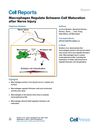
September 2018 in “Cell Reports” This study found that macrophages play a crucial role in nerve regeneration by regulating Schwann cell dynamics and remyelination, with Gas6 identified as a key factor in this process.
 September 2025 in “Cell Biochemistry and Function”
 In this study, ZnO nanoparticles synthesized with Ferulago angulata extract and doped with magnesium showed improved antioxidant, antibacterial, and antifungal properties, and facilitated faster wound healing and hair growth in a burn treatment model, although higher concentrations decreased cell viability.
328 citations
,
November 2020 in “Nature Materials” This study found that D-peptide crosslinked MAP hydrogel accelerated material degradation in vivo but significantly enhanced skin regeneration, suggesting an adaptive immune response can drive regenerative healing even with rapid scaffold breakdown.
 15 citations
,
August 2013 in “Stem Cells and Development”
15 citations
,
August 2013 in “Stem Cells and Development” This study proposes a two-step method that may enhance the generation of stem-like epidermal cells with superior proliferation and differentiation potential for skin regeneration.