Search
for
Sort by
Research
90-120 / 1000+ resultsresearch Synergistic Antioxidant-Antimicrobial-Immunomodulatory Self-Healing “Radical Sponge” Hydrogel for Diabetic Wound Regeneration via Microenvironment Reprogramming Mediated by Coordinated MAPK Suppression and PI3K-AKT Activation
research Synergistic Antioxidant-Antimicrobial-Immunomodulatory Self-Healing “Radical Sponge” Hydrogel for Diabetic Wound Regeneration via Microenvironment Reprogramming Mediated by Coordinated MAPK Suppression and PI3K-AKT Activation

research Tannic Acid Accelerates Cutaneous Wound Healing in Rats Via Activation of the ERK 1/2 Signaling Pathways
This study found that tannic acid accelerated wound healing in rats by modulating inflammatory cytokines, increasing growth factors, and activating the Erk 1/2 pathway.
research Engineering MMP9-Responsive Antioxidative Micelle-Hydrogel Dressings for Sequential Inflammatory Remodeling and Pro-Angiogenesis in Diabetic Wound Healing
In this study, researchers created a hydrogel that reduces oxidative stress and releases a pro-angiogenic drug in response to enzyme activity, which accelerated healing and improved tissue regeneration in chronic diabetic wounds during in vivo experiments.
research Cold Plasma An emerging technology for clinical use in wound healing
Cold Plasma shows promise for healing wounds by killing bacteria and helping tissue grow.

research Making Mg Magnificent
This study found that single-crystal magnesium samples smaller than 100 nm exhibited increased plastic deformation due to greater activation of nonbasal planes as local flow stresses approached 2 GPa.
research An injectable bioactive dressing based on platelet-rich plasma and nanoclay: Sustained release of deferoxamine to accelerate chronic wound healing
This study reported that an injectable hydrogel based on platelet-rich plasma and laponite improved wound healing in diabetic and normal rats by enhancing angiogenesis and macrophage polarization.
research Negatively Charged Carbon Dot‐Linked Glycyrrhizic Acid Hydrogel Promoted Hemostasis, Immunoregulation and Re‐Epithelialization of Wound Closure
In this study, a novel CT@GA-gel hybrid hydrogel was developed for diabetic wound treatment, demonstrating improved mechanical properties, tissue adhesion, and chronic wound healing benefits, including immune regulation and re-epithelialization, due to enhanced crosslinking and ROS scavenging by incorporated carbon dots.
research Injectable gelatin microspheres loaded with platelet rich plasma improve wound healing by regulating early inflammation
This study found that gelatin microspheres loaded with platelet-rich plasma enhanced wound healing in rats by improving inflammatory and angiogenic responses compared to untreated wounds or PRP alone.
research Injectable Ag nanoclusters-based hydrogel for wound healing via eliminating bacterial infection and promoting tissue regeneration
In this study, an injectable hydrogel incorporating antibacterial agents was shown to effectively heal wounds and promote hair follicle and capillary regeneration, offering a promising approach for skin tissue engineering.
research The promoted synthesis of minoxidil by magnetic nanoparticles of cobalt ferrite(CoFe2O4) as a heterogeneous reusable catalyst
This study reported that CoFe2O4 magnetic nanoparticles efficiently catalyzed the synthesis of minoxidil from 2,6-diamino-4-chloro-pyrimidine N-oxide, achieving a 95% yield with sustained reusability.
research All‐Natural Immunomodulatory Bioadhesive Hydrogel Promotes Angiogenesis and Diabetic Wound Healing by Regulating Macrophage Heterogeneity
This study developed an all-natural hydrogel that promotes diabetic wound healing by converting pro-inflammatory M1 macrophages to anti-inflammatory M2 macrophages in a simple and biosafe manner.
research Construction of conductive polyimide dressings for accelerated wound healing via an interfacial compatibility optimization and polyelectrolyte complexation synergistic strategy
research Employees’ motivation specifics of a commercial enterprise in mobilization economy
This research suggests that classical labor motivation theories may be losing relevance in a mobilization economy, where employee motivation increasingly centers on primary needs like personal safety and job security.
research Bioinspired Antibacterial-Antioxidant Bioactive Hydrogel Synchronizes Immunomodulation-Microenvironment Remodeling for Infected Wound Regeneration
This study developed a bioinspired hydrogel (BD@HH6) that exhibited strong antimicrobial and antioxidant properties, accelerated wound healing in mice by promoting angiogenesis and reducing inflammation, and represents a potential new approach for managing chronic wound infections without relying on antibiotics.

research Mechanically Active Contractile Hydrogels for Skin Wound Repair
This review categorizes contractile hydrogels by their contraction mechanisms and explores their role in advanced wound management, emphasizing mechanical and biochemical signaling in healing, but also notes challenges like force transmission and clinical applicability.
research Accelerated, injectable, self-healing, scarless wound dressings using rGO reinforced dextran/chitosan hydrogels incorporated with PDA-loaded asiaticoside
The hydrogel dressings speed up healing and reduce scarring.
research Dynamic immunomodulatory nanoarchitectonics: Rewiring tissue regenerative microenvironment via intelligent regulation
This article discusses how designing biomaterials to modulate immune responses has become a promising strategy for enhancing tissue repair and regeneration.
research Provenge is Talk of GU Malignancies Congress
This article discusses the approval and perceived potential of Provenge, a new prostate cancer vaccine, highlighting its capability to extend survival in certain patients while also noting ongoing debates about its cost and mechanisms; it reports no new clinical results.
research Evaluation of Polyacrylonitrile Nonwoven Mats and Silver–Gold Bimetallic Nanoparticle-Decorated Nonwoven Mats for Potential Promotion of Wound Healing In Vitro and In Vivo and Bone Growth In Vitro
This study found that urchin-like Ag–Au bimetallic and Ag nanoparticle-decorated PAN mats showed significant antibacterial effects and potential for wound healing in in vitro and in vivo animal models.
research Bioactive glass 1393 promotes angiogenesis and accelerates wound healing through ROS/P53/MMP9 signaling pathway
This study found that bioactive glass 1393 accelerates wound healing by promoting angiogenesis through the ROS/P53/MMP9 signaling pathway, enhancing granulation tissue formation and collagen deposition, as evidenced by both in vivo and in vitro experiments.

research Hierarchically Assembled Nanofiber Scaffolds with Dual Growth Factor Gradients Promote Skin Wound Healing Through Rapid Cell Recruitment
This study highlights that a novel radially aligned nanofiber scaffold with dual growth factor gradients significantly enhances wound healing, promoting cell migration, epidermal regeneration, and angiogenesis, ultimately leading to improved wound closure, immune regulation, and tissue remodeling compared to other groups.

research Facile strategy for gelatin-based hydrogel with multifunctionalities to remodel wound microenvironment and accelerate healing of acute and diabetic wounds
This study demonstrates that an injectable gelatin-based hydrogel incorporating zirconium and quercetin promotes diabetic wound healing in vivo by enhancing angiogenesis, collagen deposition, and hair follicle regeneration while providing antibacterial and oxidative stress protection without detectable cytotoxicity.
research Green‐Prepared Magnesium Silicate Sprays Enhance the Repair of Burn‐Skin Wound and Appendages Regeneration in Rats and Minipigs
This study suggests that inorganic magnesium silicate sprays can improve burn wound repair and promote regeneration of skin appendages, showing superior results compared to commercial wound healing products in animal models.
research Adaptive Triboelectric Nanogenerators for Long-Term Self-Treatment: A Review
This review discusses recent advancements in triboelectric nanogenerator-based electronics for clinical applications and reports no new experimental results, focusing on customization for chronic disease diagnosis and long-term treatment.
research Fabrication of Antibacterial and Flexible Hydrogels Based on Citric Acid Containing Tannic Acid for Wound Dressing
In this study, a hydrogel wound dressing infused with tannic acid demonstrated excellent antibacterial activity and promoted effective wound healing in rat burn models, leading to wound closure in 17 days and hair regrowth by day 21.
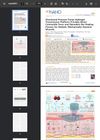
research Directional Pressure Pump Hydrogel Transmission Platform Provides Bionic Contractile Force and Remodels the Healing Process for Diabetic Mechanically Dynamic Wounds
This study developed a directional pressure-pump hydrogel delivery platform that enhances wound healing in diabetic mechanically dynamic wounds by targeting antibacterial agents and nanozymes directly to the lesion site, disrupting biofilms, mitigating tissue damage, and supporting proper skin closure and vascular remodeling in animal models.
research Sodium alginate cross-linked hydroxypropyl methylcellulose/hydroxyapatite nano biomaterial mediated with zinc to promote bone tissue healing
This research developed a zinc-doped nanocomposite using biodegradable materials, observing effective bone targeting and regeneration capabilities in vivo, with no observed cytotoxicity in the MG63 cell line, potentially due to blocking Farnesyl Diphosphate Synthetase to inhibit osteoclastic activity and promote osteogenesis.
research An Uncontrolled Case Series testing Cryo-Chilled Carbon Dioxide as a Novel Amplification of a Nano-Botanical Multi-Acting Therapy in Advanced Stage Androgenetic alopecia (AGA)
In this case series, researchers reported an unexpectedly rapid and positive response to a topical, hydrogel-based botanical treatment for androgenetic alopecia in both male and female volunteers, achieving significant improvement in hair loss within 90 days instead of the planned 270 days.