6 citations
,
April 2023 in “Frontiers in Bioengineering and Biotechnology” In a murine burn wound model, this study found that an enhanced fractal self-pumping dressing significantly reduced wound area and tissue edema by efficiently draining excess exudates.
 May 2026 in “International Journal of Biological Macromolecules”
 In this study, researchers developed a biomacromolecular hydrogel to deliver plant-derived extracellular vesicles for treating androgenetic alopecia in a mouse model, which significantly improved hair regrowth and follicle density by activating Wnt/β-catenin signaling.
76 citations
,
February 2024 in “International Journal of Molecular Sciences” This review discusses the growing importance of hydrogel scaffolds in skin wound healing, highlighting their unique properties and recent advancements in their use for treating difficult tissue damage, particularly within tissue engineering.
 59 citations
,
February 2021 in “Advanced Functional Materials”
59 citations
,
February 2021 in “Advanced Functional Materials” In this study, a silk-inspired hydrogel system was developed that combines photodynamic therapy and wound healing, which may significantly reduce melanoma recurrence and enhance healing of infected wounds.
2 citations
,
June 2025 in “ACS Biomaterials Science & Engineering” This study demonstrates that encapsulating cell-free fat extract in a gelatin methacrylate hydrogel enhances flap repair by sustaining angiogenesis, reducing oxidative stress, and offering favorable biocompatibility in a murine skin flap model, thereby advancing potential clinical flap necrosis treatments.
 August 2023 in “Cell Proliferation”
 This study observed that incorporating human follicle dermal papilla cells into fibrin microgels increased cell viability and the formation of hair follicle structures in in vitro skin cultures compared to traditional dermal papilla spheroids, suggesting a promising approach for hair follicle regeneration therapies.
5 citations
,
July 2023 in “World Journal of Stem Cells” In a study using a rat model, researchers developed injectable hydrogels from antler reserve mesenchyme which enhanced regenerative healing of full-thickness cutaneous wounds by creating a fetal-like niche that increased stem cell presence and modulated gene expression related to wound healing.
In this study, a hydrogel loaded with SHP099 was shown to improve wound healing by targeting different cell types during various stages of the healing process.
6 citations
,
May 2024 in “Macromolecular Bioscience” This study synthesized a temperature-sensitive hydrogel with strong antibacterial capabilities against S. aureus and E. coli, demonstrated via in vitro and in vivo tests, suggesting potential for antibiotic-free clinical applications when activated by near-infrared light.
73 citations
,
February 2023 in “Polymers” This review discusses the unique properties, design, and fabrication of peptide hydrogels for biomedical applications, focusing on advances in drug delivery, gene therapy, and regenerative medicine; it reports no new clinical results.
1 citations
,
August 2025 in “OPAL (Open@LaTrobe) (La Trobe University)” This study presents a composite hydrogel dressing with berberine-loaded silk fibroin microspheres and Calotropis gigantea fibers that demonstrates effective antibacterial properties, enhanced mechanical strength, and promotes wound healing.
 February 2024 in “Bioengineering”
 This study found that a hydrogel formulation containing insulin, chitosan, and hydroxypropyl methyl cellulose improved wound healing in diabetic mice, promoting faster wound closure and organized tissue formation, with in vitro tests showing no cytotoxicity and enhanced cell migration.
 31 citations
,
August 2019 in “Regenerative Medicine”
31 citations
,
August 2019 in “Regenerative Medicine” This study found that the human placenta extracellular matrix hydrogel restored the hair-inductive capacity of high-passaged dermal papilla cells, enabling them to regenerate new hair follicles when co-grafted with mouse epidermal cells.
15 citations
,
January 2024 in “Journal of Materials Chemistry B” In this study, researchers developed an injectable silk fibroin-based hydrogel that enhances wound healing by protecting against oxidative stress and promoting tissue repair, outperforming commercial wound dressing Tegaderm™ in animal models.
 87 citations
,
August 2017 in “Scientific Reports”
87 citations
,
August 2017 in “Scientific Reports” This study found that PCL-based nanofiber scaffolds enhanced cell proliferation and extracellular matrix deposition, suggesting they show promise as a cell delivery system for improving skin wound healing.
February 2026 in “Colloids and Surfaces B Biointerfaces” The composite dressing improved wound healing and hair growth in mice.
 86 citations
,
March 2018 in “ACS Biomaterials Science & Engineering”
86 citations
,
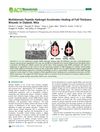
March 2018 in “ACS Biomaterials Science & Engineering” This study found that MDP hydrogel significantly accelerated wound healing and improved tissue formation in diabetic mice compared to a standard clinical hydrogel and control buffer.
28 citations
,
September 2023 in “International Journal of Biological Macromolecules” Animal experiments in this study demonstrated that a new sandwich-like fiber/sponge dressing design, which enhances wound healing through improved moisture management and faster exudate evaporation, resulted in more significant wound size reduction compared to commercial and control dressings.
 June 2025 in “Biomacromolecules”
 In this study, researchers developed a GelMA-based gradient pH hydrogel that effectively reduced bacterial load and promoted fibroblast and endothelial cell proliferation, macrophage polarization, neovascularization, and hair follicle regeneration, offering a promising treatment for bacterially infected skin wounds.

This research found that keratin hydrogels derived from human hair may support cell viability and proliferation, indicating potential as 2D and 3D soft tissue culture scaffolds.
69 citations
,
October 2013 in “Tissue Engineering Part A” This study found that using a keratin hydrogel scaffold as a filler in collagen nerve conduits significantly improved nerve regeneration and motor recovery in Macaca fascicularis monkeys compared to saline.
7 citations
,
November 2025 in “Journal of Polymer Science” This review highlights recent advances in hydrogel-based wound healing, noting that diverse hydrogel designs enhance healing and suggest potential for clinical translation, albeit with a need for more research on human applications.
10 citations
,
March 2024 in “Frontiers in Bioengineering and Biotechnology” This review examined photothermal hydrogels, biomedically innovative materials responsive to near-infrared stimulation, which hold promise for enhancing infection control and tissue regeneration. The authors highlighted their unique properties, construction methods, and potential applications while also discussing existing challenges and future research directions.
 October 2025 in “Journal of Nanobiotechnology”
 This study reports that using a hydrogel-based therapy that dynamically regulates reactive oxygen species helps achieve skin regeneration in infected wounds, promoting organized dermal architecture with improved hair follicle and blood vessel formation, rather than scar formation.
 March 2021 in “Institutional Repositories DataBase (IRDB)”
 Heparin-functionalized nanofabrics help heal wounds effectively and safely without scars in 14 days.
 November 2024 in “Polymers for Advanced Technologies”
 In this study, a hydrogel wound dressing infused with tannic acid demonstrated excellent antibacterial activity and promoted effective wound healing in rat burn models, leading to wound closure in 17 days and hair regrowth by day 21.
 4 citations
,
August 2020 in “Applied Materials Today”
4 citations
,
August 2020 in “Applied Materials Today” This study suggests that human dermal fibroblasts can be converted into dermal papilla cell-like cells using microencapsulation, which may facilitate hair follicle regeneration in mice without chemical or genetic reprogramming.
 March 2024 in “International journal of nanomedicine”
 This review discusses recent advancements in the development and use of polymer-based nanohydrogels for topical drug delivery, noting their potential to enhance drug loading, release control, and skin penetration for treating dermatological conditions.
83 citations
,
September 2021 in “Advanced functional materials” This study introduced a multifunctional DNA hydrogel dressing that may enhance wound healing by promoting tissue regeneration, nerve repair, and immune response in diabetic infectious wounds.
 1 citations
,
September 2023 in “International Journal of Biological Macromolecules”
1 citations
,
September 2023 in “International Journal of Biological Macromolecules” This study found that a novel in-situ crosslinked self-healing hydrogel made from oxidized Bletilla striata polysaccharide and cationic gelatin enhanced wound healing and showed strong hemostatic performance in animal models, suggesting its potential as an effective wound dressing for skin trauma.