9 citations
,
December 2021 in “Molecules” This study found that certain metabolites from the plants Bidens pilosa, Calophyllum inophyllum, and Fagraea berteroana may support hair follicle growth by promoting dermal papilla cell proliferation, supporting their traditional use in hair care.
3 citations
,
November 2022 in “Frontiers in Plant Science” This study found that microwave-assisted extraction significantly increased the yield of secondary metabolites, including phenolic and flavonoid content, from Nardostachys jatamansi, enhancing its anti-Alzheimer's potential compared to conventional extraction methods.
 May 2026 in “Zenodo (CERN European Organization for Nuclear Research)”
 This review highlights the dual nature of Abrus precatorius as both a traditional medicine and a toxin, emphasizing its rich phytochemical profile and potential therapeutic applications, while noting the need for rigorous quality control and clinical trials to ensure safety and efficacy.
December 2025 in “DIET FACTOR (Journal of Nutritional & Food Sciences)” This paper reviews the bioactive properties and economic potential of common hop plants, especially female varieties, highlighting their applications in agriculture, food technology, and pharmacology along with their market significance in Europe and potential for rural development in northern Pakistan.
 January 2023 in “Acta medica Philippina”
 This study found that ethyl acetate extract of Carica papaya flowers exhibited the highest antioxidant and 5α-reductase inhibitory activities, suggesting potential hair growth-promoting properties.
 May 2020 in “Research, Society and Development”
 This study suggests that mutamba fruit, regardless of maturation stage, could be valuable in the food industry due to its high soluble solids, vitamin C, and mineral content.
June 2018 in “JoLS Journal of Life Sciences” The fermented mixture may help hair growth and has antioxidative benefits.
May 2013 in “International journal of innovative research and development” This article discusses a hypothetical model of androgenic hair trichophore composed of various chemical components, but it reports no new empirical findings; the authors emphasize the model's potential impact on hair cosmetics.
7 citations
,
June 2025 in “International Journal of Molecular Sciences” This review highlights that vitexin, a natural flavonoid derived from plants like mung bean, modulates critical cellular processes involved in cancer progression, suggesting its potential as a multi-target anticancer treatment in preclinical studies.
 October 2025 in “Records of Natural Products”
 This research found that kaempferol, a flavonoid from hair growth-promoting plants, significantly enhanced human dermal papilla cell proliferation and inhibited specific signaling pathways, outperforming minoxidil, with topical application in mice promoting hair growth and thickness, indicating potential as a natural hair loss treatment.
 March 2024 in “Current materials science”
 This study explores the various properties of the flavonoid fisetin, highlighting its potential therapeutic applications due to its ability to modulate numerous biological pathways, suggesting benefits in conditions like inflammation, cancer, and neurodegenerative diseases.
 3 citations
,
June 2021 in “Iraqi Journal of Pharmaceutical Sciences ( P-ISSN 1683 - 3597 E-ISSN 2521 - 3512)”
3 citations
,
June 2021 in “Iraqi Journal of Pharmaceutical Sciences ( P-ISSN 1683 - 3597 E-ISSN 2521 - 3512)” This review highlights phytochemicals, particularly flavonoids and phenolics, as potential supportive treatments for SARS-CoV-2 by interfering with viral proteins and providing anti-inflammatory effects; it suggests a foundation for future therapeutic and vaccine development efforts.

This critical review highlights the anti-carcinogenic properties of luteolin, a plant flavonoid, and examines how encapsulating luteolin in nanoformulations may overcome its bioavailability challenges, potentially enhancing its effectiveness as a safer cancer treatment according to this source.
45 citations
,
November 2024 in “International Journal of Molecular Sciences” This review discusses how various nutrients, such as flavonoids, probiotics, and omega-3 fatty acids, may support brain health by targeting stress-related pathways, potentially offering protective effects against neurodegenerative and psychiatric disorders through their roles in oxidative stress reduction and neuroinflammation regulation.
January 2026 in “Journal of Ethnopharmacology” This study found that naringin, a natural flavonoid, significantly improved hair growth in mice by activating the Wnt/β-catenin pathway, with the 4% concentration showing comparable efficacy to 5% minoxidil, suggesting naringin as a promising alternative for alopecia treatment.
 December 2023 in “Journal of ethnopharmacology”
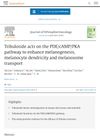
 This study found that tribuloside, a flavonoid from Tribulus terrestris L., enhances melanin production in human melanocytes, zebrafish, and human skin samples without causing toxicity, potentially through inhibiting PDE to increase cAMP levels and promote the melanin biosynthesis pathway.
 April 2017 in “Journal of Investigative Dermatology”
 This study found that fisetin, a dietary flavonoid, significantly improved psoriasiform skin lesions in mice by promoting cell differentiation, inhibiting proliferation, and modulating inflammatory responses.
 27 citations
,
March 2024 in “Frontiers in Pharmacology”
27 citations
,
March 2024 in “Frontiers in Pharmacology” This review highlights the potential of natural product-derived compounds, such as flavonoids and alkaloids, to reverse multidrug resistance in tumors, emphasizing their role in regulating signaling pathways, proteins, and genes related to MDR, and aims to guide future research efforts in this area.
 4 citations
,
August 2023 in “Italian Journal of Food Science”
4 citations
,
August 2023 in “Italian Journal of Food Science” This study found that pretreatment combining maceration with press-shear force and moist heat significantly increased the total phenolic and flavonoid contents in galactagogue herbs like banana inflorescences and Thai ginger.
 August 2023 in “International journal of experimental research and review”
 This study found that in models of diabetic wound healing, extracts from the flavonoid and tannin fractions of Ficus racemosa leaves improved wound closure time, increased breaking strength of incision wounds, and exhibited hypoglycemic activity.
 January 2020 in “Elsevier eBooks”
 This chapter provides an overview of phytochemicals with properties to combat alopecia and discusses the potential of flavonoids, found in several herbs, as a safer alternative to synthetic hair loss treatments due to their long-term skin compatibility.
2 citations
,
September 2018 in “Walailak Journal of Science and Technology (WJST)” This study found that Thuja orientalis fruits have higher monoterpene, flavonoid, phenolic content, and antioxidant activity than leaves, suggesting potential value for the pharmaceutical industry.
 June 2026 in “Zenodo (CERN European Organization for Nuclear Research)”
 In this study, quercetin and kaempferol, two plant-derived flavonoids, showed stronger binding affinities to JAK3 kinase and moderate binding to 5-alpha reductase type 2, suggesting their potential as natural treatments for androgenetic alopecia, with quercetin demonstrating suitable properties for topical application.
 June 2026 in “Zenodo (CERN European Organization for Nuclear Research)”
 This study used molecular docking to analyze the binding affinities of quercetin and kaempferol, plant-derived flavonoids, showing they have promising interaction profiles with JAK3 kinase and moderate binding with 5-alpha reductase type 2, suggesting potential as topical treatments for androgenetic alopecia.
October 2025 in “Indonesian Journal of Pharmaceutical Science and Technology” This review highlights the significant antidiabetic activity of Allium ascalonicum (shallot), attributed to its flavonoid compounds like quercetin, in reducing blood glucose levels across various studies, while calling for further research to confirm its safety and efficacy as a diabetes treatment.
 February 2024 in “Journal of Cellular and Molecular Medicine”
 In this study using rat models, researchers developed a Pluronic@F-127 hydrogel to deliver the flavonoid pectolinarin, finding it accelerates wound healing and reduces scar formation by enhancing cell migration, proliferation, and antioxidant activity.
 January 2023 in “International journal of advances in scientific research and engineering”
 This review explores the potential of anthocyanins, a type of flavonoid with antioxidant and anticancer properties, to reduce colorectal cancer risk without side effects, focusing on their impact on molecular mechanisms, cancer cell proliferation, and apoptosis.
January 2017 in “ResearchSpace (University of KwaZulu-Natal)” In this study, grade 5 learners preferred Edamame snacks over their usual sweet-flavored snacks, and different roasting methods did not significantly change the nutritional quality of Edamame beans.
3 citations
,
November 2024 in “Current Research in Microbial Sciences” This study found that extracts from the medicinal plants *Echinops echinatus* and *Tridax procumbens* displayed antimicrobial activity against several bacteria, including *Escherichia coli* and *Staphylococcus aureus*, and identified various compounds like flavonoids and terpenoids potentially responsible for these effects.
1 citations
,
May 2024 in “Pharmaceutics” This review discusses the potential benefits and challenges of using hemp actives like cannabinoids, terpenes, and flavonoids in skincare products, emphasizing their anti-inflammatory, antimicrobial, and antioxidant properties and strategies to enhance their penetration and integration in natural and sustainable cosmeceuticals.