 October 2023 in “Journal of the American Academy of Dermatology”
 This source reports that clascoterone cream has been approved in the U.S. for treating acne vulgaris in patients aged 12 and older, suggesting it works by competing with dihydrotestosterone at androgen receptors to mitigate acne's effects.
1 citations
,
May 2025 in “European Polymer Journal” This study developed a multifunctional dressing with the MeGel-SFSR composition, which showed faster healing and better tissue regeneration in diabetic wounds compared to controls, by utilizing a herbal compound and enhanced mechanical support, promoting hair follicle regeneration, collagen deposition, reduced inflammation, and vascularization in vivo.
 9 citations
,
November 2012 in “Biomolecules & therapeutics”
9 citations
,
November 2012 in “Biomolecules & therapeutics” This study found that diphlorethohydroxycarmalol significantly increased prostaglandin $E_2$ synthesis in HaCaT human keratinocytes by upregulating COX-1 and COX-2 expression, suggesting potential benefits from elevated $PGE_2$ production.
9 citations
,
September 2019 in “Clinical Cosmetic and Investigational Dermatology” In this article, the authors reported that calcipotriol/betamethasone dipropionate aerosol foam significantly improved scalp psoriasis symptoms in three patients by reducing itching and improving flaky patches within a four-week treatment period, confirming its efficacy and enhanced skin penetration compared to older formulations.
October 2024 in “Iraqi postgraduate medical journal” January 2007 in “Frontiers in Medicine” This study found that tofacitinib was an effective and better-tolerated treatment for moderate-to-severe AA compared to SCs, though its efficacy decreased in patients with disease episodes longer than two years.
December 2020 in “Forum Dermatologicum” In this case report, a combination treatment of intralesional triamcinolone acetonide, oral acitretin, and topical clobetasol propionate showed effectiveness in reducing symptoms of Graham-Little-Piccardi-Lasseur syndrome in one patient over two months, with no new areas of hair loss observed.
 March 2026 in “Clinical Cosmetic and Investigational Dermatology”
 This research found that combining a 308-nm excimer laser with oral compound glycyrrhizin and topical 0.03% tacrolimus was more effective for treating pediatric facial and cervical vitiligo, resulting in faster and higher rates of repigmentation with minimal adverse effects compared to glycyrrhizin and tacrolimus alone.
1 citations
,
November 2023 in “Journal of Innovations in Applied Pharmaceutical Science (JIAPS)” In this study, researchers developed a neem oil-based emulgel showcasing anti-dandruff properties with controlled dual release, observing formulation F5 providing a 65.27% release after 8 hours and the highest antifungal inhibition against Candida albicans.
 1 citations
,
January 2024 in “Curēus”
1 citations
,
January 2024 in “Curēus” This case study reported significant clinical improvement in a 26-year-old male with dissecting cellulitis of the scalp after treatment with upadacitinib, suggesting that JAK inhibitors may be a promising option for refractory cases, where standard treatments have limited success.
 1 citations
,
January 2021 in “Wiadomości Lekarskie”
1 citations
,
January 2021 in “Wiadomości Lekarskie” This experimental study on male rats found that a gel containing carbon dioxide extract of hops effectively promoted wound healing in severe acne by enhancing skin regeneration and exhibiting anti-inflammatory, bactericidal, and antimycotic properties.
 July 1996 in “Clinical and Experimental Dermatology”
 This study found that a single topical application of calcipotriol ointment did not affect systemic calcium levels in patients with chronic plaque psoriasis.
 1 citations
,
October 2019 in “مجله كليه طب الكندي”
1 citations
,
October 2019 in “مجله كليه طب الكندي” In this study, researchers highlight the role of androgens like dihydrotestosterone in the pathophysiology of acne, pointing to the enzyme 5a-reductase type 1 as potentially more active in individuals with acne, which may contribute to hormonal influences in the condition's development.
 April 2023 in “Dermatology practical & conceptual”
 This study observed that a tacrolimus solution (0.1%) applied to the scalp was effective and well-tolerated for treating inflammatory scalp conditions, with 72.7% of patients showing an excellent response after 2 months of treatment, which persisted after 6 months.
3 citations
,
August 2023 in “Journal of Cutaneous Medicine and Surgery” In this randomized controlled study, topical Flutamide 1% gel, applied twice daily for eight weeks, significantly reduced papules and pustules in patients with mild to moderate acne vulgaris compared to baseline.
1 citations
,
October 2025 in “Journal of Investigative Dermatology” In this study of women with frontal fibrosing alopecia, delgocitinib cream improved the molecular signature of lesions and demonstrated potential as a treatment, showing significant transcriptomic changes and some clinical improvements over 12 weeks compared to a cream vehicle.
 January 2018 in “Springer eBooks”
 PDE inhibitors, especially PDE4 inhibitors like apremilast, are effective for certain inflammatory skin conditions but have side effects and can be costly.
33 citations
,
May 2001 in “Annals of pharmacotherapy/The annals of pharmacotherapy” This review reports that topical tacrolimus appears to be a safe and effective short-term treatment for inflammatory skin disorders, though further study is needed to assess long-term safety and efficacy.
1 citations
,
August 2024 in “Journal of Cosmetic and Laser Therapy” This study found that intralesional vitamin D3 achieved similar effectiveness to triamcinolone acetonide for treating patchy alopecia areata but was associated with fewer adverse effects and higher patient satisfaction.
October 2025 in “Archives of Dermatological Research” Topical metformin gel is as effective and safe as steroids for treating alopecia areata.
8 citations
,
October 2022 in “International Journal of Molecular Sciences” This study found that CLD-hFGF2 hydrogels improved healing in deep second-degree burn wounds more effectively than hydrogels alone or direct administration of CLD-hFGF2.
 84 citations
,
March 2004 in “Veterinary Dermatology”
84 citations
,
March 2004 in “Veterinary Dermatology” In randomized controlled trials, this research reports that cyclosporin is as effective as glucocorticoids for treating canine atopic dermatitis and has potential benefits for other immune-mediated skin conditions in dogs.
24 citations
,
August 2009 in “Expert opinion on pharmacotherapy” This article highlights the benefits of combining calcipotriene and betamethasone for treating localized plaque-type, scalp, and nail psoriasis, enhancing effectiveness while reducing side effects compared to single-agent therapies.
 April 2023 in “International journal of pharmaceutical sciences review and research”
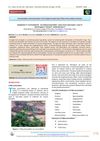
 This study concluded that an Emulgel formulation containing Tridax procumbens extract showed promising wound healing and antimicrobial activity, with improved physical properties in the F2 formulation.
16 citations
,
March 2023 in “Gels” This study found that paeonol-loaded liposomal gels demonstrated antioxidant effects and relieved inflammation in AD-like mice, suggesting potential benefits for treating atopic dermatitis.
March 2023 in “Reactions Weekly” 2 citations
,
March 1964 in “Archives of Dermatology” This study found no significant difference in the therapeutic response to intralesional triamcinolone acetonide at concentrations of 2.5, 5, and 10 mg/mL for various dermatologic conditions.
 2 citations
,
July 1982 in “British Journal of Dermatology”
2 citations
,
July 1982 in “British Journal of Dermatology” This study reports that retinol acetate inhibited the pro-oxidant effects of benoxaprofen on polymorphonuclear leucocytes in vitro.
December 2025 in “JEADV Clinical Practice” This review reports that innovative topical treatments for dermatologic conditions like acne and atopic dermatitis show minimal systemic absorption, indicating improved safety and tolerability compared to traditional therapies.
January 2022 in “Drug Delivery” This study investigated a finasteride and oregano oil-loaded nano-cubosome gel formulation, finding it enhanced drug release and skin permeation and demonstrated synergistic antibacterial effects, suggesting potential for treating alopecia areata.