 4 citations
,
April 2018 in “Journal of Investigative Dermatology”
4 citations
,
April 2018 in “Journal of Investigative Dermatology” This study suggests that hydroxypinacolone retinoate (HPR) may be an effective alternative to tretinoin for anti-aging skin treatments, offering similar collagen production benefits without increased skin irritation.
 2 citations
,
April 2023 in “South East European Journal of Immunology”
2 citations
,
April 2023 in “South East European Journal of Immunology” This pilot study found elevated levels of leptin and other proinflammatory molecules in the serum of melanoma patients, suggesting a potential role for leptin in melanoma progression and a possibility for targeting it in adjuvant therapy.
 1 citations
,
November 2025 in “Frontiers in Immunology”
1 citations
,
November 2025 in “Frontiers in Immunology” This review explores the complex role of the Innate Immune System in rheumatoid arthritis, highlighting gaps in understanding its functions and interactions with the Adaptive Immune System, offering insights into potential biomarkers and therapeutic strategies for this challenging autoimmune condition.
 1 citations
,
January 2024 in “Theranostics”
1 citations
,
January 2024 in “Theranostics” This source reviews the role of exosomes in regenerative medicine, highlighting their ability to mediate cell communication and transport biomolecules to enhance or impair biological functions, with potential applications in tissue repair and regeneration.
 1 citations
,
April 2018 in “Journal of Investigative Dermatology”
1 citations
,
April 2018 in “Journal of Investigative Dermatology” This study found that FZD2 is crucial for hair follicle formation and postnatal growth in mice and has a novel role in regulating early epidermal development, including stratification and cornification.
 May 2026 in “Frontiers in Cell and Developmental Biology”
 In this study, researchers suggest that hair follicle miniaturization in conditions like androgenetic alopecia may result from impaired conversion of quiescent stem cells to progenitor cells, influenced by the follicular niche, its collagen network, and various mechanical constraints.
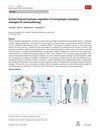
This review highlights that surface mechanical regulation can program macrophage behavior through specific mechanical cues on material surfaces, potentially advancing immunotherapies and regenerative medicine by enabling precise control over macrophage functions.
 April 2026 in “Frontiers in Cell and Developmental Biology”
 This review summarizes the role of G-protein-coupled receptors in wound healing and reports no new clinical results, highlighting their importance in signaling pathways and recent discoveries in their functions.
 January 2026 in “Forum Dermatologicum”
 This study observed that 2.5% of patients with mycosis fungoides or Szary syndrome experienced alopecia, predominantly within skin lesions, with scalp metastases from other cancers also potentially causing hair loss, highlighting the diagnostic value of trichoscopy in differentiating alopecia types.
 January 2026 in “Immune Network”
 This review discusses the heterogeneity of Tregs in normal and tumor environments, emphasizing the complexity of targeting tumor-resident Tregs while maintaining systemic immune tolerance, but reports no new findings.
 December 2025 in “Frontiers in Immunology”
 This review highlights that disturbances in neuroimmune communication, particularly between sympathetic nerves and macrophages, may contribute to autoimmune diseases like rheumatoid arthritis and type 1 diabetes, and suggests potential therapeutic avenues by restoring this communication in preclinical and early clinical studies.
 November 2025 in “Nanoscale Advances”
 This review highlights the potential of inorganic nanoparticle-based scaffolds as innovative tools for advanced wound care, emphasizing their ability to provide antimicrobial action and regenerative support, while also discussing fabrication strategies and challenges in optimizing their clinical application.
 January 2025 in “Open Medicine”
 This study found that high-concentration cell-free adipose extract effectively reduced collagen deposition and blood vessel formation in a rabbit ear model, showing promise for preventing and treating hypertrophic scars.
 May 2024 in “Frontiers in Immunology”
 In this mini-review, recent insights suggest a possible role of type-2-related immunity in diseases like alopecia areata, vitiligo, and localized scleroderma, though whether this immune response benefits or worsens these conditions remains unclear.
 October 2023 in “Biomedical science and engineering”
 Innovative methods are reducing animal testing and improving biomedical research.
 April 2018 in “Journal of Investigative Dermatology”
 This study reports that in aged mice, hair follicle dermal stem cells exhibit diminished self-renewal and preferential differentiation into dermal sheath cells, contributing to age-related hair loss.
 April 2018 in “Journal of Investigative Dermatology”
 This study found that activation of the transcription factor Nrf2 in keratinocytes promotes wound healing in mice by expanding hair follicle stem cells, independent of changes in keratinocyte proliferation or migration.
 January 2017 in “Springer eBooks”
 This article reviews the classification, pathogenesis, and treatment options for cutaneous lupus erythematosus and reports no new clinical findings.
 January 2023 in “Acta historiae medicinae stomatologiae pharmaciae medicinae veterinariae”
 This article reviews historical uses of male red deer parts in traditional medicine but provides no new research findings; it emphasizes their long-standing role in treatments for various health issues.
May 2025 in “Acta Biomaterialia” This study developed microneedles combining insulin-like growth factor-1 and type XVII collagen, showing more effective hair regeneration and reduced inflammation compared to minoxidil in a mouse model of androgenetic alopecia.
5 citations
,
November 2021 in “The journal of investigative dermatology/Journal of investigative dermatology” This study found that inhibiting Wnt/β-catenin signaling disrupted hemidesmosome organization in keratinocytes, suggesting potential therapeutic targets for HD-defective diseases like epidermolysis bullosa.
2 citations
,
April 2010 in “Cancer Research” In this study, epidermal EGFR ablation in a mouse model led to significant local and systemic inflammatory responses, highlighting EGFR's role in maintaining skin immuno-homeostasis.
 April 2026 in “Journal of Dermatological Science”
 This study highlights that hair-bearing organoids derived from embryonic stem cells can effectively model androgenic alopecia conditions and test the efficacy of anti-hair loss treatments.
May 2025 in “International Journal of Biological Macromolecules” In this study, an innovative microneedle platform loaded with IGF-1 and modified collagen was reported to significantly promote hair regeneration, enhance neovascularization, and reduce inflammation in a mouse model of androgenetic alopecia, outperforming the commonly used minoxidil treatment.
January 2025 in “Stem Cells International” In this review, researchers discuss the role of epigenetic modifications in epidermal stem cells' decline during skin aging and identify potential interventions targeting these disruptions, suggesting significant possibilities for antiaging strategies and dermatological treatments.
24 citations
,
May 2006 in “Journal of Investigative Dermatology” This study found that allergen treatment in alopecia areata mice appeared to alter leukocyte subset distribution and impaired dendritic cell migration, which may affect T-cell activation and hair follicle recovery.
19 citations
,
February 2022 in “Journal of Investigative Dermatology” Mechanical stretching can improve or hinder skin regeneration depending on duration.
 128 citations
,
October 2011 in “Development”
128 citations
,
October 2011 in “Development” This study found that adult mouse dermis can be reprogrammed by epidermal cues to resemble neonatal dermis, with changes in fibroblast proliferation and extracellular matrix composition.
59 citations
,
September 2021 in “Journal of Allergy and Clinical Immunology” This study found IL-17/IL-36 signaling to be predominant in both endotypes of Netherton syndrome, with distinct molecular profiles between NS-ILC and NS-SE lesions, offering potential therapeutic targets.
58 citations
,
July 2018 in “Journal of Allergy and Clinical Immunology” Alopecia areata severity is linked to increased TH1 and TH2 activity.