 8 citations
,
November 2020 in “Frontiers in Cell and Developmental Biology”
8 citations
,
November 2020 in “Frontiers in Cell and Developmental Biology” This study reported that exogenous R-spondin-1 can restore hair follicle neogenesis in adult mouse cells, highlighting differences in gene expression and signaling pathways between fetal and adult dermal papilla cells.
 773 citations
,
August 2017 in “International Journal of Molecular Sciences”
773 citations
,
August 2017 in “International Journal of Molecular Sciences” This article reviews the potential advantages of secretome derivatives from human uterine cervical stem cells in MSC therapy and notes the need for regulatory standards to ensure safety and efficacy.
 26 citations
,
December 2016 in “Pharmacology & Therapeutics”
26 citations
,
December 2016 in “Pharmacology & Therapeutics” This review discusses the paracrine properties of cardiac stem cells and pericytes in regenerative medicine for ischaemic diseases and reports no new clinical results.

This literature review reports that mesenchymal stem cell-derived secretome, including conditioned medium and extracellular vesicles, shows promise as an effective treatment for various diseases in animal and human in-vivo models, with ongoing clinical trials and recommendations for future research discussed.
 22 citations
,
October 2012 in “Cell Transplantation”
22 citations
,
October 2012 in “Cell Transplantation” This study found that adding Wnt-10b to the culture medium of dermal papilla cells maintained their ability to induce hair follicles over 100 days in vitro.
October 2023 in “Nutrients” This study suggests that a complex of millet and wheat extract may enhance hair health by reducing oxidative stress and inflammation and potentially prolonging the anagen phase of hair growth in models.
 59 citations
,
April 2016 in “Cell Reports”
59 citations
,
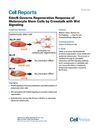
April 2016 in “Cell Reports” This study demonstrated that EdnrB signaling promotes melanocyte stem cell proliferation and differentiation, enhancing hair and epidermal melanocyte regeneration, especially under conditions of active Wnt signaling.
 September 2023 in “International Journal of Trichology”
 In this study reviewing recent literature, researchers found limited high-quality evidence supporting the use of adipose-derived stem cells for androgenic alopecia and alopecia areata, suggesting a need for further randomized controlled trials to better assess their efficacy.
April 2021 in “Journal of Investigative Dermatology” New inhibitors may help treat hair loss by promoting fat cell growth in the skin.
June 2026 in “Journal of Cosmetic Dermatology” This study found that a combined treatment using autologous scalp‐derived micrografts and allogeneic dental pulp stem cell‐derived conditioned medium was well-tolerated and improved hair characteristics in 69.5% of patients with male androgenetic alopecia, particularly increasing hair diameter and hair number per follicular unit.
 132 citations
,
June 2016 in “Cell and Tissue Research”
132 citations
,
June 2016 in “Cell and Tissue Research” This review discusses recent advancements in scar reduction techniques, highlighting promising therapeutic targets and the role of Wnt/β-catenin signaling in promoting scarless wound healing, but reports no new clinical results.
30 citations
,
November 2020 in “Journal of Advanced Research” This study found that conditioned medium from keratinocytes improved the hair-inductive properties of cultured dermal papilla cells, suggesting potential for enhancing hair follicle regeneration.
This review examines the potential of stem cells and their derived products, such as exosomes and conditioned media, in improving burn wound healing but presents no new clinical data.
31 citations
,
September 2012 in “Journal of biological chemistry/The Journal of biological chemistry” This study found that proper levels of retinoic acid, controlled by the enzyme Cyp26b1, are essential for normal hair follicle development and morphogenesis in mice.
4 citations
,
January 2025 in “The Journal of Cell Biology” This study found that deleting ceramide synthase 4 in skin epidermis stem cells disrupts hair follicle and skin barrier function, leading to immune responses similar to atopic dermatitis, due to imbalances in lipid composition affecting differentiation.
 April 2026 in “Cellular and Molecular Immunology”
 In a conditional knockout mouse model, this study found that loss of the transcription elongation factor SPT6 in basal keratinocytes led to psoriasis-like skin inflammation and delayed wound healing, suggesting SPT6 plays a crucial role in maintaining epidermal immune quiescence by suppressing proinflammatory NF-κB signaling.
13 citations
,
October 2021 in “International Journal of Molecular Sciences” In this study, an immortalized MSC line from human adipose tissue showed potential for applications in regenerative medicine and inflammatory diseases through production of active factors, demonstrated in vitro.
4 citations
,
June 2021 in “Frontiers in Pharmacology” This study found that injecting bone marrow-derived mesenchymal stem cells and conditioned medium into mice promoted hair follicle stem cell proliferation and transition to active growth phases, suggesting potential clinical targets for hair loss treatment.
 January 2026 in “Cosmetics”
 This study highlights emerging regenerative strategies, such as stem cell-derived therapies and machine learning tools, that may advance hair loss treatment beyond traditional methods by promoting follicle regeneration and offering personalized care.
 August 2024 in “Stem Cell Research & Therapy”
 This review discusses current and emerging therapies for androgenetic alopecia, emphasizing regenerative treatments and nanotechnology advancements, but it reports no new clinical results.
51 citations
,
August 2013 in “The Journal of experimental medicine/The journal of experimental medicine” This study found that Wnt secretion is important for maintaining skin homeostasis in mice, as Evi-deficient mice developed psoriasis-like skin lesions and had an imbalance in immune cell populations.
 7 citations
,
January 2020 in “PubMed”
7 citations
,
January 2020 in “PubMed” In this review, researchers highlight preclinical and clinical studies on stem cell-based therapies for hair loss, noting promising early findings but indicating that further robust clinical research is necessary to better understand their effectiveness, safety, and mechanisms.
August 2024 in “Food Bioscience” This study reported that in laboratory conditions, a cell-free supernatant of Bifidobacterium longum BB536 promoted human dermal papilla cell proliferation and reduced damage and apoptosis caused by dihydrotestosterone, suggesting potential use as a preventative treatment for androgenic alopecia by modulating specific signaling pathways.
 January 2022 in “Stem cell biology and regenerative medicine”
 This review explores the use of stem cell-based therapies for hair regeneration, highlighting the potential benefits of stem cell-derived conditioned medium, but stresses the need for more rigorous clinical trials to substantiate its efficacy.
 17 citations
,
December 2019 in “Stem Cell Research & Therapy”
17 citations
,
December 2019 in “Stem Cell Research & Therapy” This study found that their system effectively supports the rapid formation of human hair follicle organoids, providing a platform for studying hair regeneration and drug screening.
July 2025 in “Frontiers in Pharmacology” This study highlights the potential of GPR30 and its selective agonists as promising therapeutic targets for treating hair loss disorders and conditions that respond to estrogen, emphasizing their role in modulating hair growth.
 June 2021 in “Experimental and Therapeutic Medicine”
 In this study, mouse hair follicle stem cells cultured in mouse embryonic fibroblast/keratinocyte serum-free medium exhibited the highest proliferative ability and stronger osteogenic differentiation potential, similar to hair follicle dermal papilla cells.
 23 citations
,
May 2020 in “Cell Death and Disease”
23 citations
,
May 2020 in “Cell Death and Disease” This study generated FGF5-knockout Dorper sheep using the CRISPR/Cas9 system, resulting in significantly increased fine-wool and active hair-follicle density, and explored downstream signaling pathways for potential applications in androgen alopecia treatment.
 91 citations
,
December 2010 in “Stem Cells”
91 citations
,
December 2010 in “Stem Cells” This study found that Wnt signaling regulates the symmetric division of adult neural stem cells, increasing their numbers during subependymal regeneration, stroke response, and colony formation.
 July 2023 in “Current Issues in Molecular Biology”
 This study found that escin acts as a natural agonist of the Wnt/β-catenin signaling pathway in cultured human dermal papilla cells by promoting the degradation of GSK-3β, highlighting its potential therapeutic use for conditions like androgenetic alopecia and vitiligo.