June 2025 in “Zenodo (CERN European Organization for Nuclear Research)” Combining Procapil with minoxidil improves hair growth in men with hair loss.
 March 2004 in “Journal of The American Academy of Dermatology”
 This study found that the TrichoScan effectively measures hair growth changes, showing significant increases in hair counts and thickness in men with androgenetic alopecia after 6 months of using 5% minoxidil solution.
 May 2024 in “Chemical engineering journal”
 This study reports that a new minoxidil and epigallocatechin gallate co-loaded ionic liquids system showed superior efficacy in promoting hair regrowth in a mouse model of androgenic alopecia by activating hair follicle stem cells and improving microenvironment conditions, compared to existing minoxidil products.
In this study, topical sildenafil citrate was found to improve hair regeneration in a rat model of androgenic alopecia, showing superior long-term effects compared to minoxidil, including increased hair follicle numbers and epidermal thickness.

This study found that nanostructured lipid carriers significantly improved the targeted delivery of latanoprost and minoxidil to pilosebaceous units in porcine skin, with latanoprost showing notably higher accumulation.
 March 1998 in “Journal of Dermatological Science”
 Combining RU58841 and minoxidil significantly increases hair growth.
 115 citations
,
November 1999 in “Journal of The American Academy of Dermatology”
115 citations
,
November 1999 in “Journal of The American Academy of Dermatology” In this study, men using 2% and 5% minoxidil solutions experienced a significant increase in hair weight for 96 weeks compared to placebo, with effects diminishing after treatment cessation.
 43 citations
,
July 2018 in “Journal of The European Academy of Dermatology and Venereology”
43 citations
,
July 2018 in “Journal of The European Academy of Dermatology and Venereology” This study found that a topical solution combining 0.25% finasteride with 3% minoxidil significantly improved hair growth, as measured by hair density, diameter, and global assessment, in men with androgenetic alopecia, compared to 3% minoxidil alone, over 24 weeks without systemic adverse effects reported.
 32 citations
,
June 2015 in “Dermatologic Therapy”
32 citations
,
June 2015 in “Dermatologic Therapy” In this study, finasteride was found to be more effective than 5% minoxidil for treating male androgenetic alopecia in Chinese patients, with combination therapy showing the greatest improvement.
24 citations
,
January 2018 in “Journal of Cutaneous and Aesthetic Surgery” This study found that combining microneedling with topical minoxidil was more effective than minoxidil alone in increasing hair count and improving patient satisfaction for men with androgenetic alopecia, though the cosmetic impact was not significant.
 12 citations
,
June 2017 in “Cell Cycle”
12 citations
,
June 2017 in “Cell Cycle” This study observed that 5% minoxidil topical foam alters gene expression and signaling pathways in the scalp, providing insights into its mechanism of action in men with androgenetic alopecia.
 12 citations
,
November 2011 in “International Journal of Dermatology”
12 citations
,
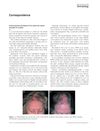
November 2011 in “International Journal of Dermatology” A woman developed a scalp condition from using minoxidil, which improved with a different treatment but left scarring.
 10 citations
,
May 2020 in “Journal of Dermatological Treatment”
10 citations
,
May 2020 in “Journal of Dermatological Treatment” This study found that combining microneedling with 5% minoxidil improved hair growth in Chinese men with androgenetic alopecia, possibly through activating the Wnt/β-catenin signaling pathway.
 6 citations
,
January 2017 in “Annals of Dermatology”
6 citations
,
January 2017 in “Annals of Dermatology” In this study, Korean women with female pattern hair loss who used a combination of topical 0.025% 17α-estradiol and 3% minoxidil saw significant increases in total hair count and hair caliber over six months.
 5 citations
,
January 2020 in “Skin Research and Technology”
5 citations
,
January 2020 in “Skin Research and Technology” This study reported that combined oral finasteride and topical 5% minoxidil treatment in men with male-pattern hair loss improved hair growth by initiating anagen in pre-existing but deficient follicles, yet the growth rates remained unchanged and did not normalize hair productivity.
4 citations
,
December 2015 in “MVP journal of medical science” In this study, topical minoxidil 5% was found to be just as effective as a combination treatment with minoxidil, azelaic acid, and tretinoin for treating androgenetic alopecia.
1 citations
,
October 2022 in “Journal of Cosmetic Dermatology” In this study, combining 2% minoxidil with weekly microneedling significantly improved hair regrowth in women with female pattern hair loss compared to using minoxidil alone, with an 85% effective rate reported in the group receiving both treatments over a 24-week period.
 1 citations
,
June 2022 in “Current drug safety”
1 citations
,
June 2022 in “Current drug safety” This case report highlights that a patient developed pleural effusion due to unintentional oral use of topical minoxidil, despite not having chronic kidney disease.
 1 citations
,
July 2017 in “Global journal of pharmacy & pharmaceutical sciences”
1 citations
,
July 2017 in “Global journal of pharmacy & pharmaceutical sciences” The study explored niosome formulations containing minoxidil and tretinoin and found increased drug stability and controlled release, suggesting potential as an effective drug delivery system for treating hair loss.
 1 citations
,
March 2017 in “Journal of evolution of medical and dental sciences”
1 citations
,
March 2017 in “Journal of evolution of medical and dental sciences” This study compared microneedling combined with platelet-rich plasma and microneedling with minoxidil for treating androgenetic alopecia in men, finding both approaches effectively improved hair density and alopecia grade.
1 citations
,
September 2015 in “MVP journal of medical science” In this study, the combination of minoxidil, azelaic acid, and tretinoin showed no significant advantage over minoxidil alone for treating androgenetic alopecia.
 1 citations
,
January 2010
1 citations
,
January 2010 This study found that using minoxidil 2% as a mesotherapy injection showed more significant improvement in treating androgenetic alopecia in female patients than topical application.
June 2026 in “International Journal of Medical Arts”  January 2025 in “International Journal of Research and Innovation in Applied Science”
 This study aimed to enhance the skin penetration of minoxidil by encapsulating it in glycerosomal vesicles, offering a potential improvement in transdermal drug delivery for treating androgenetic alopecia. Results of the investigation were not reported.
January 2025 in “Case Reports in Gastrointestinal Medicine” This case report presented by the authors provides the first evidence of severe liver failure associated with the use of topical minoxidil, emphasizing the potential for hepatotoxicity even from drugs with minimal systemic absorption.
 November 2024 in “Journal of Investigative Dermatology”
 Minoxidil rejuvenates hair follicles and reduces aging signs in male pattern baldness.
 October 2024 in “Clinical and Experimental Dermatology”
 This study found that combining 17α-estradiol 0.01% with minoxidil 2% offered no statistically significant advantage over minoxidil alone for treating female pattern hair loss and may increase the risk of menstrual irregularities.
 December 2023 in “Journal of Trace Elements in Medicine and Biology”
 This study found that nano-sized molybdenum accelerated hair growth and enhanced the effectiveness of minoxidil in a mouse model by reducing oxidative stress-related molecules.

This study compared the safety and effectiveness of 5% cetosomal minoxidil to 5% alcohol-based minoxidil in Indian men with androgenetic alopecia, finding that cetosomal minoxidil had improved safety and similar efficacy, making it a potentially better option for those sensitive to alcohol-based formulations.
April 2023 in “Asian Medical Journal and Alternative Medicine” This study found that applying 2% topical minoxidil resulted in a greater nail growth rate compared to 5% minoxidil and placebo over eight weeks, with no observed side effects, suggesting 2% is an effective concentration for accelerating nail growth.