 9 citations
,
July 2021 in “Essays in Biochemistry”
9 citations
,
July 2021 in “Essays in Biochemistry” This review discusses the roles of steroid hormone receptors in lung function related to COVID-19 and outlines ongoing clinical trials of steroid receptor ligands, but reports no new results.
 8 citations
,
December 2022 in “Nature Reviews Endocrinology”
8 citations
,
December 2022 in “Nature Reviews Endocrinology” This review discusses the roles of sex hormones in COVID-19 progression and highlights conflicting evidence on their protective effects and the complexity of sex and gender influences on the disease.
8 citations
,
July 2021 in “F1000Research” This review discusses the potential of plant-derived phytochemicals as alternatives to 5-alpha-Reductase inhibitors in treating prostate cancer, highlighting possible benefits like reduced side effects, but it reports no new findings.
 8 citations
,
June 2021 in “Frontiers in Bioengineering and Biotechnology”
8 citations
,
June 2021 in “Frontiers in Bioengineering and Biotechnology” This study investigated the effects of the 60% alcohol extract from Alnus sibirica and its active compound, oregonin, on hair health, observing anti-oxidative and anti-apoptotic benefits in human hair dermal papilla cells exposed to oxidative stress, suggesting potential as natural materials for hair loss prevention.
8 citations
,
September 2020 in “Journal of adolescent health” This review discusses strategies for maintaining access to gender-affirming care for gender diverse youth during the COVID-19 pandemic and reports no new clinical results.
7 citations
,
June 2022 in “Biology” In this study, researchers observed that male COVID-19 patients with more than 23 CAG repeats in the androgen receptor gene and lower testosterone levels experienced more severe disease outcomes.
6 citations
,
July 2024 in “Heliyon” This study examined the evolutionary and functional homology of steroid 5α-reductase and DET2 proteins, identifying protists as a common ancestor, and discovered a new subclass DET2-like in plants, potentially involved in polyprenol reduction.
6 citations
,
March 2015 in “European Journal of Public Health” This study suggests that long-term use of hair dyes may be associated with higher testosterone levels among premenopausal Japanese women.
 5 citations
,
January 2017 in “Acta Endocrinologica”
5 citations
,
January 2017 in “Acta Endocrinologica” This case report discusses a postmenopausal woman whose hyperandrogenism and metabolic symptoms improved significantly after the surgical removal of an ovarian Leydig cell tumor, confirmed post-operatively.
3 citations
,
May 2024 in “Frontiers in Physiology” In this study, male rats with spinal cord injury that received either E2 or DHT supplementation both showed restored expression of respiratory neuroplasticity following acute intermittent hypoxia, with E2 also enhancing overall breathing recovery.
3 citations
,
November 2022 in “Separations” This study successfully established and validated a method using LC-MS/MS to measure multiple androgens in plasma, finding that individuals with acne had higher levels of certain androgens compared to those with obesity.
3 citations
,
July 2009 in “Experimental and Clinical Endocrinology & Diabetes” In this study, Buserelin nasal spray significantly reduced hirsutism scores and suppressed ovarian steroid secretion in women with non-adrenal hirsutism over six months, with effects lasting post-treatment.
2 citations
,
November 2025 in “Nutrition Journal” This study found that an 8-week supplementation with specific probiotic strains improved hormonal markers and oxidative stress while decreasing inflammation in women with PCOS, although clinical symptoms like acne and hirsutism showed no significant improvement compared to the placebo group.
2 citations
,
July 2023 in “AACE Clinical Case Reports” In this case study, researchers identified a Leydig cell tumor in a 56-year-old postmenopausal woman with virilization symptoms by using ovarian vein sampling, as imaging was nonrevealing, and confirmed the tumor's location using testosterone ratios, which supported previous findings.
1 citations
,
August 2023 in “Case Reports in Women s Health” This case study in a 62-year-old postmenopausal woman highlights Leydig cell hyperplasia as a likely cause of hyperandrogenism of ovarian origin, where bilateral oophorectomy resolved the condition and confirmed the diagnosis through histopathological examination.
 1 citations
,
July 2023 in “Frontiers in Immunology”
1 citations
,
July 2023 in “Frontiers in Immunology” This review highlights the role of chronic stress, oxidative stress, and immune processes in the development of Hashimoto’s thyroiditis and polycystic ovary syndrome, emphasizing the potential of antioxidants in their treatment based on the existing literature.
 1 citations
,
August 2022 in “Biomedicines”
1 citations
,
August 2022 in “Biomedicines” This review assesses the potential of dutasteride as a promising treatment for ALS due to its reported neuroprotective, antioxidant, and anti-inflammatory effects, but emphasizes that clinical studies are needed for confirmation.
 1 citations
,
April 2018 in “Our Dermatology Online”
1 citations
,
April 2018 in “Our Dermatology Online” This article discusses the familiarity of identifying male androgenetic alopecia but presents no new research findings.
 July 2026 in “International Journal of Molecular Sciences”
 This study found that TSG-enriched Polygonum multiflorum extract, optimized through microwave-assisted and chromatographic methods, promotes hair regrowth in a mouse model of androgenetic alopecia via 5α-reductase inhibition and Wnt/β-catenin pathway activation, suggesting its potential as a natural treatment.
 June 2026 in “Oriental Journal Of Chemistry”
 This research found that a novel dehydroepiandrosterone derivative (12) significantly reduces cell viability and increases apoptosis in testosterone-stimulated normal and tumor prostate cells, unlike finasteride and dutasteride, which also showed activity under dihydrotestosterone stimulation.
January 2026 in “Addiction Biology” This study found that, although finasteride reduced dihydrotestosterone levels in males with heavy episodic drinking, it did not significantly alter brain activation or craving but was linked to a stronger desire not to drink.
 November 2025 in “Frontiers in Pharmacology”
 In this study, XZYFD, a Traditional Chinese Medicine formulation, was found to improve androgenetic alopecia in a testosterone-induced mouse model by promoting hair regrowth, restoring follicular morphology, and modulating androgen metabolism, MAPK signaling, and lipid metabolism pathways, suggesting potential benefits for patients with metabolic dysfunction.
November 2025 in “Pharmacological Research” In this study, researchers found that exosome-like nanoparticles isolated from Polygoni Multiflori Radix can promote hair growth in mice by modulating androgen signaling and gene expression, outperforming Minoxidil in testosterone-induced conditions.
 September 2025 in “Deleted Journal”
 This study found that in vitro environments simulating testosterone levels in elderly males, testosterone and its metabolite DHT significantly reduced macrophages' ability to phagocytize MRSA and Pseudomonas aeruginosa, suggesting AR manipulation and inhibiting testosterone-DHT conversion might help fight wound infections in the elderly.
 August 2025 in “International Journal of Molecular Sciences”
 This study found that sulforaphane-rich broccoli sprout extract significantly accelerated hair regrowth in a mouse model of androgenetic alopecia, suggesting its potential as a safe and effective natural therapy.
December 2024 in “AACE Clinical Case Reports” This study highlights a rare case of ovarian hyperthecosis in a 58-year-old postmenopausal woman, presenting with polycythemia and severe hyperandrogenism symptoms, with resolution of symptoms following laparoscopic bilateral oophorectomy.
September 2024 in “Journal of Clinical and Translational Endocrinology Case Reports” This study identified that biotin ingestion led to interference in immunoassay results, falsely indicating high testosterone and insulin levels in a 28-year-old female patient, thus complicating her clinical assessment and treatment planning until recognized and resolved.
 August 2024 in “Archives of Women s Mental Health”
 This study found that women with PCOS exhibited higher levels of depression, tension induction, and impaired stress coping strategies compared to healthy controls, with these psychological issues correlating with hyperandrogenism but not with central obesity or insulin resistance.
 May 2024 in “Scientific African”
 This research used computational methods to identify potential new treatments for benign prostatic hyperplasia, finding three compounds from Ghanaian plants with promising binding energy against 5alpha reductase 2 compared to existing drugs, yet further in vitro validation is necessary to confirm their efficacy.
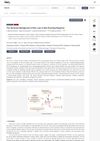 February 2024 in “Biomedicines”
 This review examines the hormonal causes of hair loss, noting how androgen excess can lead to follicle miniaturization and linking estrogen deficiency and thyroid dysfunction to common alopecia types. It further discusses hormonal treatments such as finasteride, dutasteride, and spironolactone.