6 citations
,
December 2019 in “Frontiers in genetics” In this study, animal model observations suggested that GLI1 expression may reduce cSCC initiation but is not involved in the tumor's aggressiveness.
5 citations
,
February 2025 in “International Journal of Molecular Sciences” This study investigated pyranoanthocyanin Vitisin A and found it significantly lowered triglyceride levels and reduced body weight in high-fat diet-fed mice, outperforming Cyanidin-3-O-glucoside by inhibiting hepatic lipogenesis and enhancing fatty acid β-oxidation.
5 citations
,
May 2023 in “Frontiers in Immunology” This review provides an overview of how advancing imaging technologies, such as tissue clearing and intravital microscopy, are enhancing our understanding of tumor architecture and interactions between cancer cells and the tumor microenvironment, aiding both fundamental cancer research and the development of therapies.
5 citations
,
May 2021 in “EMBO journal” This review discusses the role of polarity signaling in coordinating tissue mechanics, micro-environmental functions, and cell fate decisions, but it reports no new results, highlighting the need for further study in mammalian models.
5 citations
,
October 2017 in “Cellular Reprogramming” This research found that inhibiting HSP90 in a murine model increased cellular plasticity, suggesting a potential role for HSP90 in cancer progression through enhanced adaptability to stress.
4 citations
,
September 2025 in “International Journal of Molecular Sciences” This review discusses the dermatological applications and potential health benefits of Epigallocatechin-gallate (EGCG) from green tea, but provides no new clinical findings.
4 citations
,
January 2025 in “International Journal of Molecular Sciences” This study found that progesterone and its metabolite, allopregnanolone, provided anti-anxiety and anti-depressive effects in female mice, potentially independent of nuclear progestin receptors but requiring 5α-reduction and estradiol's influence on brain-derived neurotrophic factor.
3 citations
,
September 2025 in “Neural Regeneration Research” This review discusses the roles of prostaglandins in the nervous system and their therapeutic potential for neurological diseases, noting their complex interactions with immune cells and signaling pathways.
 3 citations
,
August 2024 in “Frontiers in Oncology”
3 citations
,
August 2024 in “Frontiers in Oncology” This review explores molecular targets for head and neck squamous cell carcinoma and discusses potential advancements in radiopharmaceuticals for targeted radionuclide therapy, reporting no new clinical results.
3 citations
,
February 2024 in “International journal of molecular sciences” This review highlights the potential of valorizing citrus by-products, particularly hesperidin from orange peels, as sustainable ingredients in skincare for antiaging, pigmentation, wound healing, and UV damage protection, emphasizing hesperidin's role in a circular economy approach.
 3 citations
,
January 2023 in “American journal of physiology. Cell physiology”
3 citations
,
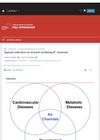
January 2023 in “American journal of physiology. Cell physiology” This editorial reviews the roles and therapeutic potential of inward rectifying K+ channels in various physiological processes, highlighting their importance in health and disease but provides no new experimental results.
 3 citations
,
October 2022 in “Frontiers in Surgery”
3 citations
,
October 2022 in “Frontiers in Surgery” This review discusses the role of proteomics in understanding skin diseases such as cancers and psoriasis, with findings suggesting cell death and metabolism as major areas of focus, but reports no new experimental results.
2 citations
,
September 2025 in “Frontiers in Endocrinology” This review critically evaluates the evidence for SARMs' tissue selectivity and suggests their clinical benefits over traditional androgens are not yet well-supported by robust evidence, underscoring the need for further head-to-head trials.
2 citations
,
September 2023 in “International journal of molecular sciences” This review summarizes the roles of matricellular proteins in skin stem cell niches, highlighting their contribution to stem cell fate, self-renewal, and potential implications for wound healing and aging.
 2 citations
,
June 2022 in “Molecules”
2 citations
,
June 2022 in “Molecules” This study demonstrated that an ethanol extract of Connarus semidecandrus Jack showed potential anti-androgenic alopecia effects in a testosterone-induced model, suggesting a possible treatment option for hair loss.
2 citations
,
September 2004 in “Experimental Dermatology” This study found that desmosomal adhesion plays a crucial role in epithelial morphogenesis and cell positioning, equivalent in importance to that of adherens junctions.
1 citations
,
October 2025 in “International Journal of Molecular Sciences” This narrative review highlights the potential of naturally occurring compounds to target specific molecular pathways and overcome resistance in advanced and recurrent papillary thyroid cancer, offering new therapeutic possibilities beyond traditional treatments like surgery and lifelong hormone replacement.
1 citations
,
August 2025 in “Frontiers in Neuroscience” This review discusses cellular senescence in relation to ALS and explores how targeting senescent cells could potentially serve as a treatment strategy, but it reports no new clinical findings and emphasizes that this link is not yet conclusively established.
1 citations
,
May 2025 in “Cytotechnology” This study observed that Icariside II, an extract from Epimedium brevicornu Maxim, can inhibit the growth of gastric cancer in cell lines and mouse models by promoting apoptosis and suppressing the Wnt/β-catenin signaling pathway, with minimal toxicity to normal gastric cells.
 1 citations
,
November 2023 in “iScience”
1 citations
,
November 2023 in “iScience” In this study, researchers found that disrupting desmoglein 3 signaling in a mouse model of pemphigus vulgaris activates normally quiescent hair follicle stem cells, compromising their multipotency but prompting a regenerative response that restores stem cell function and structures.
 1 citations
,
April 2023 in “International Journal of Molecular Sciences”
1 citations
,
April 2023 in “International Journal of Molecular Sciences” This study found that Botryococcus terribilis ethanol extract significantly reduced inflammation markers in LPS-stimulated RAW264 cells, potentially via Axl inhibition and alteration of immune-related gene expression.
 August 2026 in “Immunity & Inflammation”
 In this review, the authors discuss how niche-specific immunometabolic regulation influences tissue repair across various organs by highlighting the complex, context-dependent interaction between immune metabolism and tissue-specific regenerative outcomes.
 June 2026 in “Frontiers in Medicine”
 This study conducted a large-scale comparison using FAERS data to assess the post-marketing safety profiles of spironolactone, eplerenone, and finerenone, finding unique adverse event patterns for each drug and highlighting the need for personalized safety monitoring and further investigation in other pharmacovigilance databases.
 April 2026 in “International Journal of Molecular Sciences”
 This study reviews evidence that in keloid development, transforming growth factor-β (TGF-β) drives fibroblast proliferation and fibrosis not only through the classical Smad-dependent pathway but also via equally important Smad-independent signaling cascades, suggesting these pathways as possible targets for more effective keloid therapies.
March 2026 in “Pharmaceutical Biology” This review discusses the potential of asiaticoside from Centella asiatica for enhancing wound healing after endoscopic submucosal dissection and highlights delivery strategies to improve its gastrointestinal application; it reports no new clinical results.
February 2026 in “Advanced Science” This study found that targeting the p300/androgen receptor axis effectively reduced AR activation and ovarian fibrosis in mouse models of polycystic ovary syndrome, suggesting a potential therapeutic approach.
 February 2026 in “International Journal of Molecular Sciences”
 This review discusses the potential benefits of hyperthermia in cancer therapy, combined with natural compounds, to enhance treatment efficacy and reports no new clinical results.
January 2026 in “International Journal of Molecular Sciences” This narrative review highlights that declining testosterone levels are a complex public health issue potentially influenced by modifiable lifestyle factors and environmental stressors, suggesting integrated strategies may be needed to address the trend's impacts on health.
 November 2025 in “International Journal of Molecular Sciences”
 This review highlights various treatments for androgenetic alopecia that target its underlying pathophysiological mechanisms, reporting enhanced hair growth, especially when combining drugs, which shows improved outcomes over individual drug use alone.
 October 2025 in “International Journal of Molecular Sciences”
 This study identified changes in immune activation, ferroptosis, and structural genes in alopecia areata subtypes, suggesting molecular markers that might help understand disease variability and guide future treatments.