 8 citations
,
September 2003 in “Journal of dermatological science”
8 citations
,
September 2003 in “Journal of dermatological science” This study investigated the effects of substance P on human hair growth but found its role in hair follicle physiology remains unclear.
 April 2019 in “Journal of Investigative Dermatology”
 This study reported that mSKPs and DMSCs share similarities in biological characteristics but exhibit distinct transcriptome profiles, with mSKPs being more immune-related and DMSCs more associated with differentiation and disease pathways.
 1 citations
,
January 2022 in “Research Square (Research Square)”
1 citations
,
January 2022 in “Research Square (Research Square)” This study found that CRISPR/Cas9 efficiently edited two cellulose synthase-like genes in spinach, significantly altering root hair growth patterns and suggesting potential for large-scale genome editing in this crop.
32 citations
,
May 1999 in “Biochemical and Biophysical Research Communications” This study found that the gene BSSP, a serine protease, is predominantly expressed in sebaceous glands and is overexpressed in nude mouse skin.
January 2021 in “Figshare” This study used Density Functional Theory to calculate finasteride's molecular properties, finding the GGA/PW91 method aligns well with experimental data and identifying key reactive sites for chemical interactions.
August 2026 in “Ebers Papyrus” This study concluded that allele-specific PCR (AS-PCR) is more reliable than tetra-primer ARMS-PCR for genotyping the SNP rs1998076 due to better stability and interpretability.
 July 2021 in “Asia-Pacific journal of convergent research interchange”
 This research on dermal papilla cells found that Sparasis crispa increased mRNA expression related to hair production and may help in hair generation cycles, but its impact on male hair loss treatment remains uncertain.
8 citations
,
March 2015 in “International Journal of Oncology” This study successfully established Tsc2-deficient embryonic stem cells from Eker rats and found these cells have distinct gene expression compared to non-mutant cells, which could help identify new therapeutic targets for TSC-related pathogenesis.
September 2025 in “Global Journal of Pharmacy & Pharmaceutical Sciences” This review analyzes PDRN's molecular mechanisms and therapeutic applications in anti-aging dermatology but reports no new clinical results, highlighting the need for more standardized protocols and long-term evaluations.
January 2026 in “SSRN Electronic Journal” 57 citations
,
August 1997 in “Pediatrics International” This abstract discusses two types of hereditary vitamin D metabolism defects, VDDR I and VDDR II, and reports on their distinct characteristics and treatment responses, without presenting new clinical data.
14 citations
,
July 2021 in “Bioinformatics” This study demonstrates the use of rPanglaoDB, an R package for combining public single-cell datasets, to create the first unbiased transcriptome profile of fibrocytes, revealing their role in tissue healing.
This study found that targeting S1PR1 signaling in mouse aortic endothelial cells helps suppress inflammation-related gene expression while revealing diverse and spatially distinct endothelial cell subtypes.
August 2016 in “Anaplastology” This study reports that controlled release PRP therapy using dalteparin and protamine micro-particles may be effective for hair growth and skin rejuvenation in women.
1 citations
,
January 2004 in “Linchuang pifuke zazhi” This study found that while SP did not enhance linear hair growth in cultured hair follicles, it prolonged the anagen phase and altered the expression of growth factors and apoptosis-related molecules, suggesting a stimulatory effect on hair growth.
 June 2024 in “Archives of Dermatological Research”
 In this study, significant upregulation of the genes SFRP2 and PTGDS was found in bald hair follicles of female pattern hair loss patients compared to non-bald follicles, suggesting these genes may be biomarkers and play a role in hair loss for this condition.
1 citations
,
May 2024 in “Communications Biology” This study found that Dab2 conditional knockout mice experienced delayed hair follicle cycles and reduced hair follicle stem cell activity, suggesting Dab2's crucial role in regulating stem cell activation and anti-aging process in hair follicles.

This study found that injecting sFRP4 into mouse skin partially inhibited hair follicle regeneration, suggesting a potential therapy for hair follicle regeneration disorders.
10 citations
,
November 2023 in “Frontiers in Pharmacology” In this study, researchers developed a self-assembling hydrogel called RADA-PDGF2 and found it to accelerate wound closure in a mouse model due to its pro-proliferative and pro-migratory properties, without causing cytotoxicity or immunogenicity.
 57 citations
,
May 2014 in “Molecular Phylogenetics and Evolution”
57 citations
,
May 2014 in “Molecular Phylogenetics and Evolution” This study utilized a sequence-structure alignment approach to improve the characterization of Class A Rhodopsin GPCR superfamily, including orphan and unclassified receptors, through evolutionary analysis.
 14 citations
,
May 2021 in “Marine Drugs”
14 citations
,
May 2021 in “Marine Drugs” This review discusses the therapeutic properties of polydeoxyribonucleotides derived from marine organisms for wound healing and inflammation, but it reports no new clinical results.
May 2026 in “Chemical Engineering Journal” 1 citations
,
January 2015 This study found that bursts of ERK activation in the skin, termed SPREADs, are linked to increased cell division and help synchronize cell cycle progression in living mice.
January 2025 in “SSRN Electronic Journal” June 2026 in “ACS Applied Polymer Materials” This study reports a method for fabricating biofunctional polymer fibers by using DNA-programmable cell-free protein synthesis integrated through solution blow spinning, enabling in situ protein production and potential applications in respirators, sampling swabs, and other advanced materials.
 7 citations
,
January 2023 in “Frontiers in cell and developmental biology”
7 citations
,
January 2023 in “Frontiers in cell and developmental biology” This study found that Celsr1, not Celsr2, is the primary protein involved in establishing planar cell polarity and hair follicle polarization in the epidermis of mice.
3 citations
,
February 2018 in “Experimental and Molecular Medicine/Experimental and molecular medicine” This study suggests that hair loss disorders like Marie Unna hereditary hypotrichosis may result from mutations that disrupt post-transcriptional regulation of HR protein expression by PCPB2 interacting with Hr mRNA.
 1 citations
,
August 2023 in “Genome research”
1 citations
,
August 2023 in “Genome research” This study found that in spiny mice, the proximal side of ear wounds is crucial for regeneration, a process possibly linked to unique injury-induced immune responses compared to nonregenerative rodents.
 1 citations
,
June 2023 in “Journal of applied crystallography”
1 citations
,
June 2023 in “Journal of applied crystallography” This study utilized the DNP–SANS technique on human hair for the first time and found significant changes in the SANS profile dependent on polarization conditions, providing insights into the structural composition and dynamic properties of keratin and its associated proteins.
 6 citations
,
October 2012 in “Journal of Heredity”
6 citations
,
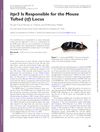
October 2012 in “Journal of Heredity” This study identified the Itpr3 gene as responsible for the tufted hair loss phenotype in the BTBR mouse strain.