 16 citations
,
December 2012 in “Bioinformation”
16 citations
,
December 2012 in “Bioinformation” This study suggests that natural molecules like curcumin, EGCG, barringtozenol, and finasteride may be effective inhibitors for VEGFR, potentially offering a cancer chemoprevention alternative to pazopanib.
 3 citations
,
July 2019 in “International journal of scientific research in science and technology”
3 citations
,
July 2019 in “International journal of scientific research in science and technology” This study found that a herbal gel containing fenugreek seed extract significantly promoted hair growth on mice after 30 days of topical application.
 November 2022 in “Journal of Investigative Dermatology”
 This study found that a lotion containing specific plant extracts significantly increased the number of anagen hairs and the anagen/telogen ratio in subjects with androgenetic alopecia after three months of use.
 April 2017 in “Journal of Investigative Dermatology”
 Applying pseudoceramide improved skin and hair health.
 7 citations
,
April 2009 in “Bioorganic & Medicinal Chemistry Letters”
7 citations
,
April 2009 in “Bioorganic & Medicinal Chemistry Letters” Diphenyl ethers can potentially reduce excess oil production when applied on the skin, helping treat conditions like acne.
November 2008 in “Cancer Prevention Research” This article reviews pivotal trials and recent findings in chemoprevention for breast, prostate, and colorectal cancers, emphasizing its potential and the importance of further research, public education, and partnerships, but reports no new results.

This study found that vinegar-processed black soybean and its extract accelerated hair growth and prevented alopecia in mice, with potential mechanisms involving modulation of the Wnt/β-catenin signaling pathway, suggesting they may be promising functional foods for hair regeneration.
May 2025 in “OPAL (Open@LaTrobe) (La Trobe University)” In this computational study, researchers identified six phytochemicals, including Jamogenin, that effectively bind to the enzyme 5-AR, potentially promoting hair growth, and found that encapsulating Jamogenin in lipid nanoparticles enhances its stability.
 December 2021 in “Research Square (Research Square)”
 This study suggests that certain nutraceuticals may enhance the inhibitory effects of tamoxifen on estrogen in breast cancer cells and potentially offer protective benefits for hair growth in patients undergoing endocrine therapy.
2 citations
,
April 2016 in “DOAJ (DOAJ: Directory of Open Access Journals)” This study found that a novel saw palmetto supercritical CO2 extract effectively inhibits 5α-reductase type II in vitro, suggesting its potential for promoting prostate health in benign prostatic hyperplasia.
 5 citations
,
February 2010 in “Drug development and industrial pharmacy”
5 citations
,
February 2010 in “Drug development and industrial pharmacy” This study found that vesicles formed with behenyltrimethylammonium chloride, stearic acid, and hinokitiol significantly improved skin permeation of hinokitiol in vitro, which may aid in hair growth promotion.
1 citations
,
January 2017 in “Deleted Journal” This study found that Orthosiphon stamineus extract significantly stimulated dermal papilla cell proliferation and enhanced hair growth in an ex vivo model of androgenic alopecia compared to vehicle-treated controls.

In this phase 2 trial, STS01 1% significantly improved hair regrowth in patients with mild to moderate patchy alopecia areata compared to placebo, with a manageable skin irritation side effect profile.
 April 2021 in “Current Topics in Nutraceutical Research”
 This study found that citron seed oil promotes hair regrowth in a C57BL/6 mouse model by enhancing the transition to the growth phase, increasing hair follicle features and skin thickness, and inducing specific protein expressions that support hair regeneration.
22 citations
,
March 2003 in “Steroids” This study found that both finasteride and a new steroidal compound, PM-9, competitively inhibit the 5α-reductase enzyme in Penicillium crustosum broth.
 1 citations
,
April 2016 in “Journal of Investigative Dermatology”
1 citations
,
April 2016 in “Journal of Investigative Dermatology” In this study, PGD2 treatment in keratinocytes increased testosterone production via reactive oxygen species, suggesting a potential role for the NRF2 pathway in androgenic alopecia treatment strategies.
 20 citations
,
January 2003 in “Chemical and Pharmaceutical Bulletin”
20 citations
,
January 2003 in “Chemical and Pharmaceutical Bulletin” This study reports that five new progesterone derivatives demonstrated inhibitory activity against the 5α-reductase enzyme and binding affinity for the androgen receptor in an in vitro hamster model.
August 2019 in “Key engineering materials” This study found that Carthamus tinctorius floret extract, at a concentration of 0.05 mg/mL, significantly inhibited 5α-reductase activity in DU-145 cells more effectively than standard treatments finasteride and dutasteride, with a stable microemulsion formulation enhancing its skin permeation and stability.
 August 2025 in “ACS Omega”
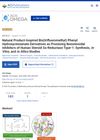
 This study synthesized and evaluated hydroxycinnamate derivatives for their ability to inhibit human SRD5A1, finding that three compounds showed significant inhibitory activity and low cytotoxicity. Compound 10a notably reduced SRD5A1 protein expression in cells, suggesting potential for nonsteroidal treatment of androgen-related conditions.
5 citations
,
November 2015 in “Journal of Enzyme Inhibition and Medicinal Chemistry” This study found that aliphatic ester moieties in 16-formyl-17-methoxy dehydroepiandrosterone derivatives increased their potency as 5α-reductase type 2 inhibitors in vitro compared to finasteride.
 March 2026 in “Preprints.org”
 This study investigated the secretome of adipose mesenchymal stem cells and fibroblasts used in skin care products, finding 16 therapeutic pathways involving numerous signaling mechanisms, which may offer skin benefits through anti-inflammatory and regenerative effects.
May 2025 in “OPAL (Open@LaTrobe) (La Trobe University)” This study identified six molecules from herbal extracts that effectively bind to 5-alpha reductase (5-AR), with Jomogenin showing high binding stability when encapsulated in lipid nanoparticles, suggesting their potential for further experimental analysis to aid hair follicle growth.
 April 2016 in “Journal of Investigative Dermatology”
 This study suggests that dsRNA may enhance KRT9 expression in palm and sole skin through β-catenin signaling, potentially linking mechanical damage to specific skin features and certain skin conditions.
35 citations
,
October 2005 in “European journal of pharmaceutics and biopharmaceutics” This study found that polymers significantly improved the chemical and microbial stability of steroid hormones in liposome formulations over eight weeks, with finasteride showing the highest diffusion rate.
 July 2026 in “Pharmacological Reports”
 In this pilot study, topical latanoprost acid was observed to increase hair count and improve hair follicle structure in women with androgenetic alopecia, with no serious adverse events, suggesting potential for further investigation to confirm its efficacy and safety.
 22 citations
,
August 2009 in “Evidence-based Complementary and Alternative Medicine”
22 citations
,
August 2009 in “Evidence-based Complementary and Alternative Medicine” This study found that a composition including Serenoa repens extract and anti-inflammatory agents effectively suppressed inflammation-related gene expression in a keratinocyte model, suggesting a potential dual strategy for treating androgenetic alopecia.
In this research presented at the BEYOND Biohacking Conference 2026, a regenerative skincare serum using plant-derived Consortia Factors® showed significant age spot lightening and improvements in skin smoothness, firmness, and radiance over eight weeks in a study with 35 women.
![Discovery of 7-Methoxy-6-[4-(4-Methyl-1,3-Thiazol-2-yl)-1H-Imidazol-5-yl]-1,3-Benzothiazole (TASP0382088): A Potent and Selective Transforming Growth Factor-β Type I Receptor Inhibitor as a Topical Drug for Alopecia](/images/assets/9620bd26-3366-4f2a-bcac-f511697bbc41/small/35997.jpg) 6 citations
,
January 2013 in “Chemical & pharmaceutical bulletin/Chemical and pharmaceutical bulletin”
6 citations
,
January 2013 in “Chemical & pharmaceutical bulletin/Chemical and pharmaceutical bulletin” In this study, TASP0382088 showed potent selective inhibition of the ALK5 receptor, significantly reducing Smad2 phosphorylation in mouse skin following topical application.
 36 citations
,
October 2009 in “Journal of Investigative Dermatology”
36 citations
,
October 2009 in “Journal of Investigative Dermatology” This study suggests that in SZ95 sebocytes, a pathway for DHT biosynthesis does not require testosterone as an intermediate, potentially impacting the treatment of androgen-sensitive skin conditions.
3 citations
,
September 2018 in “Current Drug Delivery” This study found that a finasteride topical gel formulation using propylene glycol and Tween® 80 showed significantly enhanced permeation compared to a control formulation without these enhancers.