86 citations
,
January 1996 in “Clinics in dermatology” This review discusses the effects of protein-based cosmetics on hair properties and reports no new research findings, suggesting potential benefits for developing advanced, sustainable hair products.
65 citations
,
April 2000 in “The Laryngoscope” This study concluded that clotrimazole, miconazole, and tolnaftate appeared safe in guinea pigs, whereas gentian violet showed potential for severe ototoxicity, and nystatin left a concerning residue.
 37 citations
,
May 2018 in “Journal of Cosmetic Dermatology”
37 citations
,
May 2018 in “Journal of Cosmetic Dermatology” This review analyzed clinical trial protocols for platelet-rich plasma preparation in hair loss treatment, finding inconsistent and insufficient reporting that complicates comparison and efficacy determination.
 17 citations
,
June 2018 in “Sexual Medicine Reviews”
17 citations
,
June 2018 in “Sexual Medicine Reviews” In this review, the authors examined guidelines and literature on the non-operative treatment of gender dysphoria, highlighting the importance of personalized, multidisciplinary care, and noting that such treatment is generally safe and effective according to WPATH and Endocrine Society recommendations.
 16 citations
,
January 2005 in “Pediatric Dermatology”
16 citations
,
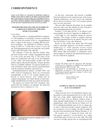
January 2005 in “Pediatric Dermatology” This brief report describes a case of Fox-Fordyce disease in a prepubertal girl but reports no new clinical findings.
 12 citations
,
February 2014 in “Recent Patents on Inflammation & Allergy Drug Discovery”
12 citations
,
February 2014 in “Recent Patents on Inflammation & Allergy Drug Discovery” This article reviews various aspects of shampoos, including preparation methods and commercial value, but reports no new experimental results, instead focusing on patents and product evaluation criteria.
 10 citations
,
September 2020 in “Archives of Dermatological Research”
10 citations
,
September 2020 in “Archives of Dermatological Research” Both methods improve hair density and thickness; double-spin may be more effective.
 6 citations
,
August 2021 in “International Journal of Pharmaceutics”
6 citations
,
August 2021 in “International Journal of Pharmaceutics” This study demonstrated that finasteride-loaded PLGA microspheres created using a novel microfluidic device exhibit extended drug release in beagle dogs, with modifications allowing for release up to 3 months.
 4 citations
,
December 2020 in “Scientific Reports”
4 citations
,
December 2020 in “Scientific Reports” This study found that a mixture of plant extracts significantly improved skin barrier function, reduced inflammation, and exhibited anti-aging effects in human skin cells.
 4 citations
,
September 2020 in “Frontiers in Microbiology”
4 citations
,
September 2020 in “Frontiers in Microbiology” In this study, algal oligosaccharides effectively countered key factors in androgenetic alopecia pathogenesis, improving hair growth indicators in vitro and in mice.
 3 citations
,
August 2021 in “Journal of fiber science and technology”
3 citations
,
August 2021 in “Journal of fiber science and technology” This study found that chitin nanofibrils prepared by the aqueous counter collision process exhibited superior emulsifying properties for stabilizing oil droplets in Pickering emulsions compared to cellulose nanofibrils.
 3 citations
,
August 2013 in “Tropical Journal of Pharmaceutical Research”
3 citations
,
August 2013 in “Tropical Journal of Pharmaceutical Research” This study concluded that the Box-Behnken experimental design effectively optimizes the size of finasteride nano-emulsions by assessing the impact of various experimental factors.
1 citations
,
August 2012 in “Research in Pharmaceutical Sciences” 
In this study, no significant association was found between androgenetic alopecia and increased risks of hypertension or hyperaldosteronism among male participants in Saudi Arabia, suggesting that AGA should not be considered an indicator for these conditions.
May 2026 in “VT International Press Journal of Multidisciplinary Research and Review” This study developed a herbal hair oil using garlic leaves, coconut oil, castor oil, hibiscus flower powder, and amla extract, finding it enhances scalp nutrition, reduces hair loss, and maintains favorable aesthetic attributes with appropriate stability and consistency for hair application.
 July 2025 in “Biomolecules”
 This systematic review found that topical adenosine may increase hair thickness and density while reducing hair loss, but the strength of evidence is low due to issues with trial design and sample size.

This study observed that public interest in JAK-inhibitor treatments for alopecia areata significantly increased around the FDA approval in 2022 and heightened media coverage, suggesting an important role for patient education about these treatments.
 March 2025 in “Formosa Journal of Sustainable Research”
 In this study involving male mice, Mangkokan leaf extract (Polyscias scutellaria) at a 7% concentration was found to heal incision wounds faster compared to 3% and 5% concentrations.
 February 2025 in “Healthcare”
 In this systematic review, the researchers observed that topical caffeine preparations appear safe and effective against hair loss, but most studies had low-quality evidence due to design flaws, indicating the need for better-designed trials before drawing definitive conclusions.
 December 2024 in “International Journal of experimental research and review”
 This study developed a stable nanoemulsion using ultrasonic vibrations and Tween 80 emulsifier, which can enhance the antibacterial activity and prolong the shelf life of food products, as well as be applicable in cosmetics and pharmaceuticals for oral and transdermal use.
This meta-analysis reports that ritlecitinib significantly improved hair growth in alopecia areata patients compared to placebo, although its potential requires further clinical exploration.
This ongoing study is evaluating whether Ayurvedic treatments, specifically Panchagavya Ghrita combined with Amalakyadi Kashaya, can improve the quality of life for cancer patients experiencing side effects from chemotherapy and radiotherapy, compared to standard care, using a variety of quality-of-life and symptom severity scales.
In this study, 14 sessions of 675 nm laser stimulation significantly improved hair count, density, and thickness in Indian patients with androgenetic alopecia, with an increase of around 17% in hair parameters over four months.
 January 2024 in “Forte Journal”
 This study found that formula 4 of the citronella and coconut oil combination promoted rabbit hair growth comparably to the positive control.
January 2024 in “Metabolites” This review highlights the importance of standardizing pre-analytical procedures for collecting and extracting samples from uncommon biological specimens like breast milk and sweat in clinical metabolomics, to enhance diagnostic and biomarker discovery efforts while minimizing contamination and bias.
 January 2024 in “International Journal of Pharmaceutical Research and Development”
 This study explored the development of herbal hair gels using natural extracts like flaxseed and guava leaves, targeting the reduction of dandruff and regulation of hair loss through antimicrobial and anti-inflammatory properties, though specific results of efficacy are not reported.
October 2023 in “Jurnal Ilmu Kefarmasian Indonesia” In this experimental study using rabbits, the researchers evaluated hair tonic formulations containing cinnamon essential oil and virgin coconut oil, finding that formula 3 had hair growth activity exceeding the positive control, though overall growth activity differences were not statistically significant.
This study used TikTok videos to explore experiences of individuals with lupus erythematosus, revealing that mucocutaneous symptoms significantly impact mental health and body image, while pharmacologic treatments are often viewed negatively, leading to important implications for clinical interactions and validation.
 June 2023 in “Skin Research and Technology”
 This study concluded that, in male patients with mild-to-moderate androgenetic alopecia, injections of PRP prepared by an automated method combined with topical 5% minoxidil were effective and safe, showing superior clinical efficacy and patient satisfaction compared to PRP alone.
This study aims to use a comprehensive health data set to develop a statistical model that can improve personalized and preventive health care by understanding relationships between various health parameters in individuals.