3 citations
,
January 2012 in “Journal of Investigative Dermatology” Inhibiting PGD2 and using dermal papilla cells may improve skin and hair regeneration.
 2 citations
,
February 2014 in “Animal Biotechnology”
2 citations
,
February 2014 in “Animal Biotechnology” This study reported that the PTGER2 gene is strongly expressed in cashmere goat skin and its expression tends to decrease from the anagen to telogen stages of the hair follicle cycle.
This study found that GPC1 is a key regulator of angiogenesis in human dermal microvascular endothelial cells, influenced by factors secreted by keratinocytes, and may be a target for alopecia treatment research.
 7 citations
,
July 2019 in “International Journal of Molecular Sciences”
7 citations
,
July 2019 in “International Journal of Molecular Sciences” This study found that PGA-4HGF nanoparticles enhanced hair growth in mice more effectively than 4HGF alone by increasing anagen phase duration and dermal papilla cell proliferation.
November 2022 in “bioRxiv (Cold Spring Harbor Laboratory)” This study found that prostaglandin E2 pretreatment may reduce radiotherapy-induced alopecia by enhancing hair follicle self-repair through transient G1 arrest, suggesting a potential preventive treatment.
 102 citations
,
July 2007 in “Genes & Development”
102 citations
,
July 2007 in “Genes & Development” This study found that maternal PPARγ is essential for preventing the production of inflammatory lipids in mouse milk, which can otherwise cause inflammation, alopecia, and growth retardation in nursing pups.
2 citations
,
October 2023 in “Philosophical Transactions of the Royal Society B Biological Sciences” This study identified novel isoforms of the PADI2 and PADI3 proteins, showing that PADI2β inhibits oligodendrocyte differentiation, possibly by opposing the effect of canonical PADI2, while PADI3β modulates the activity of PADI3α, suggesting new regulatory mechanisms of citrullination in tissue development.
38 citations
,
January 2017 in “PPAR Research” This review discusses the role of PPAR-γ in the pathogenesis of primary cicatricial alopecia, including its involvement in lichen planopilaris and treatment trials using PPAR-agonists, and reports no new clinical results.
99 citations
,
January 2004 in “Journal of Biological Chemistry” This study found that methylprednisolone can block IgG-induced keratinocyte detachment in an animal model of pemphigus vulgaris, potentially by increasing the synthesis and modifying adhesion molecules.
 9 citations
,
November 2012 in “Biomolecules & therapeutics”
9 citations
,
November 2012 in “Biomolecules & therapeutics” This study found that diphlorethohydroxycarmalol significantly increased prostaglandin $E_2$ synthesis in HaCaT human keratinocytes by upregulating COX-1 and COX-2 expression, suggesting potential benefits from elevated $PGE_2$ production.
 3 citations
,
May 2011 in “Journal of the American Academy of Dermatology”
3 citations
,
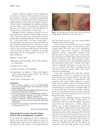
May 2011 in “Journal of the American Academy of Dermatology” This case report describes a 54-year-old woman who developed hypertrichosis around a leg ulcer while using PGE1 ointment, suggesting a potential side effect of the treatment.
 4 citations
,
April 2024 in “Cellular and Molecular Biology”
4 citations
,
April 2024 in “Cellular and Molecular Biology” In this study, injectable platelet-rich fibrin (i-PRF) was found to enhance the proliferative, migratory, and hair-inducing abilities of dermal papilla cells more effectively than platelet-rich plasma through the TGF-β/Smad pathway.
18 citations
,
December 2002 in “European Journal of Biochemistry” This study found that the MsPG3-GFP fusion protein accumulates at the growing root hair tips in Medicago plants, suggesting its role in tip growth during symbiosis.
January 2025 in “Fìzìologìčnij žurnal” This study found that in patients with elevated fibrinogen levels undergoing revision rhinoplasty, PDRN decreased M1 cytokines and increased M2 cytokines, potentially offering a new therapeutic approach, but further research is needed to understand its mechanisms and effects fully.
This study identified CXXC5 as a key mediator of hair loss induced by PGD2 and DHT via suppression of the Wnt/β-catenin pathway, with implications for potential therapeutic targets.
 7 citations
,
October 2006 in “Medical hypotheses”
7 citations
,
October 2006 in “Medical hypotheses” UV light might cause excessive hair growth by increasing PGE2 in the skin.
 3 citations
,
March 2016 in “Journal of Cosmetic Dermatology”
3 citations
,
March 2016 in “Journal of Cosmetic Dermatology” This study found that the penta-peptide Gly-Pro-Ile-Gly-Ser increased the proportion of thick hair and improved baldness appearance in Japanese men with androgenetic alopecia.
The researchers reported that PEG-FGF2 conjugates, particularly Compound 6, significantly enhanced stability, proliferation, migration, and wound healing activity compared to native FGF2, despite some reduction in bioactivity near crucial binding domains.
This article explores the potential applications of polyglutamic acid in cosmetics, discussing its benefits for skincare and haircare, but reports no new experimental results.
January 2008 in “Memorial University Research Repository (Memorial University)” This study found that the NHD domain, but not the PHD domain, of hPygo2 is crucial for Wnt-independent growth of ovarian cancer cells, and identified a key interaction with Treacle protein involved in ribosomal biogenesis.
 3 citations
,
October 2021 in “PLoS ONE”
3 citations
,
October 2021 in “PLoS ONE” In this study, topical piperonylic acid was found to improve wound healing in mice by activating EGFR and modulating gene expression related to the healing process.
 June 2012 in “Faculty Opinions – Post-Publication Peer Review of the Biomedical Literature”
 Prostaglandin D2, found in higher levels in bald scalps, stops hair growth and could be a target for treating hair loss.
 January 2022 in “bioRxiv (Cold Spring Harbor Laboratory)”
 This study found that inhibiting the gp130 Y814 signaling module promotes tissue regeneration and may prevent pathological outcomes after injury in animal models.

This study found that Pygo2 is crucial for early intestinal hyperproliferation induced by stabilized β-catenin, suggesting it as a potential target for therapeutic intervention in cancers with β-catenin mutation.
42 citations
,
June 1998 in “The journal of investigative dermatology/Journal of investigative dermatology” This study observed that PAI-2 is consistently expressed in differentiating cells of murine hair and nail, suggesting it may function as a marker of differentiation and possibly protect against premature cell death.
![Antiexudative Effects of Finasteride and a New Pyrazolo[C]Pyridine Derivative GIZh-72 in Acetic Acid-Induced Experimental Peritonitis](/images/assets/10e636c8-32b7-4d90-b645-80e0039c5960/small/4762.jpg) February 2020 in “Bulletin of Experimental Biology and Medicine”
February 2020 in “Bulletin of Experimental Biology and Medicine” Finasteride and GIZh-72 reduce inflammation, with GIZh-72 being more effective.
 May 2022 in “Journal of Immunology”
 In this study, a TGF-β mimic molecule from Heligmosomoides polygyrus was observed to enhance wound healing in mice, with improved tissue regeneration and specific immune cell recruitment without increased scarring.
 April 2023 in “Journal of Investigative Dermatology”
 This study found that PX-12 inhibited the NLRP3 inflammasome and reduced psoriasis-like symptoms in a mouse model, suggesting its potential as a treatment for psoriasis.
 2 citations
,
February 2019 in “Journal of Investigative Dermatology”
2 citations
,
February 2019 in “Journal of Investigative Dermatology” This study suggests that the expression of the DP2 receptor is higher in balding scalp cells and that its knockdown could inhibit the transition to the catagen phase in cultured human hair follicles, potentially counteracting hair growth inhibition associated with male pattern baldness.
This study found that GPC1 plays a crucial role in regulating angiogenesis in human dermal microvascular endothelial cells, which may make it a potential target in alopecia treatment research.