 December 2011 in “Drug Research”
 The document shows the state of pharmaceutical patents as of 1999, focusing on treatments for various diseases.
 April 1981 in “Pediatric research”
 This study found that abnormal liver and kidney copper metabolism in Br females had no clinical effects, whereas defective brain copper metabolism in Br males was clinically significant.
 January 2016 in “Faculty Opinions – Post-Publication Peer Review of the Biomedical Literature”
 A substance called prostaglandin D2 is found more in bald scalps and it stops hair from growing. Blocking its receptor could potentially treat hair loss.
 June 2025 in “Frontiers in Physiology”
 This study demonstrated that PGF 2α significantly stimulates hair growth in human hair follicles via a receptor-driven mechanism, with a notably stronger response in intermediate follicles than in terminal ones, suggesting potential clinical significance for conditions like alopecia.
 September 2017 in “Journal of Investigative Dermatology Symposium Proceedings”
 This study found that prostaglandin D2 increases testosterone production in human keratinocytes through a mechanism involving ROS and REDOX potential, which could inform treatments for androgenic alopecia.
This study found that isolated human scalp hair follicles express PGE2 genes and EP2 protein, suggesting PGE2 may play a crucial role in regulating hair growth.
March 2023 in “Frontiers in Cell and Developmental Biology” This review covers the role of proteoglycans in tissue growth and regeneration and highlights several studies on their potential as therapeutic targets, but reports no new clinical results.
6 citations
,
December 2023 in “Journal of Molecular Cell Biology” In this study, Gsdma1/2/3 knockout mice showed reduced epidermal hyperplasia and inflammation when induced by PMA, which was attributed to decreased EGFR-Stat3/Akt signaling due to a decrease in related ligands.
 November 2022 in “The journal of investigative dermatology/Journal of investigative dermatology”
 This study found that cPPARγ and dnPPARγ isoforms are differentially expressed in healthy human skin, suggesting that PPARγ modulators may have compartment-specific effects depending on isoform presence.
 9 citations
,
August 2014 in “European journal of ophthalmology”
9 citations
,
August 2014 in “European journal of ophthalmology” This study found that PGF 2α receptors were predominantly present in the inner root sheath of the bulb and stem of human eyelashes during the anagen phase.
 18 citations
,
February 2018 in “International Journal of Molecular Sciences”
18 citations
,
February 2018 in “International Journal of Molecular Sciences” This study found that prostaglandin D2 promotes androgen receptor and AKT signaling in human dermal papilla cells through the DP2 receptor, potentially contributing to androgenetic alopecia.
2 citations
,
September 2023 in “PubMed” The studies reviewed found favorable treatment outcomes for hypopigmented scars using PGF2α agonists with no adverse events reported. However, the authors highlight the need for larger randomized controlled trials to better understand their effectiveness and long-term safety.
 6 citations
,
October 2014 in “Experimental Dermatology”
6 citations
,
October 2014 in “Experimental Dermatology” This study suggests that AKR1C3 expression may influence PGD2-related pathways in skin squamous cell carcinoma and potentially be involved in androgenetic alopecia, although further investigation is needed to clarify its role.
158 citations
,
June 2014 in “Journal of Lipid Research” This review summarizes recent discoveries of GPCRs for lysophosphatidylserine and lysophosphatidylinositol, detailing their roles as lipid mediators, but reports no new experimental results.
9 citations
,
August 2023 in “Molecules” This study found that the peptides RMYYY and VMYMI displayed stronger binding energy and more frequent interactions with HPGDS compared to the native inhibitor, suggesting potential as future therapeutic drugs.
 March 2024 in “Journal of Microbiology and Biotechnology”
 This study suggests that phloroglucinol may enhance anagen signaling and reduce oxidative stress-induced damage in human dermal papilla cells, offering a potential therapy for hair loss.
 5 citations
,
July 2014 in “Acta Crystallographica Section D-biological Crystallography”
5 citations
,
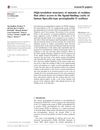
July 2014 in “Acta Crystallographica Section D-biological Crystallography” This study reports that mutations in human L-PGDS affect the entrance and exit of ligands in its binding cavity, suggesting these residues play a role in ligand interaction processes.
 April 2018 in “Radiotherapy and Oncology”
 Prostaglandin helps regenerate hair follicles after radiation damage.
 25 citations
,
January 2017 in “Steroids”
25 citations
,
January 2017 in “Steroids” This study found that the progesterone metabolite 3α-THP increased the proliferation and gene expression of human glioblastoma cells, suggesting a role in tumor progression.
 April 2021 in “Journal of Investigative Dermatology”
 This study found that CD1a-restricted CD4+ T cells responsive to lysyl-phosphatidylglycerol were more frequent in the blood of atopic dermatitis patients, suggesting a potential role in the disease's Th2-mediated pathology.
This study found that GPC1 is a key regulator of angiogenesis in hair follicles and may be an interesting target for addressing alopecia in dermatology research.
 24 citations
,
August 2017 in “Prostaglandins & Other Lipid Mediators”
24 citations
,
August 2017 in “Prostaglandins & Other Lipid Mediators” This review discusses the potential roles of prostaglandin D2 and its receptor CRTH2 in various diseases beyond allergies and asthma and reports no new clinical results.
 21 citations
,
November 2017 in “Scientific Reports”
21 citations
,
November 2017 in “Scientific Reports” This study found that prostaglandin D2 reduced proliferation in bulge resident K15+ stem cells but not in other K15+ progenitor cells, suggesting differential impacts on hair follicle stem cell niches.
October 2024 in “Dermatologica Sinica” This case report describes a 21-year-old male diagnosed with Crohn's disease and ulcerative pyoderma gangrenosum presenting with diverse extraintestinal symptoms, and highlights the success of a multi-drug treatment regimen including steroids and infliximab in improving clinical outcomes, though hematochezia was initially persistent.
November 2024 in “Journal of Investigative Dermatology” Polygenic Score can help predict severe psoriasis and psoriatic arthritis.
 April 2016 in “The journal of investigative dermatology/Journal of investigative dermatology”
 The researchers reported that disrupting the RPGRIP1L gene in mice impaired desmosome function, causing skin blistering, and their findings suggest that PKCβII inhibition could help treat pemphigus.
51 citations
,
May 2004 in “American journal of ophthalmology” This study reports that poliosis can be an adverse effect of topical prostaglandin F2α analog therapy in patients treated for primary open angle glaucoma.
22 citations
,
August 1999 in “Mechanisms of Development” This study identified two novel genes, pmg-1 and pmg-2, expressed in various skin and gland tissues and potentially involved in the differentiation of epithelial cells in epidermal appendages.
26 citations
,
May 2016 in “Journal of biological chemistry/The Journal of biological chemistry” This study found that mice lacking sPLA2-IIE had distinct skin abnormalities, particularly affecting hair follicles, highlighting the differing roles of sPLA2 isoforms in mouse skin.
 12 citations
,
April 2019 in “Scientific Reports”
12 citations
,
April 2019 in “Scientific Reports” This study found that HMGB1 enhanced hair growth by stimulating PGE2 production in human dermal papilla cells, suggesting a potential therapeutic target for alopecia treatment.