June 2023 in “Clinical Cosmetic and Investigational Dermatology” This report describes a 60-year-old female with pretibial pruritic papular dermatitis who showed significant improvement of skin lesions after one month of treatment with oral pentoxifylline. The authors highlight the unique clinical and histological features of PPPD and propose pentoxifylline as a potential therapy.
 22 citations
,
October 2019 in “International Journal of Nanomedicine”
22 citations
,
October 2019 in “International Journal of Nanomedicine” This study suggests that the hydrogel nanoparticle formulation of hair growth-promoting compounds may enhance hair follicle penetration and induce hair growth in tested models, demonstrating its potential as a hair growth treatment.
 October 2019 in “Tishreen University Journal -Medical Sciences Series”
 In this study, PRP injections were found to significantly increase hair density in men with androgenetic alopecia, with a 19.17% average improvement maintained over six months and minimal side effects.
This study found that GPC1 is a key regulator of angiogenesis in hair follicles and may be an interesting target for addressing alopecia in dermatology research.
1 citations
,
February 2023 in “IntechOpen eBooks” This chapter discusses photodynamic therapy and its potential applications beyond cancer treatment, including conditions like alopecia and angina, but reports no new clinical findings.
April 2023 in “Dermatologica Sinica” This review by Boucher et al. highlights the Pemphigus Disease Area Index and Autoimmune Bullous Skin Disorder Intensity Score as the most valid and reliable tools for assessing pemphigus severity but notes that simplified scores like IGAs require further validation.
 February 2026 in “Optics”
 This study demonstrates that polarized second harmonic generation imaging effectively monitors wool fiber stretching, revealing significant structural changes in keratin alignment that improve textile performance.
 9 citations
,
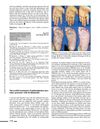
July 2018 in “European Journal of Dermatology”
9 citations
,
July 2018 in “European Journal of Dermatology” Brodalumab effectively treated a man's severe hand and foot psoriasis.
 10 citations
,
August 2020 in “Journal of Bioscience and Bioengineering”
10 citations
,
August 2020 in “Journal of Bioscience and Bioengineering” This study reports that using activated platelet-rich plasma releasate in the preparation of bioengineered hair follicle germs enhanced follicular gene expression and significantly improved hair regeneration in vitro.
January 2025 in “Journal of College of Physicians And Surgeons Pakistan” In this case report, a 36-year-old woman with GAPO syndrome underwent successful XEN gelatin micro-stent implantation in both eyes to control primary open-angle glaucoma that was unresponsive to medical treatment, marking the first documented use of this minimally invasive glaucoma surgery in such a patient.
 37 citations
,
April 2017 in “npj Regenerative Medicine”
37 citations
,
April 2017 in “npj Regenerative Medicine” This study found that platelet-derived growth factor signaling is crucial for maintaining the hair follicle dermal stem cell pool and supporting their regenerative capacity.
99 citations
,
January 2004 in “Journal of Biological Chemistry” This study found that methylprednisolone can block IgG-induced keratinocyte detachment in an animal model of pemphigus vulgaris, potentially by increasing the synthesis and modifying adhesion molecules.
 September 2024 in “Cureus”
 In this study, researchers optimized a method for preparing platelet-rich plasma to improve light transmittance aggregometry testing in coronary artery disease patients on clopidogrel and ticagrelor, finding distinct differences in platelet aggregation and volumes among these patients compared to healthy controls.
This lecture presented the author's experience with over 250 PRP treatments on more than 150 patients in esthetic dermatology, highlighting PRP's use of autologous platelets to potentially accelerate healing through normal pathways.
 1 citations
,
June 2021 in “The Indonesian Biomedical Journal”
1 citations
,
June 2021 in “The Indonesian Biomedical Journal” This study concluded that 2-hour oral glucose tolerance tests are crucial for screening glycemic disorders in women with PCOS, as HbA1c was found to be an unsatisfactory tool for predicting glycemic disorders within this group.
February 2022 in “The Nurse Practitioner” This article provides an introduction to gender-affirming hormone therapy for transgender and gender-nonbinary patients, designed as a continuing education activity, but does not report new clinical results.
July 2024 in “Journal of Investigative Dermatology” PH-762 shows promise in treating skin cancer by effectively targeting and silencing PD-1 in tumors with minimal side effects.
 165 citations
,
January 2008 in “Journal of biomaterials science. Polymer ed.”
165 citations
,
January 2008 in “Journal of biomaterials science. Polymer ed.” This review outlines the various processes activated by the peptide GHK-Cu in tissue remodeling and reports improvements in skin and wound healing but notes a need for further study to fully understand these mechanisms.
 11 citations
,
May 2016 in “Naunyn-Schmiedeberg's Archives of Pharmacology”
11 citations
,
May 2016 in “Naunyn-Schmiedeberg's Archives of Pharmacology” This study found that 15-dPGJ2 promotes apoptosis in human follicular keratinocytes, suggesting its potential role in developing hair loss prevention treatments through DP2 antagonism.
 December 2025 in “Molecules”
 This study found that the 15-PGDH inhibitor DPP improved endothelial function in hair-related cells exposed to DHT by reducing oxidative stress and enhancing angiogenic capacity.
7 citations
,
March 2023 in “Lasers in Surgery and Medicine” This study found that a single ablative fractional laser treatment significantly reduced hedgehog pathway gene expression in microscopic murine basal cell carcinomas, nearly matching the effects of repeated topical vismodegib applications.
December 2022 in “Plastic and Reconstructive Surgery” In this study, PRPF treatment was more effective than PRP alone in improving hair count and hair quality in androgenetic alopecia patients, with PRPF showing significant improvements in various hair growth parameters and having no statistical differences observed in the placebo group.
1 citations
,
January 2021 in “Indian Dermatology Online Journal” This expert group provided recommendations for preparing and using platelet-rich plasma in treating androgenetic alopecia, suggesting a manual double-spin method and specific dosing, although further studies on injectable platelet-rich fibrin are needed.
This study found that GPC1 is a key regulator of angiogenesis in human dermal microvascular endothelial cells, influenced by factors secreted by keratinocytes, and may be a target for alopecia treatment research.
 5 citations
,
December 2018 in “Journal of Cosmetic Dermatology”
5 citations
,
December 2018 in “Journal of Cosmetic Dermatology” This study found that after treatment with platelet-rich plasma, male androgenetic alopecia patients showed significant improvements in hair count, hair diversity, and reduction in certain dermoscopic features.
July 2026 in “Clinical Cosmetic and Investigational Dermatology” This study found that combining CGF with IPL treatment significantly improved skin conditions and quality of life for patients with facial sensitive skin compared to IPL alone, with enhanced wrinkle reduction, skin barrier function, and decreased adverse reactions reported.
39 citations
,
January 2008 in “World Journal of Gastroenterology” This report documents the first known case of acute inflammatory demyelinating polyneuropathy potentially linked to pegylated interferon-alpha 2a in a woman undergoing treatment for chronic hepatitis C.
 March 2026 in “bioRxiv (Cold Spring Harbor Laboratory)”
 In this study, researchers developed a new method called Enriched-GF, which enhances growth factor recovery from platelet concentrates through a combination of glass bead activation, freeze-thaw cycling, and calcium stimulation, outperforming conventional methods by providing higher and more consistent yields for regenerative medicine applications.
1 citations
,
January 2018 in “Cogent Medicine” This case study reports a pregnant woman with bullous pemphigoid who developed Cushing syndrome following steroid treatment, emphasizing the need for careful management of steroid-related complications.
 4 citations
,
February 2018 in “Journal of Investigative Dermatology”
4 citations
,
February 2018 in “Journal of Investigative Dermatology” This study suggests that thermal imaging may aid in diagnosing cellulitis, potentially improving patient care, although its applicability to certain cases requires further investigation.