September 2023 in “Journal of the American Academy of Dermatology” This study found a significant bidirectional association between psoriasis and gout, with psoriasis patients being 1.64 times more likely to have gout and gout patients being 1.36 times more likely to have psoriasis, highlighting potential shared inflammatory mechanisms.
 January 2024 in “Dermatologic Therapy”
 This study reported that in patients with androgenic alopecia, platelet-rich plasma therapy's effectiveness in enhancing hair density and caliber was positively correlated with specific growth factor concentrations, notably glial cell-derived neurotrophic factor and platelet-derived growth factor-BB, while no significant correlations were found with demographic factors.
 January 2024 in “ASEAN Journal of Psychiatry”
 In this study, researchers in Baghdad observed that women with PCOS who tested positive for CagA-IgG, a marker for H. pylori infection, showed significantly elevated insulin resistance and fasting blood sugar levels, regardless of metformin treatment, compared to controls.
 October 2023 in “Facial Plastic Surgery”
 This article describes the PHAT technique for lip and facial rejuvenation but reports no new clinical findings; the technique aims to improve skin quality and enhance surgical outcomes.
 22 citations
,
May 2002 in “Skin Research and Technology”
22 citations
,
May 2002 in “Skin Research and Technology” This study found that in male androgenetic alopecia, the contrast enhanced phototrichogram technique was superior in detecting changes in hair density and thickness compared to other methods.
 April 2017 in “The journal of investigative dermatology/Journal of investigative dermatology”
 This study reports that 71% of patients treated with the gamma-secretase inhibitor PF-03084014 for desmoid tumors experienced dermatologic side effects, such as follicular lesions and pruritic eruptions, which were managed with topical or systemic treatments.
In this study, personalized PRP therapy significantly increased hair density and diameter in a patient with androgenetic alopecia, highlighting its potential benefit but emphasizing the need for broader clinical trials.
 January 2017 in “Hair transplant forum international”
 This study examined the effects of platelet-rich plasma (PRP) treatment on women with female androgenetic alopecia in a double-blind, placebo-controlled pilot trial, but specific results were not reported in the abstract.
 3 citations
,
April 2021 in “PLoS ONE”
3 citations
,
April 2021 in “PLoS ONE” The authors concluded that controlling voltage, pulse width, and calcium concentration in pulse electric field-activated platelet-rich plasma enhances the release of growth factors and serotonin without causing clot formation, suggesting potential clinical advantages over bovine thrombin-activated PRP.
 24 citations
,
November 2019 in “Experimental Dermatology”
24 citations
,
November 2019 in “Experimental Dermatology” This review synthesizes current research on PPAR-γ signaling in hair follicle biology and its potential role in treating hair growth disorders like scarring alopecia and hirsutism, but reports no new clinical results.
 9 citations
,
December 2010 in “Journal of The European Academy of Dermatology and Venereology”
9 citations
,
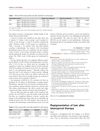
December 2010 in “Journal of The European Academy of Dermatology and Venereology” This letter reports repigmentation of hair in patients receiving latanoprost therapy.
 October 2025 in “Infection Control and Hospital Epidemiology”
 This article discusses developing a standardized operating procedure for PRP administration to align with infection prevention regulatory standards and reports no new clinical results.
October 2017 in “Journal of Investigative Dermatology” This article presents a diagnostic quiz based on clinical images and reports findings from the mentioned article but does not provide new clinical results.
 January 2023 in “Dermatologic Therapy”
 In this randomized controlled trial, the nutritional supplement PPT5 α was associated with increased terminal hair percentages and improved self-assessed hair parameters in women with early-stage androgenetic alopecia.
January 2026 in “Andrology” This study found that PRP injections are safe and may slightly reduce penile curvature and improve PDQ scores in men with stable-phase Peyronie's Disease, but the changes are not significant enough to predict long-term effects.
February 2026 in “Biomedicine & Pharmacotherapy” In this study, researchers developed EPO-derived peptides that enhanced hair growth by stimulating dermal papilla cells and increasing IGF-1 expression without triggering systemic erythropoietic effects in tested models, indicating a promising approach for treating hair loss.
 January 2026 in “RSC Advances”
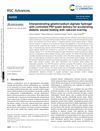
 This study found that the natural polymer-based hydrogel Gel/SA@PL released growth factors in a controlled way, which enhanced tissue regeneration and minimized scarring in the healing of diabetic wounds.
 April 2019 in “Radiotherapy and oncology”
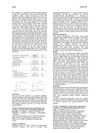
 HPV infection is linked to better survival in advanced anal cancer, higher radiation doses improve survival, especially in HPV-negative patients, and prostaglandin E₂ pretreatment can protect mouse hair follicles from radiation damage.
February 2023 in “Materials today bio” In this study, researchers developed a promising transdermal agent using Triton X-100-modified polyethyleneimine that successfully delivered genetic material to hair follicle cells in mice, potentially alleviating hair loss due to androgenetic alopecia by promoting cell proliferation and inhibiting apoptosis.
 1 citations
,
April 2022 in “JAAD case reports”
1 citations
,
April 2022 in “JAAD case reports” This case report describes a unique instance of IgG/IgA pemphigus in a Chinese woman, highlighting its distinct clinical and immunopathologic characteristics, including successful management with dapsone and prednisolone.
This study found that GPC1 is a significant regulator of angiogenesis in human dermal microvascular endothelial cells, suggesting its potential as a target for alopecia research.
 May 2023 in “Elsevier eBooks”
 This study found that platelet-rich plasma may be an effective adjuvant treatment for androgenetic alopecia, especially when combined with antiandrogenetic medications and topical minoxidil, though factors like patient age and family history could influence outcomes.
July 2025 in “Journal of Investigative Dermatology” This study found that both desmoglein-specific and non-desmoglein autoantibodies may play active roles in Pemphigus vulgaris pathogenesis, with HLA genetics influencing autoimmune specificity.
 3 citations
,
April 2022 in “Frontiers in Physiology”
3 citations
,
April 2022 in “Frontiers in Physiology” This study found that loss of the Ptch2 receptor in mice leads to increased incisor growth and enhanced mesenchymal stem cell differentiation, highlighting Ptch2's role in organ regenerative potential.
4 citations
,
June 1988 in “The American journal of cosmetic surgery” This paper describes a method for treating facial pitted scars using donor grafts and reports expected outcomes and potential complications, without providing new clinical results.
May 2020 in “Journal of the Dermatology Nurses’ Association” This study concluded that using a multimedia patient education tool may improve patient comprehension of platelet-rich plasma treatment for androgenetic alopecia in a dermatology practice.
 28 citations
,
October 1992 in “JEADV. Journal of the European Academy of Dermatology and Venereology/Journal of the European Academy of Dermatology and Venereology”
28 citations
,
October 1992 in “JEADV. Journal of the European Academy of Dermatology and Venereology/Journal of the European Academy of Dermatology and Venereology” In this study, Scalp Immersion Proxigraphy (SIP) was shown to produce more accurate measurements of linear hair growth rate than crude phototrichogram techniques, suggesting SIP's suitability for clinical trials monitoring hair growth.
November 2025 in “OPAL (Open@LaTrobe) (La Trobe University)” In this study, researchers conducted additional IHC staining on equine skin sections and found that collagen type III primarily labels the extracellular matrix, while anti-PDGFR-antibody staining highlights cells with long-shaped processes mainly arranged around hair follicles.
61 citations
,
September 1994 in “Journal of Medical Genetics” This study found strong evidence linking a keratin gene anomaly to pachyonychia congenita, supporting its role in affecting skin, nails, hair, and mucosa.
April 2020 in “BMC endocrine disorders” This case report describes a 65-year-old woman with childhood-onset growth hormone deficiency who developed panhypopituitarism, including late-onset secondary hypoadrenocorticism, affecting her respiratory and renal function.