 15 citations
,
May 2017 in “JEADV. Journal of the European Academy of Dermatology and Venereology/Journal of the European Academy of Dermatology and Venereology”
15 citations
,
May 2017 in “JEADV. Journal of the European Academy of Dermatology and Venereology/Journal of the European Academy of Dermatology and Venereology” This article is a letter to the editor about high-dose pulsed corticosteroid therapy combined with methotrexate for severe childhood alopecia areata and provides no new clinical results.
 10 citations
,
July 2008 in “Journal of Cutaneous Pathology”
10 citations
,
July 2008 in “Journal of Cutaneous Pathology” This study reports that marked, deep dermal mucin deposition in a patient with alopecia areata may indicate underlying systemic lupus erythematosus, as this feature was not prevalent in other alopecia areata cases.
 6 citations
,
January 2019 in “Journal of dermatology”
6 citations
,
January 2019 in “Journal of dermatology” This letter to the editor discusses immune checkpoint inhibitor-related alopecia and insights into its pathophysiology using non-invasive diagnostic techniques, but reports no new clinical results.
 3 citations
,
January 2021 in “Skin appendage disorders”
3 citations
,
January 2021 in “Skin appendage disorders” This study concluded that hair pigmentation, as measured by eumelanin-to-pheomelanin ratio, is not a risk factor for developing alopecia areata when compared to androgenetic alopecia patients.
 3 citations
,
May 2019 in “International journal of research in dermatology”
3 citations
,
May 2019 in “International journal of research in dermatology” This study found that platelet rich plasma was effective in treating alopecia areata, with 65% of patients responding well to treatment.
 3 citations
,
August 2012 in “The American Journal of Dermatopathology”
3 citations
,
August 2012 in “The American Journal of Dermatopathology” This report describes a 20-year-old Chinese man with a rare combination of congenital compound and blue melanocytic nevus associated with alopecia areata.
 2 citations
,
July 2017 in “Skin appendage disorders”
2 citations
,
July 2017 in “Skin appendage disorders” Alfredo Rebora suggests a simpler classification for hair loss and a new test for easier diagnosis.
 July 2025 in “International Journal of Dermatology Venereology and Leprosy Sciences”
 In this study involving 20 participants with alopecia areata, microneedling was reported to clinically improve hair density and growth in affected areas, with results starting around one month and concluding three months after the final treatment session.
In this study, researchers found that CD4 T cells from the skin draining lymph nodes of mice with alopecia areata can transfer the disease to recipient mice, highlighting the key role of these cells and their interaction with CD8 T cells in the disease's development.
 September 2023 in “SKIN The Journal of Cutaneous Medicine”
 This case report documented a 74-year-old female with alopecic patches and other skin issues during talquetamab therapy for multiple myeloma, suggesting that the drug may cause skin-related adverse effects due to reactivity to GPRC5D-expressing structures.
 June 2023 in “British journal of dermatology/British journal of dermatology, Supplement”
 In this report, a 46-year-old woman's sudden diffuse hair loss was diagnosed as granulomatous alopecia areata, with spontaneous hair regrowth observed after two months. This case highlights that granulomatous inflammation should not exclude the diagnosis of alopecia areata, emphasizing the importance of clinicopathological correlation.
 July 2021 in “Clinical case reports and studies”
 In this case report, a 9-year-old boy with diffuse alopecia areata showed improvement with topical diphencyprone immunotherapy, suggesting it as a safe and effective treatment option in pediatric cases of alopecia areata resistant to other therapies.
 April 2021 in “Sohag Medical Journal”
 This review outlines the proposed theories behind the development of alopecia areata, emphasizing the autoimmune process involving lost immune privilege in hair follicles, and stresses the need to pinpoint specific pathogenic mechanisms for potential treatments.
 May 2020 in “JAAD case reports”
 This source describes a previous case report that combined anthralin and calcipotriene to treat alopecia areata, showing promising results, but highlights that further research is needed to understand the mechanisms and potential benefits of this combination therapy.
 April 2017 in “InTech eBooks”
 This review discusses potential mechanisms and treatments for trichodynia, noting a lack of strong literature support and reporting no new clinical results; the authors highlight several hypotheses and available treatment options.
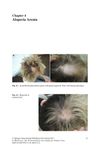 December 2016 in “Springer eBooks”
 A 45-year-old woman with autoimmune diseases experienced patchy hair loss due to alopecia areata, which has no cure but can be treated, with varying success.

This case report describes retinal occlusion and medial canthal swelling in a 64-year-old female following the injection of acellular porcine urinary bladder matrix for hair restoration, a previously unreported side effect.
 September 2025 in “Annals of Plastic Surgery”
 In this case report, a 76-year-old male had an eyelid lesion that mimicked squamous cell carcinoma but was diagnosed as benign inverted follicular keratosis after surgical excision, underscoring the importance of distinguishing between the two for proper management.
1 citations
,
August 2024 in “Pediatric Dermatology” In this report, researchers describe an unusual case of congenital pili multigemini, a hair follicle disorder, presenting on the eyebrow of a female infant, highlighting its rarity and atypical location.
 April 2025 in “Current Rheumatology Reviews”
 This case study highlights the importance of considering systemic lupus erythematosus in young patients presenting with atypical symptoms like periorbital erythema and pancytopenia, as early diagnosis and treatment can lead to remission.
 8 citations
,
October 2005 in “Otolaryngologic Clinics of North America”
8 citations
,
October 2005 in “Otolaryngologic Clinics of North America” This article discusses the mechanisms and prevention of aging, particularly in facial rejuvenation, but reports no new experimental findings.
1 citations
,
April 2015 in “Neurology” This study found that hyperpigmented skin changes resembling Schamberg’s purpura occur in areas affected by CRPS and can also appear on mirror-image locations of unaffected limbs, potentially improving with the condition's treatment.
 50 citations
,
March 2000 in “American Journal of Clinical Dermatology”
50 citations
,
March 2000 in “American Journal of Clinical Dermatology” This article discusses the etiology, clinical features, and treatment of alopecia areata but presents no new clinical findings, underlining the palliative nature of current therapies.
 May 2015 in “Journal of The American Academy of Dermatology”
 A woman with Parry-Romberg syndrome developed new curly hair on one side of her scalp, a condition not previously linked to the syndrome.
 2 citations
,
February 2009 in “Journal of the American Academy of Dermatology”
2 citations
,
February 2009 in “Journal of the American Academy of Dermatology” Injecting triamcinolone into the eyebrow area may help eyelash regrowth in alopecia areata patients.
 14 citations
,
April 2016 in “British Journal of Dermatology”
14 citations
,
April 2016 in “British Journal of Dermatology” This study found that a combined pattern of repigmentation was most commonly observed in vitiligo, with a new 'medium spotted' pattern proposed for areas with few hair follicles.
24 citations
,
January 2013 in “Lasers in medical science” This study found that fractional ultrapulse CO2 laser resurfacing effectively enhanced upper eyelid crease and brow position in patients with low and moderate dermatochalasis, with only mild side effects reported.
7 citations
,
January 2014 in “International Journal of Trichology” This article reviews five cases of primary idiopathic pseudopelade of Brocq and reports no histopathological changes indicative of any specific cicatricial alopecia.
7 citations
,
January 2013 in “Ophthalmic plastic and reconstructive surgery” This case report describes a rare instance of late-onset, bilateral nevus comedonicus of the eyelids in a 79-year-old man, highlighting its clinical and histopathologic features.
 6 citations
,
January 2015 in “Journal of the American Veterinary Medical Association”
6 citations
,
January 2015 in “Journal of the American Veterinary Medical Association” A 7-year-old dog with a rare autoimmune disease was euthanized due to severe anemia and poor prognosis.