 1 citations
,
January 2015 in “Actas dermo-sifiliográficas/Actas dermo-sifiliográficas”
1 citations
,
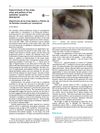
January 2015 in “Actas dermo-sifiliográficas/Actas dermo-sifiliográficas” Latanoprost eye drops caused excessive cheek hair growth and eyelash whitening in a woman.
September 2024 in “Journal of the American Academy of Dermatology” Eyebrow and eyelash regrowth usually matches scalp hair response in alopecia areata patients treated with baricitinib.
 7 citations
,
January 2017 in “International Journal of Dermatology”
7 citations
,
January 2017 in “International Journal of Dermatology” This study found that superficial cryotherapy significantly increased hair density and thickness in treated eyebrows compared to untreated controls after 5 months in patients with alopecia areata.
2 citations
,
January 2025 in “Journal of Oncology Pharmacy Practice” This case study reports a rare instance of pembrolizumab-induced eyelash trichomegaly in a 63-year-old male patient, highlighting the importance for clinicians to be aware of such uncommon adverse effects to manage patient treatment effectively.
January 2016 in “프로그램북(구 초록집)” This study found that the revised BASP classification for pattern hair loss, which addresses certain limitations of the original, could serve as an alternative option despite a decrease in clinical accuracy and ease of use.
 184 citations
,
November 2014 in “Developmental Cell”
184 citations
,
November 2014 in “Developmental Cell” This study identifies a bipotent stem cell in adult hair follicles that self-renews and contributes to dermal sheath and papilla cell populations, potentially aiding hair regrowth after injury, disease, or aging.
 101 citations
,
November 1992 in “Archives of Dermatology”
101 citations
,
November 1992 in “Archives of Dermatology” In this study, tapering prednisone followed by 2% topical minoxidil helped limit hair loss in some patients with alopecia areata, with 30% to 47% showing over 25% hair regrowth initially.
 80 citations
,
June 2008 in “Biomaterials”
80 citations
,
June 2008 in “Biomaterials” This study found that poly(ethylene-co-vinyl alcohol) membranes support the self-assembly of dermal papilla cells into compact spheroidal microtissues capable of inducing new hair follicles, suggesting potential for large-scale production for hair follicle regeneration.
 68 citations
,
December 2011 in “Journal of Investigative Dermatology”
68 citations
,
December 2011 in “Journal of Investigative Dermatology” This study reported that a three-dimensional hydrogel culture system supports the growth and maintenance of distinct dermal papilla cell types, crucial for skin reconstitution assays in neonatal mice.
 67 citations
,
May 2010 in “Journal of The American Academy of Dermatology”
67 citations
,
May 2010 in “Journal of The American Academy of Dermatology” This article discusses a unique case of permanent chemotherapy-induced alopecia in a patient receiving chemotherapy for breast cancer, characterized by a distinctive histologic finding and excludes bone marrow transplantation, but reports no new clinical results.
 66 citations
,
May 2012 in “Scientific Reports”
66 citations
,
May 2012 in “Scientific Reports” This study demonstrated that bioengineered hair follicles reconstituted from embryonic skin cells and transplanted into hosts can restore physiological hair functions, suggesting potential applications for treating alopecia.
 65 citations
,
November 2012 in “Tissue Engineering Part B-reviews”
65 citations
,
November 2012 in “Tissue Engineering Part B-reviews” This review discusses the biology of hair follicle stem cells and highlights their potential for applications in regenerative medicine, drug, and gene delivery, but reports no new clinical results.
 63 citations
,
May 2000 in “Australasian Journal of Dermatology”
63 citations
,
May 2000 in “Australasian Journal of Dermatology” This case study reported a 23-year-old woman with chronic myeloid leukemia who developed permanent hair loss after chemotherapy and did not respond to topical minoxidil treatment.
 62 citations
,
February 2016 in “ACS Applied Materials & Interfaces”
62 citations
,
February 2016 in “ACS Applied Materials & Interfaces” This study found that 3D microtissue models of dermal papilla cells can enhance the ability to induce hair-follicle neogenesis in vivo, offering potential for controlled cell production in follicle regeneration.
 49 citations
,
November 1992 in “Archives of dermatology”
49 citations
,
November 1992 in “Archives of dermatology” This article discusses the emotional and psychological impact of severe alopecia areata on patients, emphasizing feelings of loss, vulnerability, and self-identity changes, and reports no new results.
 48 citations
,
May 2008 in “Drug Discovery Today: Disease Mechanisms”
48 citations
,
May 2008 in “Drug Discovery Today: Disease Mechanisms” This review discusses recent advancements in understanding hair follicles, their disorders, and potential therapeutic opportunities, but it reports no new clinical findings.
 46 citations
,
September 2003 in “International Journal of Dermatology”
46 citations
,
September 2003 in “International Journal of Dermatology” This study found that trichodynia is common among patients with telogen effluvium and androgenetic alopecia, and it often coexists with psychological issues like depression and anxiety.
 40 citations
,
December 2016 in “Journal of Dermatological Treatment”
40 citations
,
December 2016 in “Journal of Dermatological Treatment” This study reviewed the role of the JAK/STAT signaling pathway in skin diseases and the potential of JAK inhibitors for treating conditions like psoriasis and atopic dermatitis. Although the findings are promising, the authors concluded it is premature to establish their place in dermatological treatments.
 40 citations
,
January 2010 in “International Journal of Trichology”
40 citations
,
January 2010 in “International Journal of Trichology” This review discusses the diagnostic criteria and guidelines for managing loose anagen syndrome and differentiating it from non-scarring alopecias, but it reports no new clinical results.
 37 citations
,
June 2018 in “Clinical and Experimental Medicine”
37 citations
,
June 2018 in “Clinical and Experimental Medicine” This study found that patients with alopecia areata had significant systemic inflammation and vitamin D deficiency, with both conditions more pronounced as disease severity increased.
 36 citations
,
April 2016 in “British journal of dermatology/British journal of dermatology, Supplement”
36 citations
,
April 2016 in “British journal of dermatology/British journal of dermatology, Supplement” This article reviews the role of vasoactive intestinal peptide in maintaining immune privilege in hair follicles and does not report new findings; the authors propose it as essential for immune homeostasis in alopecia areata.
 32 citations
,
December 2018 in “Cytokine”
32 citations
,
December 2018 in “Cytokine” This review discusses the involvement of type I interferons in skin autoimmune and inflammatory diseases but reports no new clinical results.
 32 citations
,
July 2012 in “Stem Cells Translational Medicine”
32 citations
,
July 2012 in “Stem Cells Translational Medicine” In this study, VD(3) pretreatment increased hair follicle formation in a rat model by promoting dermal papilla cell differentiation, suggesting potential for hair regeneration therapy.
 29 citations
,
December 2019 in “Stem Cells Translational Medicine”
29 citations
,
December 2019 in “Stem Cells Translational Medicine” This review discusses the current challenges and strategies in hair follicle bioengineering for treating hair loss and reports no new clinical results; it highlights ongoing hurdles and future directions for developing functional hair regeneration therapies.
 29 citations
,
March 2010 in “Journal of Dermatological Science”
29 citations
,
March 2010 in “Journal of Dermatological Science” This study found that Wnt3a increased beta-catenin signaling and upregulated specific genes in cultured human dermal papilla cells, enhancing their response to PGE2 and potentially aiding hair growth.
 27 citations
,
March 2018 in “Allergy and asthma proceedings”
27 citations
,
March 2018 in “Allergy and asthma proceedings” This study found that Israeli patients with alopecia areata had a higher prevalence of comorbid conditions, including food allergies and chronic spontaneous urticaria, compared to matched controls.
 27 citations
,
December 2015 in “Clinical and Experimental Dermatology”
27 citations
,
December 2015 in “Clinical and Experimental Dermatology” This study found that hair regrowth occurred in 72.2% of alopecia areata patients treated with diphencyprone, with disease extent at baseline and duration affecting outcomes.
 27 citations
,
April 2005 in “Journal of Chemotherapy”
27 citations
,
April 2005 in “Journal of Chemotherapy” This study reported two cases of alopecia universalis triggered by PEG-interferon and ribavirin therapy for chronic hepatitis C, with hair regrowth observed after therapy completion or withdrawal.
 26 citations
,
November 2016 in “European Journal of Clinical Pharmacology”
26 citations
,
November 2016 in “European Journal of Clinical Pharmacology” This study found that using valproic acid during radiotherapy for glioma was associated with delayed hair loss and improved survival outcomes.
 24 citations
,
April 2012 in “Developmental Biology”
24 citations
,
April 2012 in “Developmental Biology” This animal study found that dermal papilla cells in hair follicles of chimeric mice can originate from various fibroblasts in the skin, challenging assumptions about their specific lineage.