 23 citations
,
January 2009 in “Veterinary Dermatology”
23 citations
,
January 2009 in “Veterinary Dermatology” This study found that recombinant hepatitis B vaccine may increase the risk of alopecia areata onset in older predisposed mice but larger trials suggest this effect might lie within normal variation.
 23 citations
,
July 2008 in “British journal of dermatology/British journal of dermatology, Supplement”
23 citations
,
July 2008 in “British journal of dermatology/British journal of dermatology, Supplement” This review discusses the use of contact sensitizers for topical immunotherapy in dermatological conditions such as alopecia areata and viral warts, but it reports no new clinical findings.
 22 citations
,
December 2014 in “Naunyn-Schmiedeberg's Archives of Pharmacology”
22 citations
,
December 2014 in “Naunyn-Schmiedeberg's Archives of Pharmacology” This study found that baicalin activates Wnt/ß-catenin signaling in human dermal papilla cells, increasing alkaline phosphatase expression, growth factor expression, and promoting hair growth in mice.
 22 citations
,
June 2013 in “Australasian Journal of Dermatology”
22 citations
,
June 2013 in “Australasian Journal of Dermatology” Early stage bald spots are linked to skin inflammation and damage to the upper part of the hair follicle.
 22 citations
,
October 2012 in “Cell Transplantation”
22 citations
,
October 2012 in “Cell Transplantation” This study found that adding Wnt-10b to the culture medium of dermal papilla cells maintained their ability to induce hair follicles over 100 days in vitro.
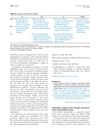 21 citations
,
March 2015 in “Journal of The American Academy of Dermatology”
21 citations
,
March 2015 in “Journal of The American Academy of Dermatology” In this study, five out of six patients treated with vemurafenib for metastatic melanoma experienced hair loss, which improved after topical steroid treatment.
 20 citations
,
March 2017 in “Journal of cutaneous pathology”
20 citations
,
March 2017 in “Journal of cutaneous pathology” This study describes tumor necrosis factor inhibitor-associated psoriatic alopecia, highlighting the distinctive histologic feature of sebaceous lobule atrophy, which is potentially reversible and helps differentiate it from idiopathic psoriatic alopecia.
 20 citations
,
December 2010 in “JEADV. Journal of the European Academy of Dermatology and Venereology/Journal of the European Academy of Dermatology and Venereology”
20 citations
,
December 2010 in “JEADV. Journal of the European Academy of Dermatology and Venereology/Journal of the European Academy of Dermatology and Venereology” This study found that selective downregulation of CD200 in the bulge area might contribute to unusual bulge involvement in a subset of alopecia areata cases.
 19 citations
,
November 2016 in “Dermatology and therapy”
19 citations
,
November 2016 in “Dermatology and therapy” This study describes a case where stopping infliximab and using oral minocycline with topical treatments effectively resolved alopecia and scalp psoriasis in a woman with Crohn's disease.
 19 citations
,
December 2015 in “Journal of Materials Chemistry B”
19 citations
,
December 2015 in “Journal of Materials Chemistry B” This study found that using layer-by-layer encapsulation techniques on dermal papilla cells can support their function and may help treat hair loss when used in conjunction with freshly isolated epidermal cells.
 19 citations
,
September 2002 in “Acta dermato-venereologica”
19 citations
,
September 2002 in “Acta dermato-venereologica” In this retrospective study, anti-tuberculous agents, likely rifampicin, were effective adjunctive therapies for a chalazion, coinciding with spontaneous drainage in a patient with rosacea.
 18 citations
,
May 2016 in “Aesthetic Surgery Journal”
18 citations
,
May 2016 in “Aesthetic Surgery Journal” This study found that body hair transplantation using follicular unit extraction was effective and resulted in high satisfaction among selected patients with limited scalp donor hair.
 16 citations
,
July 2020 in “International Journal of Molecular Sciences”
16 citations
,
July 2020 in “International Journal of Molecular Sciences” This study found that ruxolitinib modulated inflammatory changes and stimulated growth factor signals by blocking the JAK-STAT pathway in an in vitro model of alopecia areata.
 15 citations
,
February 2011 in “Journal of Tissue Engineering and Regenerative Medicine”
15 citations
,
February 2011 in “Journal of Tissue Engineering and Regenerative Medicine” This study found that a newly developed hemi-vascularized sandwich method significantly improved the regeneration and maturity of hair follicles compared to other transplantation approaches in rat models.
 14 citations
,
March 2002 in “The journal of investigative dermatology/Journal of investigative dermatology”
14 citations
,
March 2002 in “The journal of investigative dermatology/Journal of investigative dermatology” This study found that serum MIF levels were significantly higher in patients with extensive alopecia areata compared to those with mild alopecia areata and healthy individuals.
 13 citations
,
July 2019 in “Journal of Dermatological Science”
13 citations
,
July 2019 in “Journal of Dermatological Science” This study suggests that 3D spheroid cultivation of dermal papilla cells can restore their hair-inductive capabilities, which are lost in 2D-cultured cells.
 10 citations
,
January 2012 in “International Journal of Trichology”
10 citations
,
January 2012 in “International Journal of Trichology” This study found no significant association between serum levels of vitamin B12, folate, TSH, ferritin, zinc, or anxiety scores and trichodynia in telogen alopecia patients.
 9 citations
,
May 2013 in “JAMA Dermatology”
9 citations
,
May 2013 in “JAMA Dermatology” This report details a case of extensive leukotrichia induced by dasatinib in a patient with refractory chronic myelogenous leukemia.
 8 citations
,
September 2015 in “Journal of the European Academy of Dermatology and Venereology”
8 citations
,
September 2015 in “Journal of the European Academy of Dermatology and Venereology” This study observed that hair and scalp sensations were significantly more common and intense in chemotherapy patients compared to those receiving tamoxifen, with sensations ceasing after 11 weeks.
 6 citations
,
October 2016 in “Journal of Chemotherapy”
6 citations
,
October 2016 in “Journal of Chemotherapy” This case report describes a rare instance of alopecia universalis occurring eight weeks after discontinuing pegylated interferon α and ribavirin therapy, highlighting the need for awareness among healthcare providers.
 6 citations
,
February 2014 in “Experimental Dermatology”
6 citations
,
February 2014 in “Experimental Dermatology” This review discusses the potential for cellular hair regeneration by building on foundational rodent studies and emphasizes the need for protocols to enhance the inductive properties of human dermal papilla cells.
 6 citations
,
June 2013 in “British Journal of Dermatology”
6 citations
,
June 2013 in “British Journal of Dermatology” This study found that intense pulsed light treatment primarily targets pigmented structures in hair follicles and may damage dermal papilla cells at high energy levels, but stem cells are mostly spared.
 5 citations
,
April 2024 in “BMC Neurology”
5 citations
,
April 2024 in “BMC Neurology” The researchers reported that non-motor symptoms like taste disorders and alopecia are associated with myasthenia gravis, particularly in severe cases and those linked to thymoma.
 5 citations
,
October 2013 in “Veterinary Clinics of North America: Equine Practice”
5 citations
,
October 2013 in “Veterinary Clinics of North America: Equine Practice” This review discusses various noninflammatory alopecias in horses, particularly alopecia areata, and reports no new treatment results, emphasizing the need for differential diagnosis through examination and biopsy.
 4 citations
,
May 2019 in “Journal of The European Academy of Dermatology and Venereology”
4 citations
,
May 2019 in “Journal of The European Academy of Dermatology and Venereology” Hair loss treatment caused more hair loss in a man.
 4 citations
,
August 2010 in “Journal of the American Academy of Dermatology”
4 citations
,
August 2010 in “Journal of the American Academy of Dermatology” This case report involves a 56-year-old woman with idiopathic thrombocytopenic purpura and scarring alopecia, suggesting diagnoses including discoid lupus erythematosus and lichen planopilaris without presenting new clinical findings.
 4 citations
,
July 2008 in “British journal of dermatology/British journal of dermatology, Supplement”
4 citations
,
July 2008 in “British journal of dermatology/British journal of dermatology, Supplement” This study found that alopecia areata patients who responded poorly to topical immunotherapy had impaired peripheral blood mononuclear cell responses to T-cell stimulants.
 4 citations
,
July 2005 in “International Journal of Dermatology”
4 citations
,
July 2005 in “International Journal of Dermatology” This article does not contain an abstract and presents no new clinical findings, instead discussing prior cases and literature on infant alopecia universalis and the potential role of topical PUVA therapy.
 3 citations
,
September 2022 in “Archives of dermatological research”
3 citations
,
September 2022 in “Archives of dermatological research” In this study, fractional CO2 laser treatment for alopecia areata was found to significantly increase terminal hair and patient satisfaction compared to betamethasone valerate cream alone, highlighting its efficacy and safety both as a standalone and combined treatment.
 3 citations
,
January 2018 in “Biomedical dermatology”
3 citations
,
January 2018 in “Biomedical dermatology” This study found that epigallocatechin-3-gallate (EGCG) may reduce paclitaxel-induced apoptosis in human dermal papilla cells by regulating microRNA expression related to apoptosis and cell proliferation.