 1398 citations
,
May 2008 in “Histochemistry and Cell Biology”
1398 citations
,
May 2008 in “Histochemistry and Cell Biology” This review summarizes the cell type distribution and functional significance of human keratins, emphasizing their roles in tumor diagnosis and potential clinical applications, and reports no new clinical findings.
13 citations
,
April 1982 in “The Journal of Dermatology” This study found that poly(adenosine diphosphate-ribose) synthesis in human skin varies by cell type and condition, with distinct patterns in psoriatic, cancerous, and normal tissues.
 6 citations
,
October 2016
6 citations
,
October 2016 This article reviews the complex structure and molecular composition of hair keratins, highlighting their self-assembly process and implications for keratin extraction techniques, but reports no new experimental results.
48 citations
,
January 2002 in “Journal of Structural Biology” This study reports that trichocyte intermediate filaments from rat vibrissae and human hair follicles may contain a hollow region at their core, suggesting unique structural properties.
 7 citations
,
July 2008 in “Experimental Dermatology”
7 citations
,
July 2008 in “Experimental Dermatology” This study identified molecular elements controlling the expression and stabilization of THH protein in hair follicle cells, revealing key mechanisms that support hair shaft development in mice.
August 2026 in “Journal of Cosmetic Dermatology” This study found that Plinest injections improved skin hydration and elasticity in the face, neck, and décolleté and were well-tolerated, with high patient satisfaction over a 4-month follow-up.
 May 2023 in “Antioxidants”
 In this study, researchers found that supramolecular peptide self-assembling materials derived from Pacific oysters exhibit promising effects for skin wound healing in vitro and in vivo, demonstrating procoagulant, antioxidant, anti-inflammatory, and regenerative properties that suggest potential as a natural treatment option.
 June 2025 in “Aesthetic Cosmetology and Medicine”
 This article reviews the potential uses of PDRN in regenerative and aesthetic medicine, noting promising results in various treatments but highlighting the need for further long-term studies to confirm their safety and effectiveness.
59 citations
,
November 2011 in “Development” This study found that the transcription factor Trps1 acts as a novel regulator of the Wnt signaling pathway and early hair follicle progenitors in developing vibrissa follicles in mice.
3 citations
,
January 2022 in “Burns & Trauma” This study found that CTHRC1 is crucial for sweat gland function and vascular network integrity in mice, and its administration improved sweat gland performance by reconstructing nearby blood vessels.
5 citations
,
January 1981 This article reviews the classification and complexity of keratin protein groups in hair follicles, but reports no new experimental results on their transcriptional events.
 60 citations
,
August 2008 in “Human molecular genetics online/Human molecular genetics”
60 citations
,
August 2008 in “Human molecular genetics online/Human molecular genetics” This study suggests that a position effect disrupting TRPS1 expression may be linked to hypertrichosis in both Ambras syndrome in humans and a similar phenotype in Koa mice.
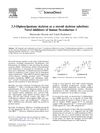 13 citations
,
August 2007 in “Bioorganic & medicinal chemistry letters”
13 citations
,
August 2007 in “Bioorganic & medicinal chemistry letters” This study developed a new competitive 5alpha-reductase inhibitor with an IC(50) of 0.84 microM using a novel chemical structure.
 7 citations
,
February 1998 in “Polymer journal”
7 citations
,
February 1998 in “Polymer journal” This study found that the stability of the coiled-coil structure in human hair keratin is maintained by ion-pairing and hydrophobic interactions, which are disrupted as pH approaches 7.0.
In this study, researchers found that substance P and calcitonin-gene-related peptide have distinct roles in the regulation of hair growth in mice, suggesting potential therapeutic targets for hair growth manipulation.
 40 citations
,
October 2009 in “Journal of Biomedical Nanotechnology”
40 citations
,
October 2009 in “Journal of Biomedical Nanotechnology” This review discusses pyrene excimer nucleic acid probes for detecting biomolecules and protein-DNA interactions and reports no new experimental findings.
 26 citations
,
January 2019 in “Experimental Dermatology”
26 citations
,
January 2019 in “Experimental Dermatology” This study developed an in vitro system to analyze human skin progenitor cells' ability to form hair peg-like structures, providing insights for engineering hair follicle organoids.
 6 citations
,
March 2018 in “Journal of Medicinal Food”
6 citations
,
March 2018 in “Journal of Medicinal Food” This study demonstrated that water-soluble peptides from egg yolk, termed "hair growth peptide," stimulated human hair follicle cell growth and improved hair growth in female pattern hair loss.
18 citations
,
February 1992 in “Molecular Biology Reports” This study identified and characterized a murine type II hair keratin, demonstrating its presence in specific cells of hair and tongue tissues.
April 2020 in “International Journal of Cosmetic Science” This study found that improved protein extraction methods enhanced the resolution of hair proteins on gels, but differences in protein abundance between curly and straight Japanese women’s hair were minimal and unlikely to affect hair structure.
17 citations
,
June 1994 in “Archiv für Pathologische Anatomie und Physiologie und für Klinische Medicin” Tenascin is present in normal skin and certain skin tumors but not in sebaceous glands or their tumors.
39 citations
,
November 2007 in “Experimental dermatology” This study found that prostaglandin receptors are widely expressed in hair follicles, suggesting a complex network of prostanoid pathways involved in hair growth control.
122 citations
,
January 2006 in “Molecular & Cellular Proteomics” This study found that keratin and other hair proteins in humans are extensively modified posttranslationally, which helps explain the structural characteristics of mature hair.
 1 citations
,
May 2020 in “bioRxiv (Cold Spring Harbor Laboratory)”
1 citations
,
May 2020 in “bioRxiv (Cold Spring Harbor Laboratory)” This study found that D-peptide crosslinked MAP hydrogels accelerate skin regeneration and promote adaptive immunity, despite faster scaffold degradation in vivo.
 211 citations
,
April 2018 in “Cold Spring Harbor Perspectives in Biology”
211 citations
,
April 2018 in “Cold Spring Harbor Perspectives in Biology” Keratins are crucial for cell structure, growth, and disease risk.
1 citations
,
August 2025 in “Bioengineering” In this study, the combination of full-thickness skin column grafts and the TSN6 peptide improved wound healing quality in pigs by enhancing epidermal maturation compared to other treatments.
This study demonstrated potential in using specific keratin peptide profiles from human hair shafts to distinguish gender and ethnicity, suggesting it could enhance forensic investigations, though larger studies are needed.
478 citations
,
September 1996 in “Proceedings of the National Academy of Sciences” This study found that overexpression of PTHrP in mice chondrocytes led to short-limbed dwarfism and delays in endochondral ossification, highlighting PTHrP's role in inhibiting chondrocyte differentiation.
55 citations
,
February 2014 in “Journal of Structural Biology” This study observed that human hair macrofibrils predominantly exhibit a double-twist architecture with varying inter-macrofibril angles, advancing insights into their structural organization and mechanical implications.
 7 citations
,
January 2019 in “Postepy Dermatologii I Alergologii”
7 citations
,
January 2019 in “Postepy Dermatologii I Alergologii” This study found that the count of CAG trinucleotide repeats in the androgen receptor gene may be associated with acne in female patients without hyperandrogenism.