 April 2021 in “Sohag Medical Journal”
 This review outlines the proposed theories behind the development of alopecia areata, emphasizing the autoimmune process involving lost immune privilege in hair follicles, and stresses the need to pinpoint specific pathogenic mechanisms for potential treatments.
 May 2020 in “International Journal of Engineering Applied Sciences and Technology”
 This study explored the antimicrobial potential of natural bioactive materials such as Citrus lemon, Garlic, Baeckea frutescens, Neem, and Eclipta Alba, highlighting their eco-friendly and non-toxic properties for combating harmful bacteria.
 68 citations
,
May 2011 in “European Journal of Dermatology”
68 citations
,
May 2011 in “European Journal of Dermatology” Acne is caused by genetics, diet, hormones, and bacteria, with treatments not yet curative.
 57 citations
,
March 2024 in “Nano-Micro Letters”
57 citations
,
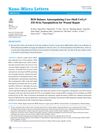
March 2024 in “Nano-Micro Letters” In this study, researchers created a core-shell nanozyme, CeO2@ZIF-8/Au, which autonomously regulates ROS levels to efficiently eliminate bacteria, reduce inflammation, and promote wound healing by balancing ROS generation and scavenging in response to environmental conditions.
 10 citations
,
September 2024 in “Journal of Nanobiotechnology”
10 citations
,
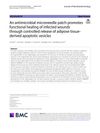
September 2024 in “Journal of Nanobiotechnology” This study developed an antimicrobial microneedle patch for delivering apoptotic vesicles to treat infected wounds, which was found to effectively reduce bacterial growth and accelerate scarless healing, including the rapid formation of mature hair follicles in just 8 days, a previously unreported early outcome.
 4 citations
,
September 2017 in “International research journal of pharmacy”
4 citations
,
September 2017 in “International research journal of pharmacy” This study found that in vitro, the methanolic extract of Musa Acuminata bract was effective against both Gram-positive and Gram-negative bacteria, suggesting potential use for treating bacterial infections.
This study reports that prostatitis, affecting many men aged 30 to 50, arises from diverse causes, including bacterial infections and pelvic pain syndromes, and requires treatment strategies specific to its type, such as antibiotics and lifestyle changes.
 4 citations
,
December 2020 in “International journal of research - granthaalayah”
4 citations
,
December 2020 in “International journal of research - granthaalayah” This study found that tetracycline can adhere to hair follicle structures and disrupt cell metabolism, potentially damaging healthy human cells as well as pathogens.
 December 2024 in “Indonesian Journal of Tropical and Infectious Disease”
 In a tropical, high-burden region, this study found that tinea corporis and tinea cruris were the most common types of dermatophytosis, particularly affecting female adults, and that treatment commonly involved griseofulvin and ketoconazole cream, with Trichophyton mentagrophytes as the prevalent pathogen.
January 2024 in “IntechOpen eBooks” This study highlights the various bacterial, fungal, and viral threats to honeybee colonies, such as American Foulbrood and Deformed Wing Virus, and discusses management strategies like Integrated Pest Management and genetic resistance to preserve honeybee populations and their crucial pollination roles.
 2 citations
,
March 2023 in “European Polymer Journal”
2 citations
,
March 2023 in “European Polymer Journal” This study developed multifunctional nanofiber wound dressings that significantly reduced bacteria and promoted healing in a mouse wound model by incorporating antibacterial and growth-promoting agents.
4 citations
,
December 2023 in “Clinical Cosmetic and Investigational Dermatology” This study found that in people with leprosy sequelae, ulcers on the lower limbs exhibited decreased microbial diversity and reduced abundance of specific bacteria compared to normal skin, with skin metabolites closely linked to these microbial changes.
78 citations
,
May 2019 in “Frontiers in Cellular and Infection Microbiology” This study found that the antimicrobial peptide DPK-060 effectively reduced bacterial counts of Staphylococcus aureus and was safe for topical use in preclinical models, although nanocarrier encapsulation did not enhance its efficacy.
 August 2023 in “International Journal of Nanomedicine”
 This study found that a graphene-barium titanate nanosystem can accelerate wound healing by killing bacteria and promoting fibroblast proliferation, demonstrating effectiveness in both Gram-negative and Gram-positive bacteria-infected wounds in mice.
9 citations
,
November 2024 in “Journal of Wound Management Official journal of the European Wound Management Association” Cold Plasma shows promise for healing wounds by killing bacteria and helping tissue grow.
January 2025 in “Case Reports in Veterinary Medicine” In this case study, a female European bison calf developed generalized bacterial dermatitis caused by *Staphylococcus aureus*, which improved after targeted treatment, highlighting the need for timely diagnosis and disease management in wildlife conservation.
 3 citations
,
August 2023 in “World Journal of Biology and Biotechnology”
3 citations
,
August 2023 in “World Journal of Biology and Biotechnology” This research underscores the critical role of the human microbiome in health, highlighting potential therapeutic benefits of interventions like fecal microbiota transplantation and probiotics for conditions linked to microbiome dysbiosis, such as metabolic disorders and inflammatory diseases.
 3 citations
,
January 2017 in “PubMed”
3 citations
,
January 2017 in “PubMed” This report describes a case of inflammation and infection with specific pathogens in synthetic hair implants done by a non-medical professional, highlighting risks associated with the procedure.
September 2025 in “Frontiers in Pharmacology” This study found that the meropenem-loaded spanlastic formulation showed strong potential as an effective topical therapy for bacterial skin infections in non-diabetic mice, demonstrating superior therapeutic activity and wound healing compared to free meropenem.
 May 2024 in “Indian Dermatology Online Journal”
 This study reports a case of trichobacteriosis pubis, a rare bacterial infection causing malodour in the pubic region, which improved with hair trimming and topical clindamycin, subsequently enhancing the patient's sexual relationship.
11 citations
,
August 2022 in “Evidence-based Complementary and Alternative Medicine” This study found that methanolic extract of Eclipta alba leaves exhibited strong antibacterial effects against certain pathogens including methicillin-resistant Staphylococcus aureus, but it showed no activity against Mycobacterium tuberculosis, including drug-resistant strains.

This study found that supraphysiological and physiological androgen levels inhibited U937 macrophages' phagocytosis of MRSA compared to untreated controls, but AR antagonism reversed this effect, suggesting targeting AR or using 5alpha-reductase inhibitors might aid bacterial clearance in elderly males' chronic wounds.
 4 citations
,
October 2022 in “Microbial Cell Factories”
4 citations
,
October 2022 in “Microbial Cell Factories” This study identified novel endophytic actinobacteria from the Citrullus colocynthis plant with antibacterial properties, suggesting potential for new antibiotic development against multi-drug-resistant bacteria.
August 2025 in “Materials Today Bio” This study reports that novel nanofibrous dressings combining polylysine and tannic acid significantly reduce bacterial burden, support wound healing, and exhibit strong anti-inflammatory effects in infected full-thickness wounds, promoting near-complete closure and skin regeneration within two weeks.
 44 citations
,
March 2020 in “Antibiotics”
44 citations
,
March 2020 in “Antibiotics” The researchers reported that carnosic acid and carnosol, extracts from rosemary leaves, specifically inhibit S. aureus virulence expression, suggesting potential topical treatments for atopic dermatitis flares.
 January 2026 in “Frontiers in Drug Discovery”
 This study highlights that while advances in dermatology, such as biologics and JAK inhibitors, have improved treatments for conditions like atopic dermatitis and psoriasis, challenges remain, including issues with lasting efficacy and the need for more personalized therapies.
 15 citations
,
September 1984 in “Veterinary Clinics of North America: Small Animal Practice”
15 citations
,
September 1984 in “Veterinary Clinics of North America: Small Animal Practice” The document explains various skin conditions in cats and how to diagnose and treat them.
 11 citations
,
March 2025 in “Environmental Monitoring and Assessment”
11 citations
,
March 2025 in “Environmental Monitoring and Assessment” This review discusses how faecal pollution contributes to antimicrobial resistance in surface water and highlights the need for standardized methods and better wastewater management but reports no new clinical results.
3 citations
,
November 2024 in “Current Research in Microbial Sciences” This study found that extracts from the medicinal plants *Echinops echinatus* and *Tridax procumbens* displayed antimicrobial activity against several bacteria, including *Escherichia coli* and *Staphylococcus aureus*, and identified various compounds like flavonoids and terpenoids potentially responsible for these effects.
 January 2026 in “Frontiers in Microbiology”
 This study suggests that Enterococcus faecium fermentation broth may have anti-aging effects in mice, mainly through modulating gut microbiota and enhancing immunity, with the key component NlpC/P60 potentially boosting host immune responses and increasing beneficial bacterial populations.